Quranic Answer
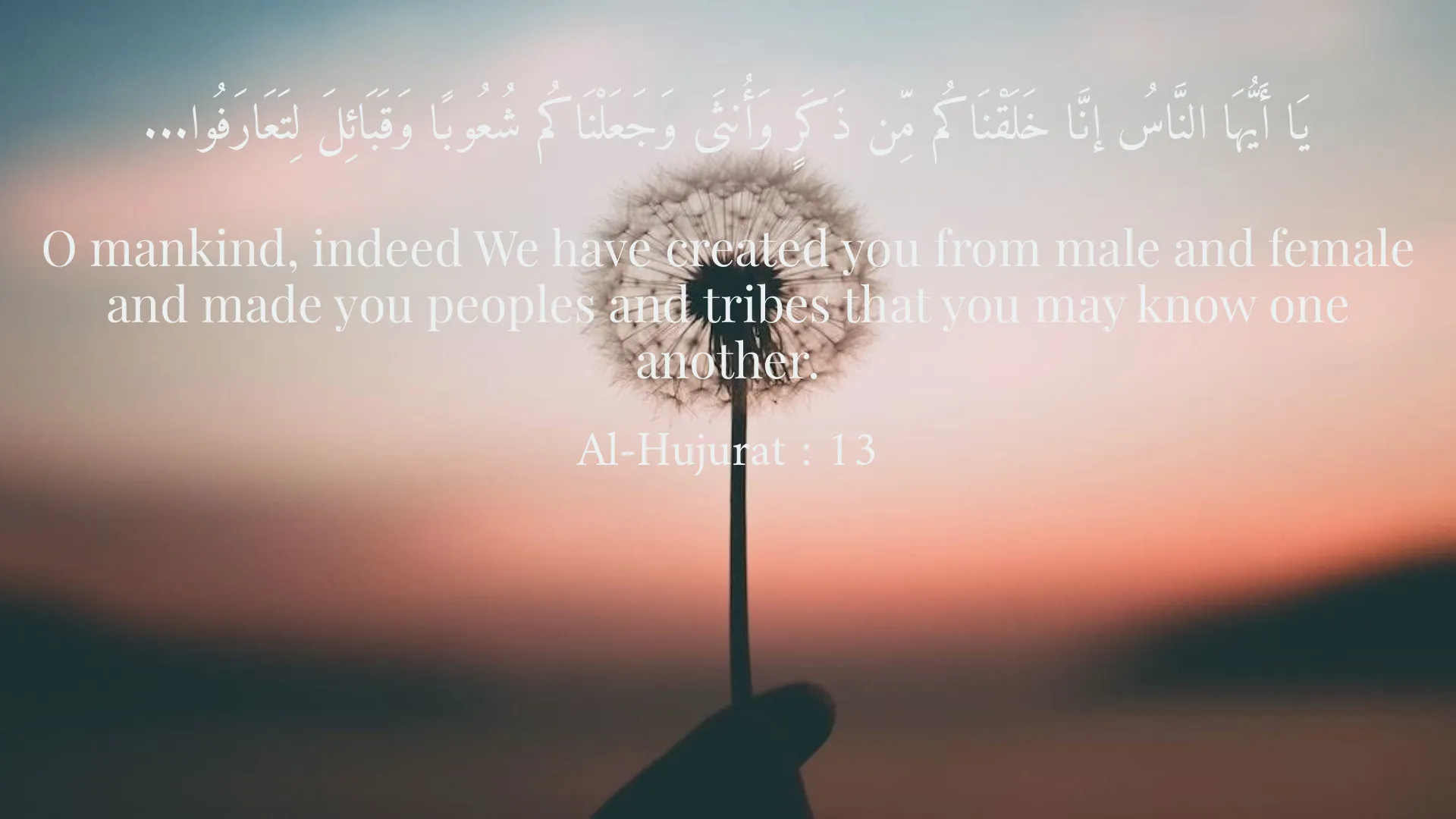
Respecting others is one of the fundamental ethical principles in Islam, and it is emphasized in the Holy Quran. The notion of respect is deeply embedded within Islamic teachings and is evident in various verses of the Quran. Among the facets discussed in the Quran, the respect for humanity stands out as particularly significant. This respect is not merely a social nicety but a profound spiritual obligation that forms the backbone of ethical conduct in the life of a Muslim. In Surah Al-Hujurat, verse 13, Allah states, "O mankind, indeed We have created you from male and female and made you peoples and tribes that you may know one another." This verse encapsulates a powerful message about equality and the intrinsic value of every human being, regardless of their ethnic background, gender, or social status. The Quran acknowledges the diversity among people, articulating that this plurality is part of Allah's divine plan. The purpose of creating different peoples and tribes is to foster understanding and respect among one another. Therefore, it is implied that respecting one another is not only a moral duty but a means to live harmoniously in a diverse society. Furthermore, this respect isn't limited to mere acknowledgment of diversity; it extends to treating one another with fairness and dignity. In another unique example from Surah Al-An’am, verse 151, Allah commands, "Say, 'Come, I will recite what your Lord has prohibited to you: that you not associate anything with Him and to parents, good treatment.'" This particular verse emphasizes the importance of treating others kindly, especially family members. Family is viewed with great reverence in Islam, and the respect shown to family members echoes outward to the larger community. The guidance provided in these verses forms a framework for ethical interpersonal relationships, encouraging Muslims to act with compassion and respect to foster unity and love. The teachings of Islam regarding respect extend beyond verbal expressions; they encompass behaviors that embody kindness and graciousness toward all individuals. For example, the Prophet Muhammad (peace be upon him) exemplified these values in his life. His interactions with others, regardless of their social standing, were rooted in respect and honor, showcasing the ideal Muslim behavior. He stressed that "the best among people are the best towards people." This poignant statement calls upon individuals to introspect and evaluate their relationships with others. It sheds light on the understanding that one's standing in society is directly correlated to their treatment of others. In essence, respect in the context of Islam transcends obligatory actions; it should be a reflection of one’s faith and character. The significance of respecting others permeates through various aspects of society, showcasing its multifaceted nature. In the realm of social justice, respecting others can lead to inclusive development and community building. When individuals practice respect, they contribute to a positive environment that encourages collaboration and mutual understanding. Conversely, disrespect and disdain can lead to discord and division among individuals and communities, highlighting the relevance of the Quranic message in modern society. Moreover, in an increasingly interconnected world, the importance of respect for others becomes even more pronounced. In the age of globalization, interactions with people from diverse cultures and backgrounds have become commonplace. The challenge of respecting others while navigating differing beliefs, traditions, and customs requires an adherence to the principles laid out in the Quran. Engaging with others respectfully can lead to shared learning experiences and enhance personal growth, allowing individuals to broaden their perspectives while creating bridges of understanding across cultural divides. Respecting others creates a supportive community, wherein individuals feel valued and appreciated. When respect is woven into the fabric of society, it lays the groundwork for friendships and alliances that can withstand the test of time. Respect nurtures love, understanding, cooperation, and offers a sense of belonging that every individual seeks. Thus, the importance of respect must be emphasized in educational institutions, workplaces, and within families, ensuring the principles of Islam are reflected in everyday interactions. Furthermore, the ethical framework Islam provides encourages individuals to engage in self-reflection and recognize their responsibility in their interactions. By practicing respect, individuals not only honor Allah's commandments but also set a standard for others, inspiring them to embrace a culture of kindness and empathetic behaviors. This cyclical nature of respect strengthens communal bonds, promotes peaceful coexistence, and ultimately aligns societal values with Islamic teachings. In conclusion, respecting others is a cornerstone of ethical behavior in Islam, underscored by the values espoused in the Quran. Through the teachings of the Quran and the life of the Prophet Muhammad (peace be upon him), Muslims are reminded that respect is foundational to love, unity, and cooperation within communities. Recognizing the common humanity of all individuals not only fulfills a religious obligation but also enriches personal and communal lives. Consequently, respect permeates social dynamics, nurturing an environment where kindness and understanding can flourish. Therefore, it is the responsibility of all individuals, regardless of their faith, to embrace the principle of respect, fostering a world that is inclusive, compassionate, and interconnected in its shared humanity.
Related Verses
يَا أَيُّهَا النَّاسُ إنَّا خَلَقْنَاكُم مِّن ذَكَرٍ وَأُنثَى وَجَعَلْنَاكُم شُعُوبًا وَقَبَائِلَ لِتَعَارَفُوا...
O mankind, indeed We have created you from male and female and made you peoples and tribes that you may know one another.
Al-Hujurat : 13
قُلْ تَعَالَوْا أَتْلُ مَا حَرَّمَ رَبُّكُمْ عَلَيْكُمْ أَلَّا تُشْرِكُوا بِهِ شَيْئًا...
Say, 'Come, I will recite what your Lord has prohibited to you: that you not associate anything with Him and to parents, good treatment.'
Al-An'am : 151
Short Story
On a beautiful day, Seyyed, a young man from a loyal tribe, decided to visit his friends. Upon entering the house of one of his friends, he noticed that the mother was seriously ill. Seyyed, without any hesitation, showed respect to his friend's mother and took care of her. His actions generated waves of love in everyone’s hearts, and his friend said, 'By respecting my mother, you healed her and taught us a valuable lesson in ethics and love.'