Quranic Answer
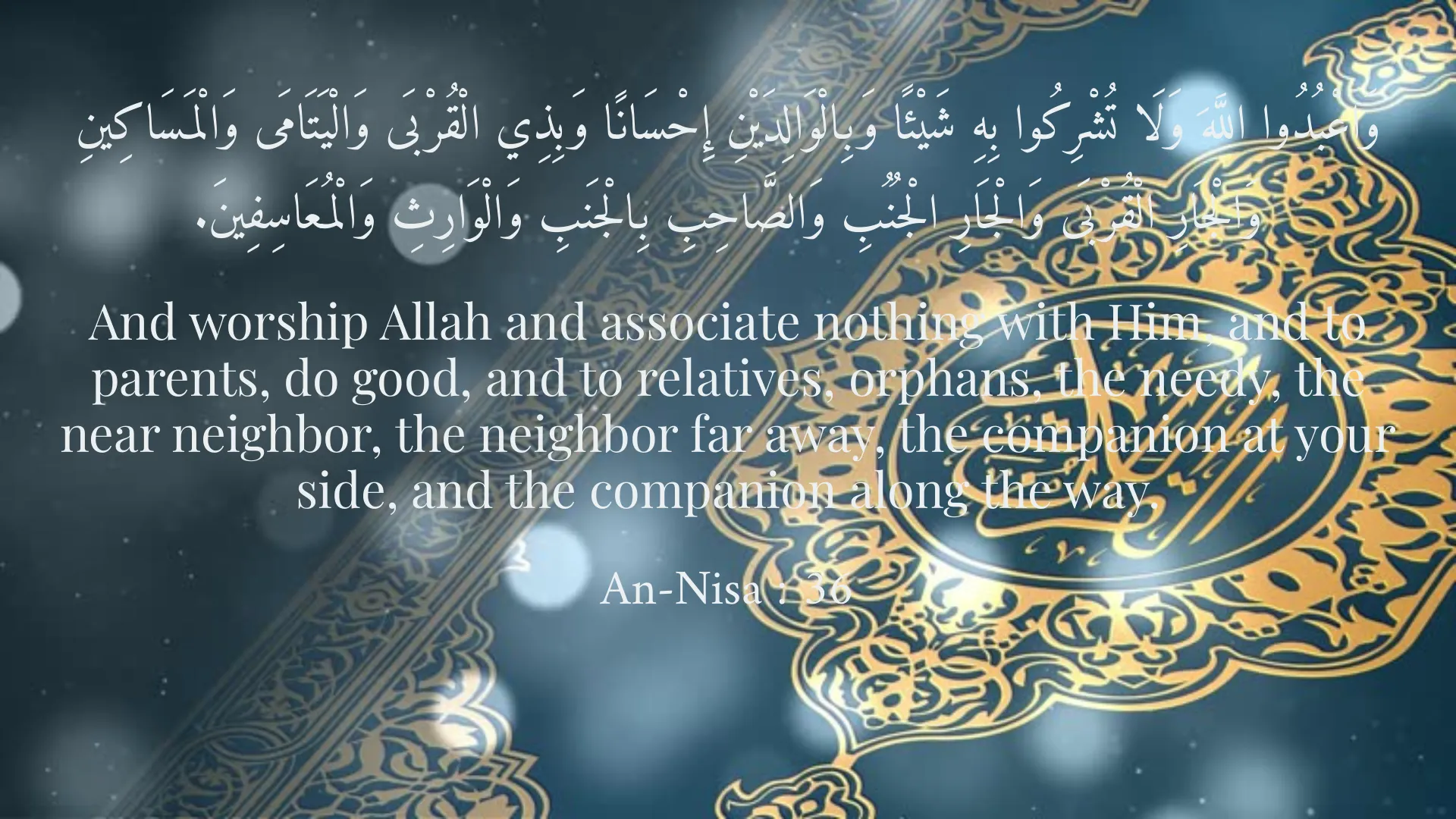
In the Holy Quran, respect for neighbors is regarded as one of the significant moral principles guiding interpersonal relationships in Islamic teachings. The instruction to treat neighbors with kindness and respect is explicitly mentioned in various verses, emphasizing its universal applicability within Islamic communities. In particular, Surah An-Nisa, verse 36, serves as a quintessential example of how Allah commands believers to show compassion and goodwill towards not only relatives and orphans, but also the needy, friends, and critically, neighbors near and far. This divine instruction underscores the importance of nurturing relations with those who live around us, thereby instilling a sense of community that is vital for social harmony. The term “neighbors” in this context encompasses a broad spectrum of individuals, transcending mere proximity. Neighbors can be individuals residing right next door, or those within a community whom we interact with regularly. The message is clear: one cannot limit good conduct solely to family or friends. Instead, the moral obligation extends to everyone within a shared living environment, creating a holistic approach to mutual respect and cooperation. Moreover, the concept of neighborly respect is reinforced through cultural practices and traditions in Islamic societies. For instance, the prophetic traditions (Hadith) also speak highly of the rights of neighbors, further elaborating the responsibilities individuals have towards one another. Prophet Muhammad (PBUH) said, "Jibril kept recommending me regarding the neighbor until I thought that he would make him inherit." This indicates that neighbors hold significant importance, akin to family members within Islamic teachings. This emphasis on neighborly rights encourages a culture of love and friendship, fostering an environment where social bonds thrive. In another significant verse, Surah Al-Imran, verse 103, Allah commands Muslims to hold firmly to the rope of Allah and not be divided. This call for unity and solidarity among believers is intrinsically linked to the notion of respect for one's neighbors. By cultivating a sense of community through respect and understanding, tensions and conflicts are likely to diminish, thus creating a more peaceful social framework. In contrast, neglecting the rights of neighbors could lead to misunderstandings and rivalries, creating discord within communities. The social implications of respecting neighbors extend beyond mere etiquette; they can have a profound impact on the overall health of a society. When individuals respect their neighbors, numerous social issues such as conflict, isolation, and even crime can be significantly reduced. For instance, social cohesion is strengthened when community members look out for one another, cultivating a supportive network where individuals feel valued and understood. This network can lead to collaborative efforts in local issues, from organizing community events to addressing social challenges collectively. Furthermore, in today's globalized world, the significance of neighborly respect becomes even more pronounced. With urbanization resulting in increasingly dense living conditions, individuals often find themselves living in closer proximity to those from diverse cultural, social, and religious backgrounds. In such contexts, maintaining respect and understanding towards neighbors is crucial. It allows for the creation of inclusive, harmonious societies where diversity is celebrated rather than feared. The act of caring for one’s neighbors is not merely an individualistic concept; it has far-reaching ramifications for community building. When we extend kindness and understanding towards our neighbors, we advocate for a culture of empathy and compassion. This attitude can inspire others to do the same, creating a ripple effect that fosters a more caring and supportive community environment. Additionally, engaging with neighbors can offer avenues for personal growth and enrichment. By establishing ties with those around us, we can learn from their experiences, perspectives, and traditions. Such interactions can broaden our understanding of the world, enriching our lives and promoting collective well-being. Challenges always accompany the endeavor to respect neighbors. Misunderstandings can arise, leading to potential conflicts, especially in diverse communities where differing values and beliefs exist. Therefore, educating individuals about the importance of neighborly respect and conflict resolution methods can equip communities to handle disagreements constructively. By emphasizing dialogues and open communication, communities can build bridges instead of walls. It is also important to recognize that respecting neighbors is not limited to mere physical presence. In an age defined by technology and social media, maintaining virtual relationships can also reflect the same principles of respect and consideration. Online interactions with neighbors can mirror the same level of kindness and empathy expected in person. Therefore, fostering respectful online communities can positively impact local dynamics as well. In conclusion, it can be firmly established that respecting neighbors is both a religious obligation articulated in the Holy Quran and a crucial pillar for healthy social relations. The teachings in Islam regarding good conduct towards neighbors encourage communal support, visibility, and interactions that ultimately reduce social tensions. Through the promotion of respect and compassion towards our neighbors, we make tangible strides towards building healthier, more compassionate communities. By strengthening positive connections with our neighbors, we not only commit ourselves to fulfilling divine commandments but also contribute to the alleviation of social problems. In this way, the principles laid out in the Quran find practical application in everyday life, guiding us toward creating a society that values friendship, peace, and shared responsibility.
Related Verses
وَاعْبُدُوا اللَّهَ وَلَا تُشْرِكُوا بِهِ شَيْئًا وَبِالْوَالِدَيْنِ إِحْسَانًا وَبِذِي الْقُرْبَى وَالْيَتَامَى وَالْمَسَاكِينِ وَالْجَارِ الْقُرْبَى وَالْجَارِ الْجُنُبِ وَالصَّاحِبِ بِالْجَنبِ وَالْوَارِثِ وَالْمُعَاسِفِينَ.
And worship Allah and associate nothing with Him, and to parents, do good, and to relatives, orphans, the needy, the near neighbor, the neighbor far away, the companion at your side, and the companion along the way.
An-Nisa : 36
وَاعْتَصِمُوا بِحَبْلِ اللَّهِ جَمِيعًا وَلَا تَفَرَّقُوا ۚ وَذْكُرُوا نِعْمَتَ اللَّهِ عَلَيْكُمْ إِذْ كُنتُمْ أَعْدَاءً فَأَلَّفَ بَيْنَ قُلُوبِكُمْ فَأَصْبَحْتُمْ بِنِعْمَتِهِ إِخْوَانًا.
And hold firmly to the rope of Allah all together and do not become divided. And remember the favor of Allah upon you when you were enemies and He brought your hearts together and you became, by His favor, brothers.
Al-Imran : 103
Short Story
Once upon a time in a neighborhood, there lived a man named Hassan. He was always kind to his neighbors and stood by them in every problem and joy. One day, when his neighbor was moving, Hassan helped him, and this act brought them closer together. From that day on, the neighbors became more connected and each brought support and friendship to the other.