Quranic Answer
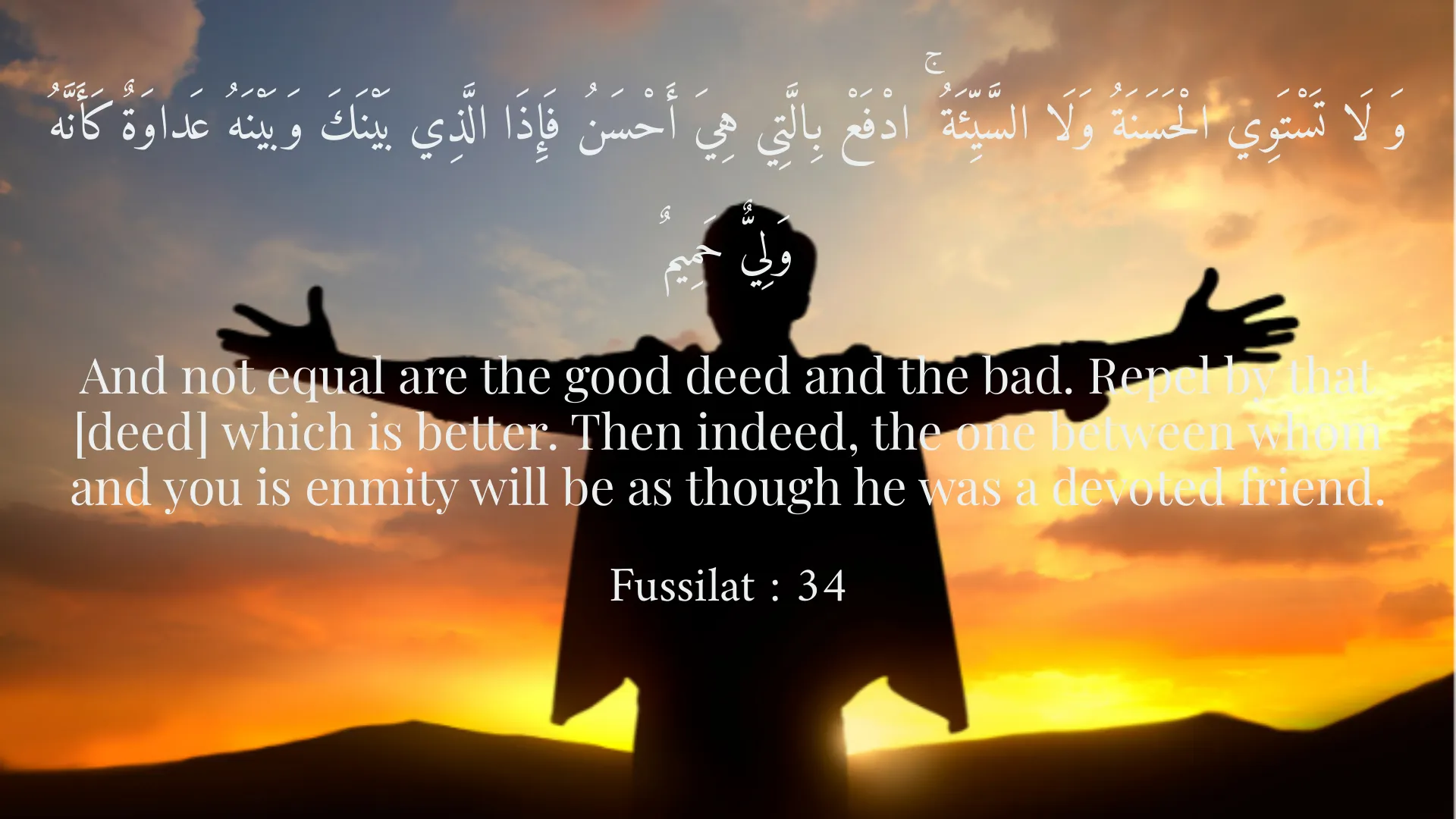
In the Holy Quran, the significance of ethical behavior is intricately interwoven into the fabric of interpersonal relationships, highlighting the paramount importance of how individuals ought to conduct themselves, particularly in their dealings with others, including adversaries. This theme echoes throughout various verses that advocate for good conduct, the value of forgiveness, and the necessity of patience, even when faced with hostility. The Quran calls upon believers to rise above base instincts and retaliatory behaviors, emphasizing that one's character can have a profound impact on the dynamics of human relationships. A quintessential example of this teaching can be found in Surah Fussilat, verse 34, which states: "And not equal are the good deed and the bad. Repel by that [deed] which is better. Then indeed, the one between whom and you is enmity will be as though he was a devoted friend." This verse poignantly encapsulates the transformational power of responding to negativity with positivity. It suggests that through kind and ethical actions, it is possible to alter the perception and behavior of those who might harbor animosity. The approach advocated here transcends mere passive forgiveness—it challenges individuals to actively engage in good deeds as a means of reshaping relationships and building bridges, rather than walls. The moral underpinning of such teachings is not merely for the sake of social harmony; it serves to cultivate a community atmosphere rooted in mutual support, love, and understanding. When individuals adhere to these principles, they contribute to a more benevolent society where compassion reigns over conflict. A community that holds fast to these teachings can foster environments that not only tolerate differences but celebrate them, thereby enriching the social fabric of humanity. Moreover, the Quran provides further insight into the ethical interactions that leaders, particularly those in positions of authority, ought to maintain. Surah Al-Imran, verse 159, narrates an important aspect of the character of the Prophet Muhammad (PBUH): "So by mercy from Allah, [O Muhammad], you were lenient with them. And if you had been rude in speech and harsh in heart, they would have disbanded from about you." This verse underscores the critical role of compassion and tact in leadership. It illustrates how gentleness in communication and an understanding heart can unite people rather than push them apart. The Prophet's embodying of these virtues serves as a timeless model for effective leadership, particularly in challenging circumstances where it would be easy to resort to harshness or aggression. What this signifies for followers of Islam, and indeed for all individuals striving for ethical living, is the imperative to engage with one another from a place of love and understanding. Negative emotions, while natural, must not dictate one’s actions. Instead, faith encourages overcoming such feelings through ethical engagement. This concept is particularly important in today's world, where division and hostility often seem prevalent. The practical application of these teachings can take many forms in daily life. One could start by practicing patience in moments of provocation. Rather than replying with anger or disdain, individuals can choose to respond with understanding. This not only diffuses potential conflict but also models the behavior one wishes to see in others. Additionally, seeking common ground is a powerful way to advance ethical engagements. By understanding that every individual has their unique experiences and fears, it becomes much easier to empathize with adversaries and, in turn, to foster kindness towards them. Witnessing the effects of ethical behavior can inspire change at a broader level within communities. Acts of kindness, however small, can generate ripples that extend far beyond the initial interaction. For instance, engaging in community service or participating in dialogues aimed at resolving conflicts can sow seeds of harmony where discord once thrived. Communities that prioritize ethical behavior in their collective interactions can create legacies of peace and understanding that endure across generations. Beyond interpersonal relationships, this emphasis on ethics also extends to broader societal norms and governance. Leaders who model ethical behavior lay down frameworks for societal conduct that prioritize justice, compassion, and inclusivity. In nations or communities that embrace these principles in the public sphere, the outcome is often a more equitable and harmonious society. Conversely, when those in power disregard ethical conduct, widespread discord and unrest are likely to ensue. Thus, the principles laid out in the Quran regarding ethical behavior are not limited to personal interactions but have far-reaching implications for societal health. To conclude, the ethical teachings found in the Holy Quran extend far beyond mere religious instruction; they present a comprehensive framework for living that can fundamentally alter individual lives and society at large. The verses emphasizing good deeds, patience, and compassion toward others reflect a philosophy that, if adhered to, can transform adversaries into allies. As each individual takes responsibility for their actions and interactions, sees the importance of ethical behavior, and chooses kindness over conflict, the potential for uplifting entire communities becomes a pressing reality. The teachings of the Quran serve as a profound reminder that transformative power lies not in our ability to combat negativity with more negativity but in our commitment to ethical behavior that reflects kindness, understanding, and steadfastness, even when faced with challenges.
Related Verses
وَ لَا تَسْتَوِي الْحَسَنَةُ وَلَا السَّيِّئَةُ ۚ ادْفَعْ بِالَّتِي هِيَ أَحْسَنُ فَإِذَا الَّذِي بَيْنَكَ وَبَيْنَهُ عَداوَةٌ كَأَنَّهُ وَلِيٌّ حَمِيمٌ
And not equal are the good deed and the bad. Repel by that [deed] which is better. Then indeed, the one between whom and you is enmity will be as though he was a devoted friend.
Fussilat : 34
فَبِمَا رَحْمَةٍ مِّنَ اللَّهِ لِنْتَ لَهُمُ ۖ وَ لَو كُنتَ فَظًّا غَلِيظَ الْقَلْبِ لَانْفَضُّوا مِنْ حَوْلِكَ
So by mercy from Allah, [O Muhammad], you were lenient with them. And if you had been rude in speech and harsh in heart, they would have disbanded from about you.
Al-Imran : 159
Short Story
One day, a man told his teacher: 'I want to hold a grudge against my neighbor who always treats me badly.' The teacher replied, 'Why not treat him kindly? Perhaps your kindness will soften his heart, and your relationship will improve.' After some time, the man decided to act kindly, and he found that his neighbor gradually turned into a friend.