Quranic Answer
The significance of good character and kind treatment of others is a theme that resonates deeply within the pages of the Holy Quran. These attributes are not merely supplementary virtues but rather essential moral principles that form the bedrock of a harmonious society. In numerous verses, the Quran emphasizes the importance of kindness, compassion, and good character, showcasing how these attributes facilitate stronger interpersonal relationships and create a more peaceful community. This article delves into the Quranic teachings on good character and its profound impact on society, drawing insights from specific verses, historical examples, and contemporary relevance. One of the most remarkable illustrations of kindness in the Quran can be found in Surah Al-Imran, verse 159, where Allah advises the Prophet Muhammad: 'And it is by the mercy of Allah that you were lenient with them. And if you had been rude in speech and harsh in heart, they would have disbanded from about you.' This verse serves as a powerful reminder that the character of an individual, particularly a leader, plays a pivotal role in influencing the behavior of others. In this context, the Prophet is advised on the importance of kindness and leniency, which are far more effective in attracting and uniting people than rudeness and harshness. This lesson can be extrapolated to our lives today. In an era marked by increasing division and polarization, the Quran's call for kindness resonates more than ever. When individuals approach each other with compassion and understanding, they create an inviting environment where dialogue and connection can flourish. Conversely, when individuals engage in harshness, they not only alienate others but also sow the seeds of discord and conflict. The Quran thus implicitly encourages individuals, especially those in positions of authority, to adopt a demeanor that is welcoming and compassionate. Moreover, in Surah Fussilat, verse 34, Allah states: 'And not equal are the good deed and the bad. Repel by that [deed] which is better.' This verse captures the essence of how responses to negativity should be guided by positive actions. By advocating for the repulsion of negativity with goodness, the Quran promotes a model of interaction that emphasizes integrity and virtue over hostility and retaliation. The idea here is that when individuals respond to wrongdoing with good deeds, they not only diminish hostility but also encourage a culture of respect and goodwill. Historically, the life of the Prophet Muhammad exemplifies these teachings in action. His dealings with people from various backgrounds, including adversaries, were marked by kindness, patience, and understanding. For instance, even when faced with hostility, he demonstrated remarkable forbearance. Instead of retaliating with anger, he chose to respond with compassion, which gradually transformed adversaries into allies. This transformation is not only a testament to the power of good character but also serves as a blueprint for us today: our interactions should be rooted in empathy, regardless of circumstances. The impact of good character extends far beyond personal relationships; it plays a fundamental role in societal cohesion. A community characterized by kindness and mutual respect is more likely to foster trust and collaboration among its members. When individuals treat each other with dignity, it builds a sense of belonging and encourages individuals to work toward common goals. This is particularly crucial in diverse communities where differing backgrounds and beliefs could lead to misunderstandings and conflict. Promoting good character and kindness helps bridge these divides, fostering an environment of inclusivity and unity. In the contemporary world, where social media often amplifies negativity and hostility, the Quran's message of good character and kindness serves as a vital counter-narrative. In digital interactions, it is easy for individuals to mask their identities behind screens, often leading to the spread of vitriol and unkind discourse. However, the principles laid out in the Quran remind us of our obligation to treat others with kindness, irrespective of the medium of communication. Upholding good character online can counteract the prevailing negativity and set a positive example for others. Furthermore, the attraction to faith and spirituality is profoundly influenced by one’s character. As people witness the genuine kindness of a believer, they become more open and inclined to explore the beliefs and values that person represents. In Surah Al-Imran, the verse not only imparts a message about character but also illustrates how the influence of goodness can lead others towards seeking faith. This highlights the essential role that individuals play as ambassadors of their faith through their actions and ethics. Ultimately, good character is a fundamental aspect of what it means to be a true believer. The Quran teaches that the manifestation of faith is not merely in ritual practice but in the day-to-day treatment of others. Each act of kindness, no matter how small, contributes to building an empathetic community that reflects the teachings of the Quran. When individuals embody the principles of kindness and respect, they create a ripple effect, fostering an atmosphere where values such as love, peace, and understanding can thrive. In conclusion, the teachings of the Quran on good character and kind treatment of others hold immense significance for individuals and society as a whole. Verses such as those found in Surah Al-Imran and Surah Fussilat underline the power of kindness to attract and unite people, the importance of responding to negativity with goodness, and the role of good character in fostering peaceful communities. As modern individuals navigating a complex world, embodying these principles can help us forge stronger bonds, promote social harmony, and pave the way for a more compassionate society. By treating others with kindness, we not only fulfill a profound moral obligation but also contribute to the overarching goal of building an empathetic and united community.
Related Verses
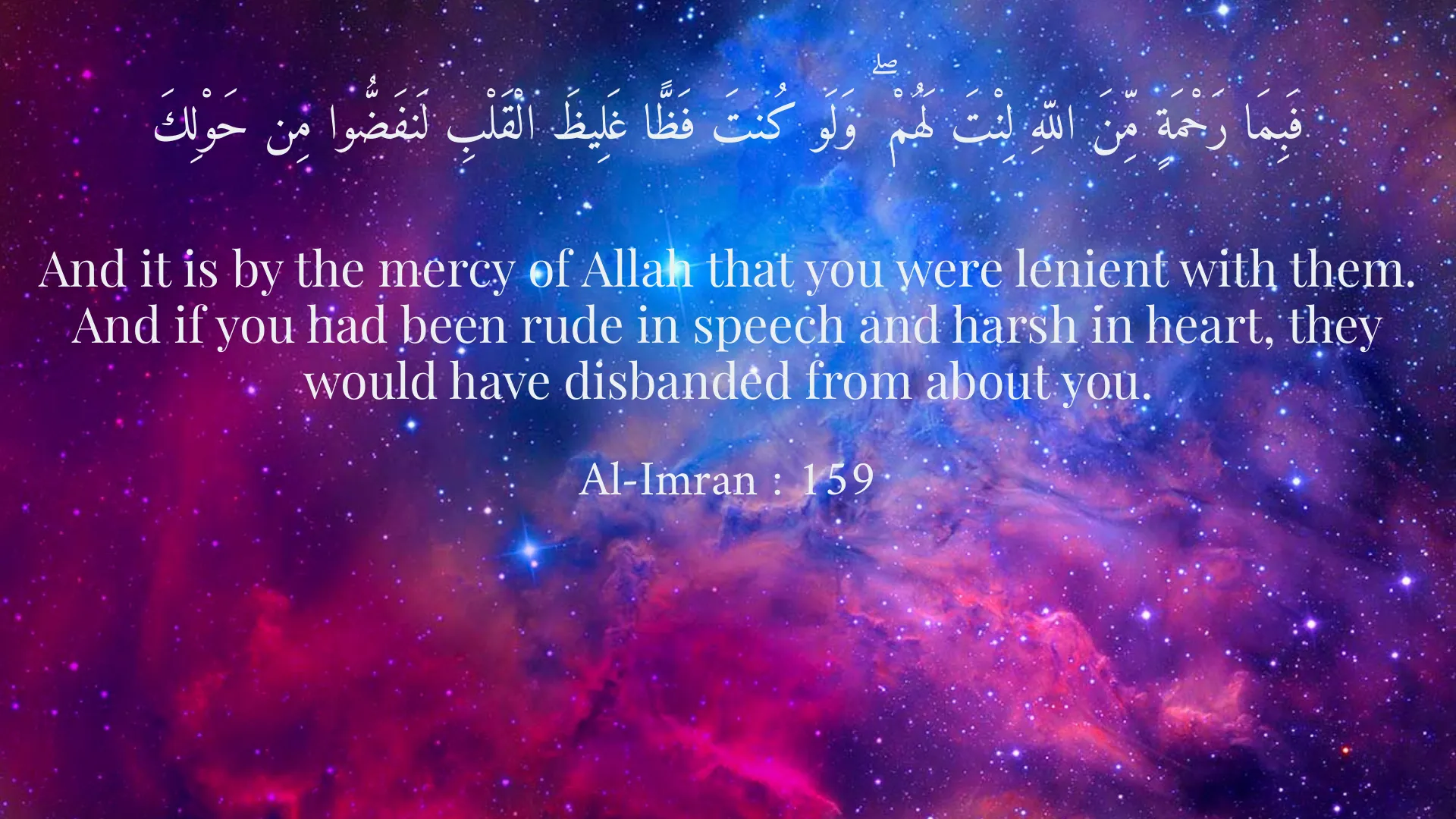
فَبِمَا رَحْمَةٍ مِّنَ اللّهِ لِنْتَ لَهُمْ ۖ وَلَو كُنتَ فَظًّا غَلِيظَ الْقَلْبِ لَنفَضُّوا مِن حَوْلِكَ
And it is by the mercy of Allah that you were lenient with them. And if you had been rude in speech and harsh in heart, they would have disbanded from about you.
Al-Imran : 159
وَلاَ تَسْتَوِى الْحَسَنَةُ وَلَا السَّيِّئَةُ ۚ إِدْفَعْ بِالَّتِى هِىَ أَحْسَنُ
And not equal are the good deed and the bad. Repel by that [deed] which is better.
Fussilat : 34
Short Story
One day, a man named Hassan decided to treat his neighbor, who always behaved badly towards him, with good character. He greeted him with good mornings and showed kindness in their conversations. After a while, his neighbor noticed Hassan's change in behavior and gradually stopped being mean. This story shows that good character can change hearts and create a friendlier community.