Quranic Answer
In the Holy Quran, the approach of kindness and wishing well for others is clearly articulated, offering a profound insight into the ethical dimensions of interpersonal relationships. This guiding principle reflects not only a moral obligation but also a foundational aspect of the faith itself. The Quran, revered as the ultimate source of divine guidance, addresses the way believers ought to conduct themselves towards others, promoting societal harmony, mutual support, and a collective pursuit of goodness. One of the most noteworthy instances that emphasize this teaching can be found in Surah Al-Imran, verse 104, where Allah commands the believers to promote goodness beyond their self-interests. The verse states: 'And let there be [arising] from you a nation inviting to all that is good and enjoining what is right and forbidding what is wrong. And those will be the successful.' (Al-Imran 104). This powerful command invites individuals to cultivate a community that extends beyond mere personal aspirations to a collective endeavor aimed at goodness and virtue. The essence of this directive lies in the concept of community. In Islam, the interconnectedness of society is fundamental—believers are encouraged to be actively engaged in improving not only their own lives but also the lives of those around them. The call to 'invite to all that is good’ suggests an active role for individuals, pushing them to become advocates of positivity and agents of change. Social responsibility emerges as a key component of faith, with success being not just personal achievement but the flourishing of a compassionate society where individuals look after one another. Moreover, the subsequent part of the verse where it admonishes believers to 'enjoin what is right and forbid what is wrong' highlights a balanced approach towards societal conduct. It is an appeal for moral vigilance, reminding individuals that their role within the community includes guiding others toward ethical behavior while also holding themselves accountable to the same standards. The imperative to correct wrongdoing is rooted in the belief that a morally upright community leads to collective success, thereby aligning personal welfare with communal integrity. Another significant verse that reinforces this theme is found in Surah Al-Ma'idah, verse 32, which states: 'Because of that, We decreed upon the Children of Israel that whoever kills a soul unless for a soul or for corruption [done] in the land - it is as if he had slain mankind entirely.' (Al-Ma’idah 32). This potent assertion underscores the immense value of human life and the catastrophic consequences of violence. The Quranic perspective here transcends mere legal ramifications; it articulates a moral vision where the sanctity of life is paramount, and to harm one is to harm all. The weight of this teaching is profound; it calls for believers to consciously protect and cherish human life, suggesting that every act of kindness, compassion, and mercy contributes to the greater good of humanity. Such emphasis on the preservation of life reinforces the idea that wishing well for others is not merely a commendable act but an intrinsic part of one's faith and duty as a Muslim. Each person is viewed as valuable and essential to the tapestry of humanity, thus encouraging a mindset that promotes peace, love, and solidarity. Lastly, in Surah Adh-Dhariyat, verse 56, Quran states: 'And I did not create the jinn and mankind except to worship Me.' (Adh-Dhariyat 56). This verse underscores not only the spiritual purpose of existence but also hints at the deep-rooted responsibilities individuals have toward one another. Worship in Islam extends beyond ritualistic practices; it encompasses principles of justice, kindness, and mutual respect. By fulfilling our duties towards one another, believers embody their servitude to Allah, creating an environment where goodwill flourishes and society prospers. In summary, the teachings of the Quran on kindness and goodwill towards others form a robust framework for living a life steeped in compassion, responsibility, and community engagement. The verses discussed compel believers to work collaboratively towards a more just and wholesome society, reminding them that their actions have far-reaching implications for their communities. Every act of kindness, every instance of promoting good, contributes to a legacy of compassion that defines one's character and faith. As followers of Islam strive for personal piety, they are equally called to reflect upon their interactions with others, recognizing that true success lies in the health and wellbeing of their communities. Thus, wishing well for others transcends being a simple moral duty; it is inextricably linked to the essence of one's faith and the understanding of a life spent in service of not only oneself but also the collective good of humanity. This perspective shapes the ethos of a believer, encouraging a life marked by altruism and a positive impact on the world around us.
Related Verses
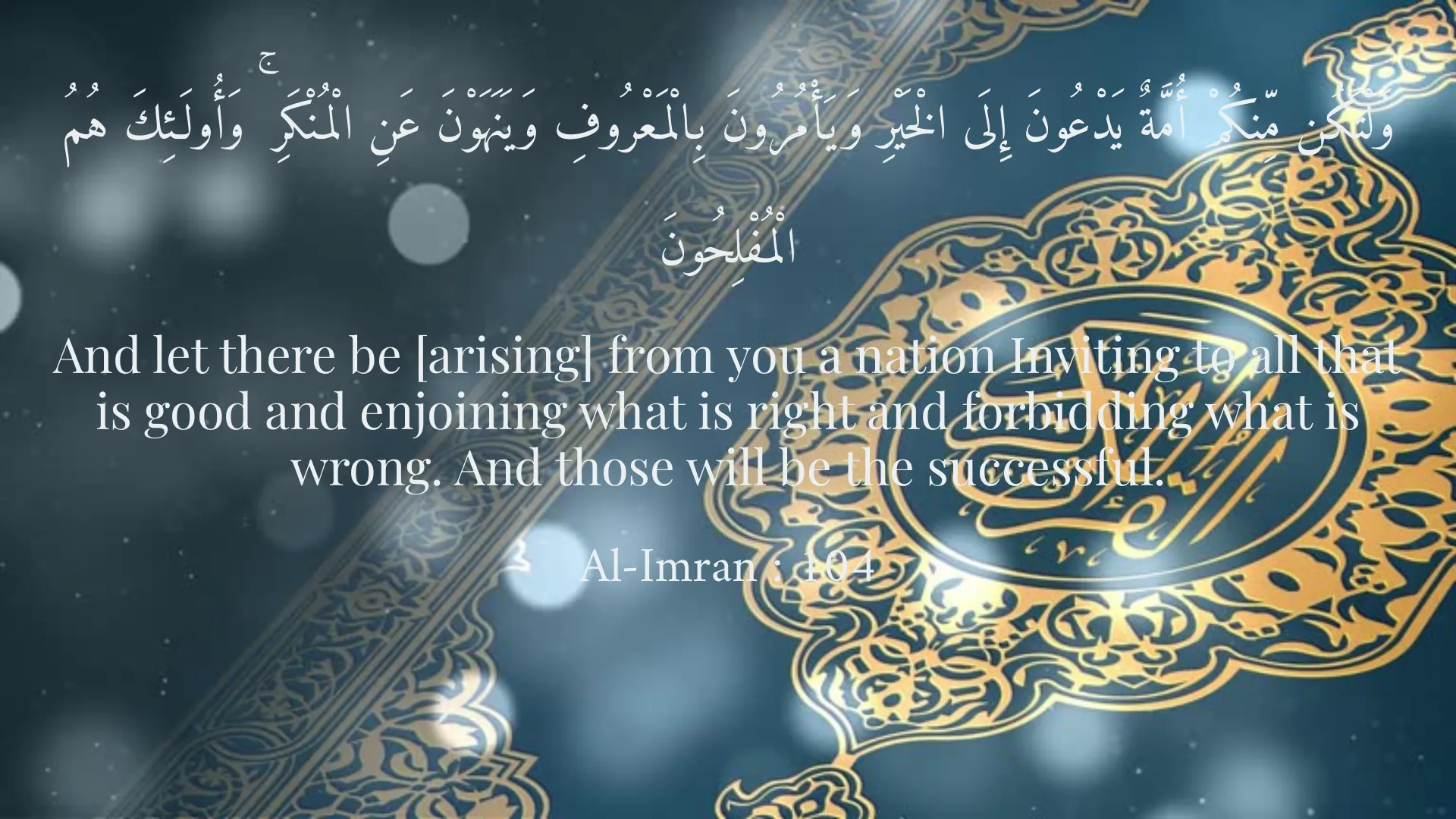
وَلْتَكُن مِّنكُمْ أُمَّةٌ يَدْعُونَ إِلَى الْخَيْرِ وَيَأْمُرُونَ بِالْمَعْرُوفِ وَيَنَهَوْنَ عَنِ الْمُنْكَرِ ۚ وَأُولَـئِكَ هُمُ الْمُفْلِحُونَ
And let there be [arising] from you a nation Inviting to all that is good and enjoining what is right and forbidding what is wrong. And those will be the successful.
Al-Imran : 104
مَن قَتَلَ نَفْسًا بِغَيْرِ نَفْسٍ أَوْ فَسَادٍ فِي الْأَرْضِ فَكَأَنَّمَا قَتَلَ النَّاسَ جَمِيعًا
Because of that, We decreed upon the Children of Israel that whoever kills a soul unless for a soul or for corruption done in the land - it is as if he had slain mankind entirely.
Al-Ma'idah : 32
وَمَا خَلَقْتُ الْجِنَّ وَالإِنسَ إِلَّا لِيَعْبُدُونِ
And I did not create the jinn and mankind except to worship Me.
Adh-Dhariyat : 56
Short Story
One day in a small village, there was a man named Hasan. He would help the villagers every day and was always thinking about how he could bring goodness to others. One day, his kindness reached the ears of a wise man, and he said to Hasan, 'Brother, the one who wishes well for others places himself in the mercy of God.' This statement resonated deeply with Hasan, inspiring him to always walk on the path of goodness.