Quranic Answer
Backbiting, also known as 'ghibah' in Arabic, is a profound social issue that is explicitly condemned in the Islamic faith and is regarded as one of the major sins. The significance of this transgression is underscored in the Holy Quran, where Allah provides guidance for believers to foster a respectful and loving community. The act of speaking ill of others, in any form, creates ripples of negativity that can disrupt the harmonious symphony of human interactions. Backbiting is not merely a trivial act of gossip; it carries far-reaching consequences, and its prohibition is a reflection of the moral and ethical values intrinsic to the Islamic way of life. In Surah Al-Hujurat, verse 12, Allah implores the believers to 'avoid much [negative] assumption' while categorically warning against the evils of spying and backbiting. The analogy presented here is striking – Allah questions believers, asking if they would like to consume their deceased brother's flesh, establishing a vivid imagery that conveys the abhorrence of backbiting. This rhetorical question serves as an effective reminder of the severity of this sin. It emphasizes that speaking maliciously about another person, especially in their absence, dehumanizes them and harms the sanctity of interpersonal relationships. The consequences of backbiting extend far beyond the immediate act itself. Firstly, it breeds mistrust among individuals, leading to a breakdown in communication and connection. When a community is riddled with rumors and negative assumptions, it creates an environment of suspicion and fear rather than trust and compassion. Conflict and discord arise, fracturing relationships and creating divisions that are often difficult to mend. The Quran's repeated emphasis on the impacts of backbiting serves as a cautionary tale for communities, urging believers to value and protect their relationships rather than destroy them through careless words. In addition to its social ramifications, backbiting also introduces a layer of spiritual pollution. According to Islamic teachings, engaging in backbiting corrupts one’s inner character. It diverts the individual from the path of righteousness and purity, leading them further into a cycle of sin and wrongdoing. The internal repercussions of backbiting can manifest as feelings of guilt, shame, and an awareness of moral decay. Over time, this can result in a distance from one’s values and beliefs, leading to possible alienation from the community and from God. Surah Al-Isra, verse 36, underscores another layer of this prohibition by cautioning believers against discussing matters about which they have no knowledge. This highlights the importance of information integrity and the necessity of verifying facts before sharing them. Falsehood and misinformation can proliferate through backbiting, leading to misguided beliefs and actions among individuals. The Quran serves as a guide to the importance of critical thinking and verifying information before allowing it to impact one’s perceptions and actions towards others. Moreover, the implications of backbiting can hinder the growth of goodwill and harmony in any collective setting. In a thriving community, individuals rely on one another to uphold values of respect, empathy, and support. When backbiting infiltrates the fabric of these relationships, it weakens the bonds that hold society together. Trust erodes and negativity circulates, making it exceedingly difficult to nurture a positive and uplifting community environment. The collective energy beings sapped, resulting in disillusionment and discontent among its members. Islamic teachings also highlight that ignoring such misconduct does not merely impact the individual offender but also resonates through the larger community. The failure to address backbiting encourages a culture of silence, where individuals feel compelled to turn a blind eye to destructive behavior. This can stifle healthy discussions and grievances, making room for resentment and deeper societal issues. In contrast, confronting backbiting with education, empathy, and clarity fosters an environment where individuals can learn and grow from one another, ultimately reinforcing stronger relationships and community ties. Through these teachings, it becomes evident that every wrongful act, such as backbiting, ensnares individuals in a broader web of sins and transgressions. Not only does it have direct consequences on interpersonal relationships, but it also entraps the individual in a cycle of moral decay from which they may struggle to emerge. Recognizing the gravity of backbiting is crucial in today’s world, where the art of communication has evolved drastically with the rise of social media and digital platforms. In conclusion, backbiting is a social sin deeply condemned within Islam, as it disrupts the sanctity of human relationships and integrity. The Quran serves as a powerful reminder against this vice, elucidating its destructive potential both on an individual and community level. It is essential for believers to heed these warnings and actively work towards fostering a community built on respect, trust, and understanding. By cultivating an environment free from backbiting, individuals can contribute to a thriving society that uplifts its members, maintaining a strong bond of brotherhood and sisterhood in faith and humanity. Ultimately, the teachings against backbiting can guide us towards a more compassionate and unified world, where love prevails over negativity, and individuals flourish together.
Related Verses
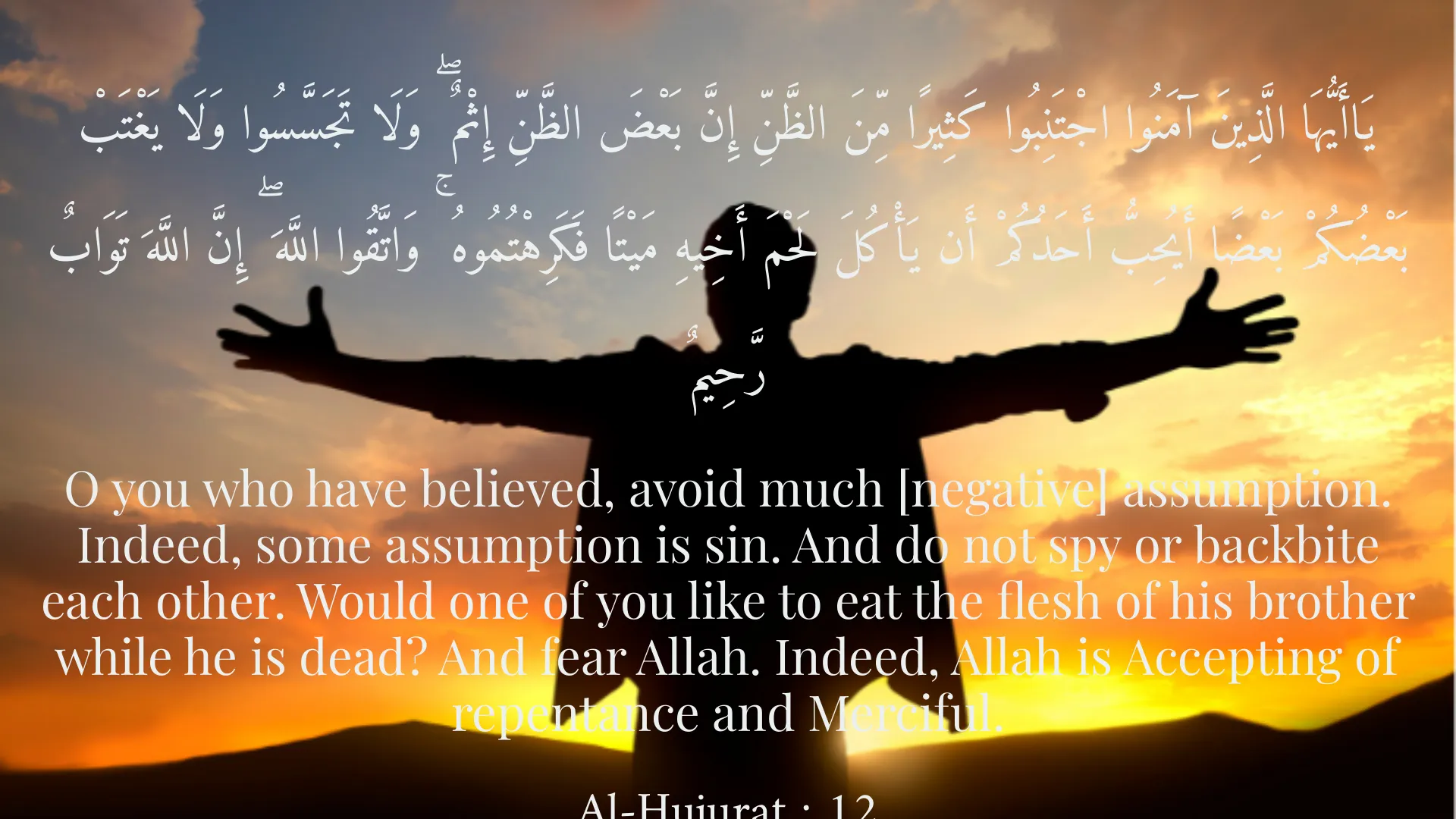
يَاأَيُّهَا الَّذِينَ آمَنُوا اجْتَنِبُوا كَثِيرًا مِّنَ الظَّنِّ إِنَّ بَعْضَ الظَّنِّ إِثْمٌ ۖ وَلَا تَجَسَّسُوا وَلَا يَغْتَبْ بَعْضُكُمْ بَعْضًا أَيُحِبُّ أَحَدُكُمْ أَن يَأْكُلَ لَحْمَ أَخِيهِ مَيْتًا فَكَرِهْتُمُوهُ ۚ وَاتَّقُوا اللَّهَ ۖ إِنَّ اللَّهَ تَوَابٌ رَّحِيمٌ
O you who have believed, avoid much [negative] assumption. Indeed, some assumption is sin. And do not spy or backbite each other. Would one of you like to eat the flesh of his brother while he is dead? And fear Allah. Indeed, Allah is Accepting of repentance and Merciful.
Al-Hujurat : 12
وَلَا تَقْفُ مَا لَيْسَ لَكَ بِهِ عِلْمٌ ۚ إِنَّ السَّمْعَ وَالْبَصَرَ وَالفُؤَادَ كُلُّ أُولَـٰئِكَ كَانَ عَنْهُ مَسْؤُولًا
And do not pursue that of which you have no knowledge. Indeed, the hearing, the sight, and the heart - about all those [one] will be questioned.
Al-Isra : 36
Short Story
Once upon a time, a young man named Amir wanted to spend his time chatting with friends, often engaging in backbiting about others. He recalled the verses of the Quran and realized that every time he engaged in backbiting, his spirit became tainted and his friends started distancing themselves from him. Ultimately, he decided to stop this behavior and focus more on good deeds. With this change in attitude, not only did his friends return to him, but he also felt better and his life became filled with joy and peace.