Quranic Answer
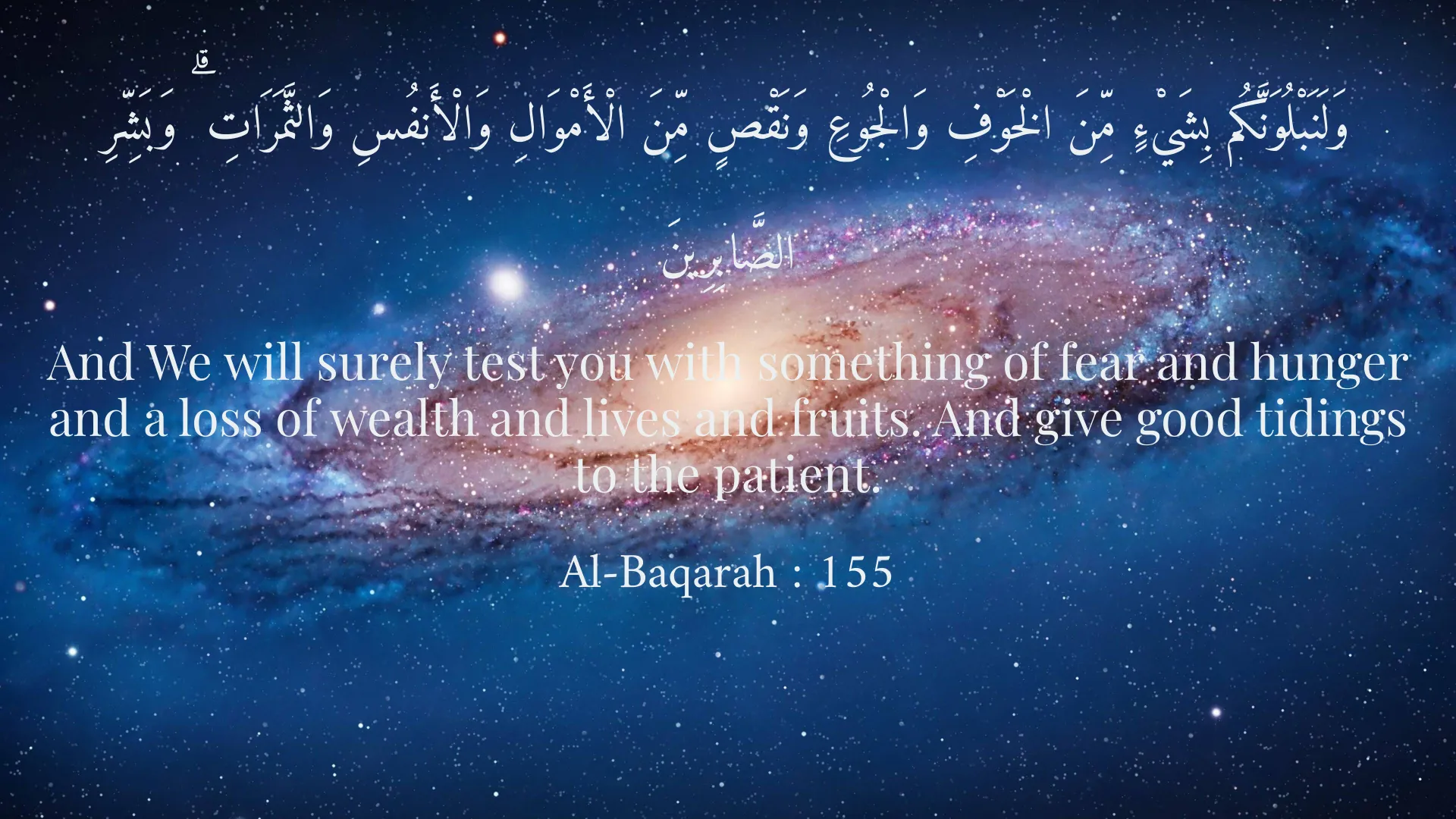
In the Holy Quran, the concept of divine tests and trials is presented with profound significance, serving various purposes that contribute to the spiritual development of believers. These challenges are not merely random occurrences or punishments from a higher power; rather, they are intricate components of a divine plan designed to hold a mirror to the inner faith, patience, and resilience of those who believe. The Quran illustrates this concept beautifully through its verses, particularly in Surah Al-Baqarah and Surah Aal-e-Imran, where it emphasizes that tests play a crucial role in the journey of a believer's faith. In Surah Al-Baqarah, verse 155 states: "And We will surely test you with something of fear and hunger and a loss of wealth and lives and fruits." This declaration by Allah very clearly outlines the reality of life as a series of tests and challenges. Rather than being a source of despair, these trials are meant to build character, strengthen one's willpower, and cultivate spiritual growth. The hardships specified in this verse—fear, hunger, loss—are universal experiences that resonate with the human condition. They remind believers that experiencing adversity is part of life and that it is through these challenges that a deeper connection with Allah can be forged. The verse emphasizes the inevitability of tests in a believer's life, and underscores the purpose behind these divine challenges. Struggles are not meant to break the believer but to mold them into a person who is resilient, steadfast, and deeply faithful. This perspective shifts the narrative from viewing tests as punitive measures to understanding them as opportunities for personal and spiritual development. Furthermore, in Surah Aal-e-Imran, verse 186, Allah provides further insight by stating: "You will surely hear from those who were given the Scripture before you and from those who associate others with Allah much abuse." This verse highlights that facing hardship and adversity is a common thread throughout history for all believers. Those who have come before have endured trials, and their stories are woven into the fabric of faith itself. It is a reminder that the path of belief and devotion is often fraught with challenges. Believers are called upon to navigate the difficulties with patience and perseverance. The Quran encourages resilience in the face of adversity. Instead of succumbing to despair or frustration when encountering life's trials, believers are urged to hold steadfast to their faith, understanding that these trials are part of their spiritual journey. They become transformative experiences that refine their character, deepen their wisdom, and bring them closer to Allah. Moreover, the Quran reassures believers through its teachings. The verse from Surah Al-Inshirah elucidates the balance of hardship and ease: "Indeed, with hardship comes ease" (Surah Al-Inshirah, verse 6). This powerful statement encapsulates the essence of divine tests; it suggests that while hardship is a reality, it is accompanied by relief and ease. This beautiful pairing serves as a source of hope and motivation for those enduring trials, fostering a belief that challenges have an endpoint and are ultimately part of a larger divine wisdom. The cyclical nature of hardship leading to ease is a fundamental principle that many believers carry as they traverse through their tests. The acknowledgment that after every storm there is calm, instills in them the strength to persevere through life's trials, no matter how severe they might seem at the moment. By retaining a perspective enriched in faith and patience, believers can transform their trials into stepping stones towards spiritual elevation. To emphasize the relationship between divine tests and personal growth, it's vital to observe how experiences of hardship often catalyze profound self-discovery and transformation. Through trials, individuals often develop attributes such as empathy, humility, and understanding. They come to appreciate the values of gratitude, contentment, and reliance on Allah, which significantly enrich their lives and their relationships with others. Additionally, divine tests serve as a reminder of Allah’s omniscience and omnipotence. Believers can find solace in knowing that Allah is fully aware of their struggles and that no trial is placed upon them without purpose. This acknowledgment becomes a source of strength, reinforcing their faith and encouraging them to seek closeness to Allah through prayer and reflection during times of adversity. In these moments, it is often through prayers and supplication that believers sustain themselves. Turning to Allah in times of testing is a common practice that allows believers to express their vulnerabilities and seek guidance. This act not only fosters a stronger relationship with the Creator but also serves as a powerful reminder of their reliance on divine wisdom, thus shaping their humility and faith. Furthermore, community support plays a vital role in overcoming these tests. The shared experiences of believers can offer strength and encouragement in navigating trials. Engaging in communal prayers, seeking advice, and lending support to one another reinforces the concept of collective resilience in faith. Each believer, through their own trials, can draw upon the strength of their community, fostering an environment where shared growth is possible. In conclusion, the Holy Quran presents divine tests and trials as essential components of a believer’s journey. They are designed not to serve as forms of punishment, but to act as catalysts for spiritual growth and character development. The teachings within Quranic verses offer profound insights into navigating these challenges with patience and perseverance. Believers are encouraged to view hardships through a lens of hope, understanding that every challenge faced is accompanied by ease and opportunity for growth. Ultimately, divine tests not only shape the believer’s character but also enhance their connection with Allah. Through trials, believers learn to embrace patience, cultivate resilience, and maintain faith in the face of adversity. The essence of these teachings is to remind believers that they are never alone in their trials; Allah’s wisdom and support are ever-present, guiding them towards spiritual elevation and deeper faith.
Related Verses
وَلَنَبْلُوَنَّكُم بِشَيْءٍ مِّنَ الْخَوْفِ وَالْجُوعِ وَنَقْصٍ مِّنَ الْأَمْوَالِ وَالْأَنفُسِ وَالثَّمَرَاتِ ۗ وَبَشِّرِ الصَّابِرِينَ
And We will surely test you with something of fear and hunger and a loss of wealth and lives and fruits. And give good tidings to the patient.
Al-Baqarah : 155
لَتَسْمَعُنَّ مِنَ الَّذِينَ أُوتُوا الْكِتَابَ مِن قَبْلِكُمْ وَمِنَ الَّذِينَ أَشْرَكُوا أَذًى كَثِيرًا ۖ وَإِن تَصْبِرُوا وَتَتَّقُوا فَإِنَّ ذَٰلِكَ مِنْ عَزْمِ الْأُمُورِ
You will surely hear from those who were given the Scripture before you and from those who associate others with Allah much abuse. But if you remain patient and conscious of Allah - that is the greatest of [determined] matters.
Aal-e-Imran : 186
فَإِنَّ مَعَ الْعُسْرِ يُسْرًا
Indeed, with hardship comes ease.
Al-Inshirah : 6
Short Story
One day, a young man named Ahmad remembered the verses of the Quran and began to contemplate the hardships he faced in life. He realized that all the challenges had actually been opportunities for his growth and that he should keep patience and gratitude in his heart. Ahmad decided to focus more on prayer and connecting with God, and as a result, he experienced more peace and happiness in his life.