Quranic Answer
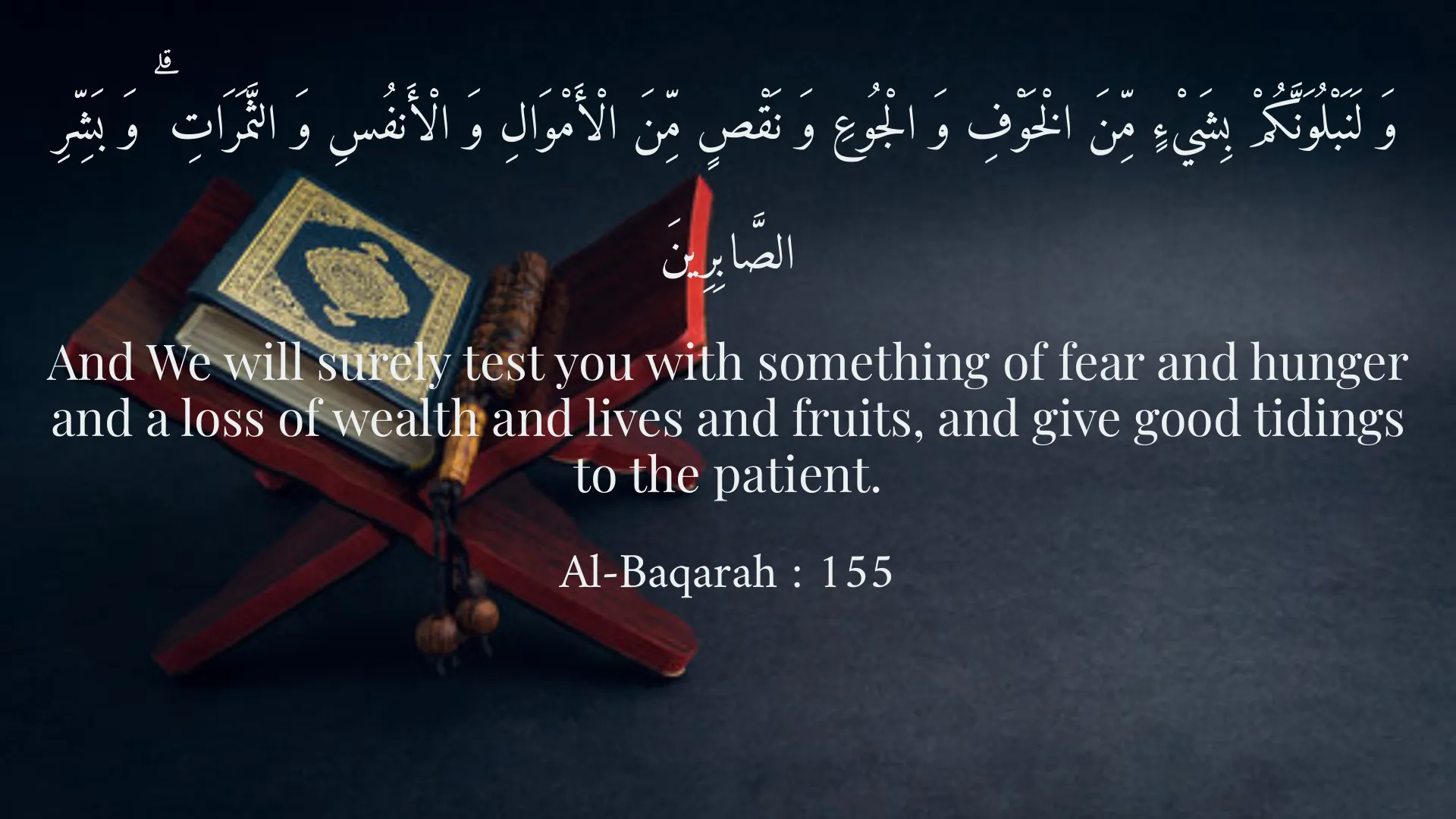
The concept of tests and trials in human existence is a profound theme embedded in the teachings of the Holy Quran. Throughout the Quran, it is emphasized that every individual will face various challenges during their lifetime. These tests are not random or meaningless; rather, they serve as crucial instruments for personal growth and spiritual development. The idea is articulated in Surah Al-Baqarah (Chapter 2, Verse 155), where Allah acknowledges this reality by stating: 'And We will surely test you with something of fear and hunger and a loss of wealth and lives and fruits, and give good tidings to the patient.' Here, it is clear that these trials can take on multiple forms – from fears and anxieties to the loss of material possessions and loved ones. Each of these challenges is designed to cultivate resilience, patience, and a profound connection with the Divine. The notion that life’s difficulties are part of a divine plan is pivotal. It fosters a sense of purpose and understanding in the face of adversity. The verse from Al-Baqarah not only recognizes the inevitability of tests but also offers reassurance that there is a reward for those who remain steadfast and patient. The act of enduring hardship not only strengthens one's character but also deepens one's faith and trust in God. This waiting and striving amidst trials allow individuals to emerge stronger, with a greater appreciation for both their blessings and their faith. In another poignant verse, Surah Al-Imran (Chapter 3, Verse 186) reiterates this theme: 'You will surely be tested in your properties and your selves.' This declaration underscores the dual nature of testing, which encompasses both the external and internal aspects of human experience. Whether it be financial struggles, health issues, or emotional burdens, all of these facets of life can serve as trials that shape individuals. The Quran does not simply portray tests as negative experiences; rather, it invites believers to view them as opportunities. In the face of trials, there is a call to seek refuge in God, emphasizing the importance of prayer, patience, and perseverance. Such practices not only help individuals navigate through their difficulties but also draw them closer to their Creator. The divine tests serve the dual purpose of being both a challenge and an invitation to strengthen one's spiritual and moral fortitude. This understanding of trials is not unique to Islam, as similar themes are observed in various religious traditions. Many spiritual systems recognize that suffering and hardship can lead to enlightenment and wisdom. Yet, the Quran provides a comprehensive framework for understanding how these challenges can cleanse the soul and enhance one's spiritual journey. The key lies in the attitude and actions of the individual, guided by faith in God. Moreover, patience, or 'sabr' in Arabic, is highlighted as a fundamental virtue that believers are encouraged to foster during periods of difficulty. The Quran consistently reminds its followers of the state of the patient: they are promised reward and mercy from God. In Surah Al-Baqarah, Allah reassures that the patient individuals will prevail and be rewarded: 'And give good tidings to the patient.' Thus, patience is not only a means to endure but also an essential quality that cultivates spiritual maturity and resilience. In the context of a modern world where individuals are often inundated with stress and hardship, the teachings in the Quran serve as a guiding compass. Rather than succumbing to despair when faced with challenges, believers are urged to reflect, pray, and seek solace in the knowledge that hardships are part of the divine testing process. This perspective encourages a long-term view of life, where each test can ultimately contribute to a grander purpose and trajectory toward personal and spiritual development. It is also crucial to recognize that these tests are often interwoven within the social fabric, affecting not only individuals but entire communities. The collective challenges faced by a society can enhance communal bonds, emphasizing solidarity and support among members. In times of societal strife, individuals look to their faith and community for strength, thereby reinforcing the moral fabric of society which is often guided by religious teachings. As believers navigate these tests, the teachings in the Quran remind them of the transient nature of worldly concerns, urging them to anchor their trust in God, who is the ultimate source of support. Understanding that trials can lead to spiritual refinement creates a more resilient approach to life's fluctuations. In conclusion, the presence of tests in life, as articulated in the Quran, is an invitation to embrace difficulties with a constructive mindset. These trials are not merely obstacles, but profound lessons that can lead to spiritual awakening and personal development. The Quran encourages believers to approach challenges with patience and faith, reassuring them that steadfastness during such times is rewarded by God. Thus, tests are an inescapable part of the human experience that fosters not only resilience and strength but also a deeper connection to the divine, turning life’s challenges into opportunities for growth and enlightenment.
Related Verses
وَ لَنَبْلُوَنَّكُمْ بِشَيْءٍ مِّنَ الْخَوْفِ وَ الْجُوعِ وَ نَقْصٍ مِّنَ الْأَمْوَالِ وَ الْأَنفُسِ وَ الثَّمَرَاتِ ۗ وَ بَشِّرِ الصَّابِرِينَ
And We will surely test you with something of fear and hunger and a loss of wealth and lives and fruits, and give good tidings to the patient.
Al-Baqarah : 155
لَتُبْلَوُنَّ فِي أَمْوَالِكُمْ وَ أَنفُسِكُمْ
You will surely be tested in your properties and your selves.
Al-Imran : 186
Short Story
Once upon a time, a young man named Amir faced numerous challenges in his life. He often wondered why these problems arose for him. One day, he recalled the verses of the Quran and realized that life is full of tests and trials. Amir decided to be patient through his struggles and seek help from God. Over time, he not only managed to overcome his challenges but also grew and became a better person.