Quranic Answer
“Are all sufferings a sign of a test?” This profound and fundamental question has always occupied the human mind. Understanding the why and the nature of suffering is one of the keys to peace and insight in life, and the Holy Quran provides a comprehensive and multifaceted answer to this question that goes beyond a simple “yes” or “no.” In other words, the Quran teaches us that sufferings, calamities, and hardships in human life can take various forms and have different purposes; some are certainly divine tests, while others may be the results of human actions or simply part of the ephemeral nature of this world. Suffering as a Divine Test (Ibtila' and Fitnah): A significant portion of the sufferings and hardships that humans experience are referred to in the Quran as “Ibtila'” or “Fitnah,” meaning tests or trials. Allah Almighty explicitly states in numerous verses that human beings will surely be tested to measure their faith, patience, gratitude, and steadfastness in the path of truth. These tests are not due to God’s lack of knowledge, but rather to reveal the true essence of individuals; who has truly believed and who is false in their claim. In Surah Al-Ankabut, verses 2 and 3 clearly state: “Do people think that they will be left alone because they say, 'We believe,' and will not be tested? But We have certainly tested those before them, and Allah will surely make evident those who are truthful, and He will surely make evident the liars.” This verse indicates that testing is an inseparable part of the path of faith, and no one is exempt from it. Divine tests can take various forms. Sometimes they come with “fear, hunger, and a loss of wealth, lives, and fruits,” as stated in Surah Al-Baqarah, verse 155: “And We will surely test you with something of fear and hunger and a loss of wealth and lives and fruits, but give good tidings to the patient.” This verse reminds us that losses and hardships in life are opportunities to demonstrate patience and reliance on God. The purpose of these tests is to purify the soul, strengthen faith, and elevate one's spiritual rank. These sufferings help individuals detach from worldly attachments, achieve self-knowledge, and ultimately draw closer to God. Prophets and divine saints were also not exempt from these tests; the story of Prophet Ayub (Job) (peace be upon him) is a prime example of patience in the face of the most severe sufferings and illnesses, which elevated him to the highest ranks of divine proximity. These trials are opportunities to discover hidden potentials, increase gratitude, and gain a greater understanding of divine blessings after the hardship is lifted. This type of suffering indicates divine favor and care for the servant, as God only tests those for whom He sees the capacity for growth and perfection. Suffering as a Consequence of Actions (Jaza' and 'Iqab): Another aspect of suffering mentioned in the Quran is the consequence of people's own actions and behaviors. In Surah Ar-Rum, verse 41, Allah says: “Corruption has appeared on land and sea by [reason of] what the hands of people have earned, so that He may let them taste part of [the consequence of] what they have done that perhaps they will return [to righteousness].” This verse clearly indicates that many problems, calamities, and disorders in human societies are the direct result of human actions, including oppression, corruption, ingratitude, transgression against the rights of others, and injustice. This type of suffering is an aspect of “punishment” or “recompense” for actions, but even in this case, their ultimate goal is the return of humanity to the right path and repentance. They are a divine wake-up call for people to turn back from their wrong course and move towards righteousness and reform. Furthermore, in Surah An-Nisa, verse 79, we read: “Whatever good befalls you is from Allah, and whatever evil befalls you is from yourself.” This verse emphasizes human responsibility for actions and their consequences. Wrong choices, sins, negligence, and hasty decisions can lead to hardships and problems that, from a Quranic perspective, are the natural reflection and outcome of those very actions. These sufferings are a warning bell for the awakening of conscience and the rectification of one's life path, not merely a test without a precondition. They invite individuals to reflect on past behavior and plan for a better future, and have the potential, through repentance and change of conduct, to turn into an opportunity for growth and purification. Suffering as Part of the Ephemeral Nature of the World: In addition to tests and consequences of actions, some sufferings and hardships are simply part of the nature of this fleeting and mortal world. This world is a temporary abode of trials and passage, not a place of absolute and eternal tranquility. Allah Almighty repeatedly emphasizes in the Quran that this worldly life is a realm of trials, work, and effort, and true perfection and peace are only achieved in the afterlife. Therefore, the existence of diseases, death, losses, old age, and other physical and psychological limitations are part of the natural design of this world. These are not necessarily divine tests in the specific sense, nor are they solely the result of sinful actions; rather, they are unavoidable realities that remind humans that this world is a transitory passage and not an eternal dwelling. This type of suffering leads humanity to reflect on the purpose of creation, the Hereafter, and life after death. They teach humans not to become attached to the glitter of the world and to set their ultimate goal in divine pleasure and attaining eternal bliss. Indeed, the very existence of pain and hardship in this world serves to distinguish it from the Hereafter and to encourage humans to strive for the rewards of the afterlife. Accepting the truth that hardships are an inseparable part of worldly life helps individuals face challenges with greater realism and, instead of complaining and despair, to seek solutions, patience, and reliance on God. Conclusion and Quranic Solutions: Given what has been stated, the answer to the question of whether all sufferings are a sign of a test is “no”; however, many of them are indeed tests, and the others are consequences of actions or part of the nature of this world, each of which can, in some way, be an opportunity for growth and return to God. What is important is how the believer reacts to these sufferings. The Holy Quran offers solutions for dealing with hardships: 1. Patience (Sabr): Patience in the face of calamities is emphasized in numerous verses (e.g., Al-Baqarah 155: “but give good tidings to the patient”). Patience is not merely enduring problems but active resilience and hope for divine relief. 2. Reflection and Learning Lessons: Sufferings should lead humans to ponder divine wisdom and the reasons for their occurrence. 3. Seeking Forgiveness and Repentance (Istighfar and Tawbah): If suffering results from sins, seeking forgiveness and repentance is a way to alleviate it and return to God. 4. Reliance on God (Tawakkul) and Seeking Refuge in Him: In all circumstances, seeking refuge in the absolute power of God and relying on Him is the most comforting solution. 5. Performing Righteous Deeds: Righteous deeds not only help alleviate afflictions but also increase blessings and heavenly rewards. 6. Seeing Wisdom Behind Sufferings: Even in the hardest times, one must have faith that God is All-Wise and All-Knowing, and behind every suffering, there is a hidden good or a veiled lesson. Ultimately, sufferings and hardships, whatever form they take, are an inseparable part of the human journey in this world. The Quran teaches us that these sufferings are tools for purification, awakening, and guiding humanity towards perfection and closeness to God. Understanding these different dimensions of suffering helps us face life's challenges with a deeper perspective and reliance on God, transforming every hardship into a bridge to eternal bliss. This Quranic insight not only provides hope but also leads individuals towards responsibility and effort to improve conditions, both through internal rectification and societal reform.
Related Verses
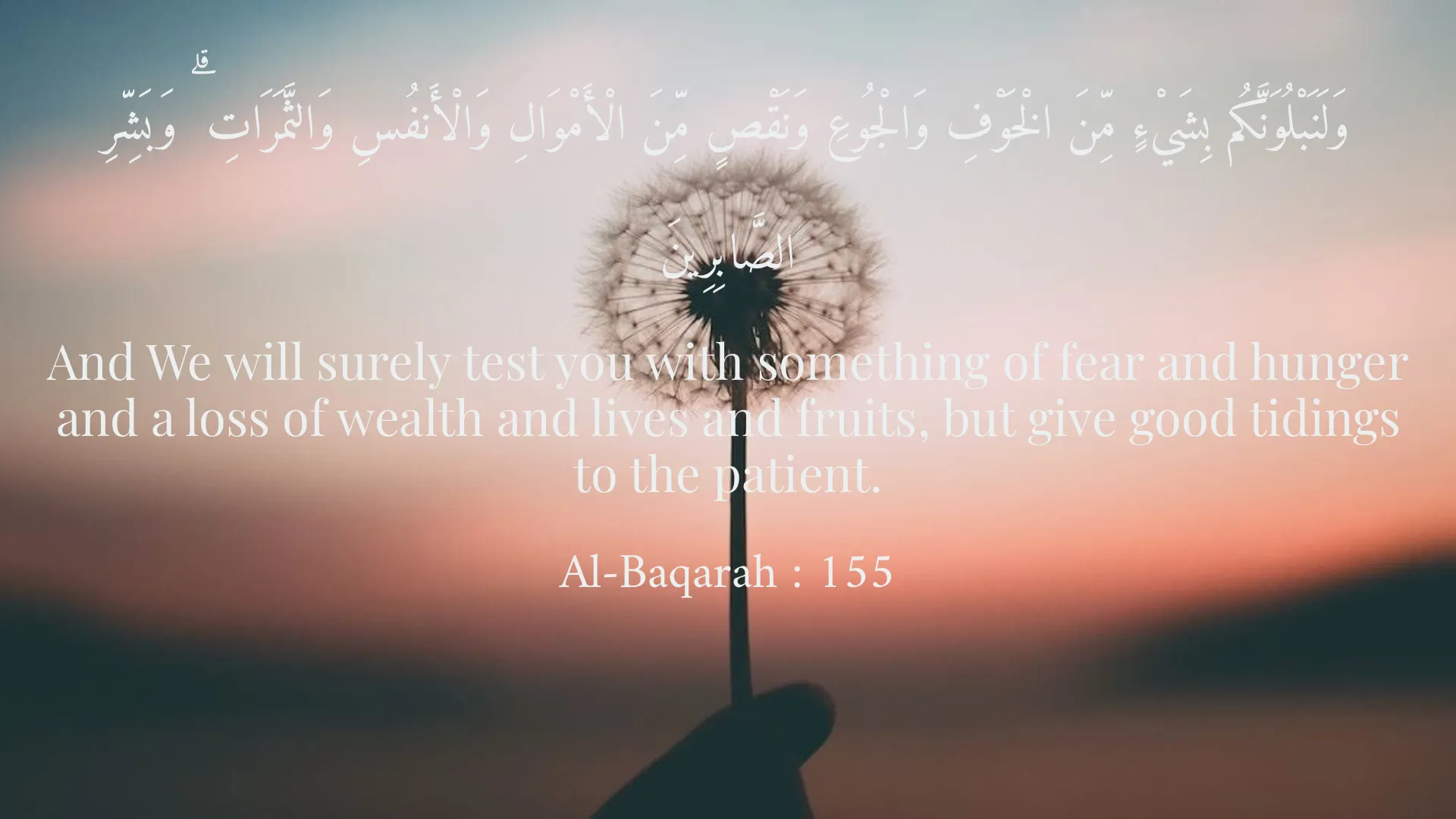
وَلَنَبْلُوَنَّكُم بِشَيْءٍ مِّنَ الْخَوْفِ وَالْجُوعِ وَنَقْصٍ مِّنَ الْأَمْوَالِ وَالْأَنفُسِ وَالثَّمَرَاتِ ۗ وَبَشِّرِ الصَّابِرِينَ
And We will surely test you with something of fear and hunger and a loss of wealth and lives and fruits, but give good tidings to the patient.
Al-Baqarah : 155
أَحَسِبَ النَّاسُ أَن يُتْرَكُوا أَن يَقُولُوا آمَنَّا وَهُمْ لَا يُفْتَنُونَ
Do people think that they will be left alone because they say, 'We believe,' and will not be tested?
Al-Ankabut : 2
وَلَقَدْ فَتَنَّا الَّذِينَ مِن قَبْلِهِمْ ۖ فَلَيَعْلَمَنَّ اللَّهُ الَّذِينَ صَدَقُوا وَلَيَعْلَمَنَّ الْكَاذِبِينَ
But We have certainly tested those before them, and Allah will surely make evident those who are truthful, and He will surely make evident the liars.
Al-Ankabut : 3
ظَهَرَ الْفَسَادُ فِي الْبَرِّ وَالْبَحْرِ بِمَا كَسَبَتْ أَيْدِي النَّاسِ لِيُذِيقَهُم بَعْضَ الَّذِي عَمِلُوا لَعَلَّهُمْ يَرْجِعُونَ
Corruption has appeared on land and sea by [reason of] what the hands of people have earned, so that He may let them taste part of [the consequence of] what they have done that perhaps they will return [to righteousness].
Ar-Rum : 41
مَّا أَصَابَكَ مِنْ حَسَنَةٍ فَمِنَ اللَّهِ ۖ وَمَا أَصَابَكَ مِن سَيِّئَةٍ فَمِن نَّفْسِكَ ۚ وَأَرْسَلْنَاكَ لِلنَّاسِ رَسُولًا ۚ وَكَفَىٰ بِاللَّهِ شَهِيدًا
Whatever good befalls you is from Allah, and whatever evil befalls you is from yourself.
An-Nisa : 79
Short Story
Latif, a prosperous merchant, once suffered a devastating loss when his ship, laden with precious goods, sank in a storm. He fell into deep sorrow, believing he had lost everything. A wise dervish, seeing his distress, approached him and said, "O merchant, lament not over what the sea has taken, for often, the greatest gains are hidden in the deepest losses." Latif was puzzled. The dervish continued, "Perhaps this hardship is a divine test, not of your wealth, but of your patience and reliance on God. A true gem is only revealed after much searching in the depths. Endure with grace, and you shall find what is truly invaluable." Latif took these words to heart. He began to rebuild his life with humility, helping others, and relying more on God. Over time, he found that he had gained a peace of mind and inner strength far more precious than any worldly goods. He realized that the calamity had indeed been a test, guiding him towards a path of greater spiritual wealth and contentment.