Quranic Answer
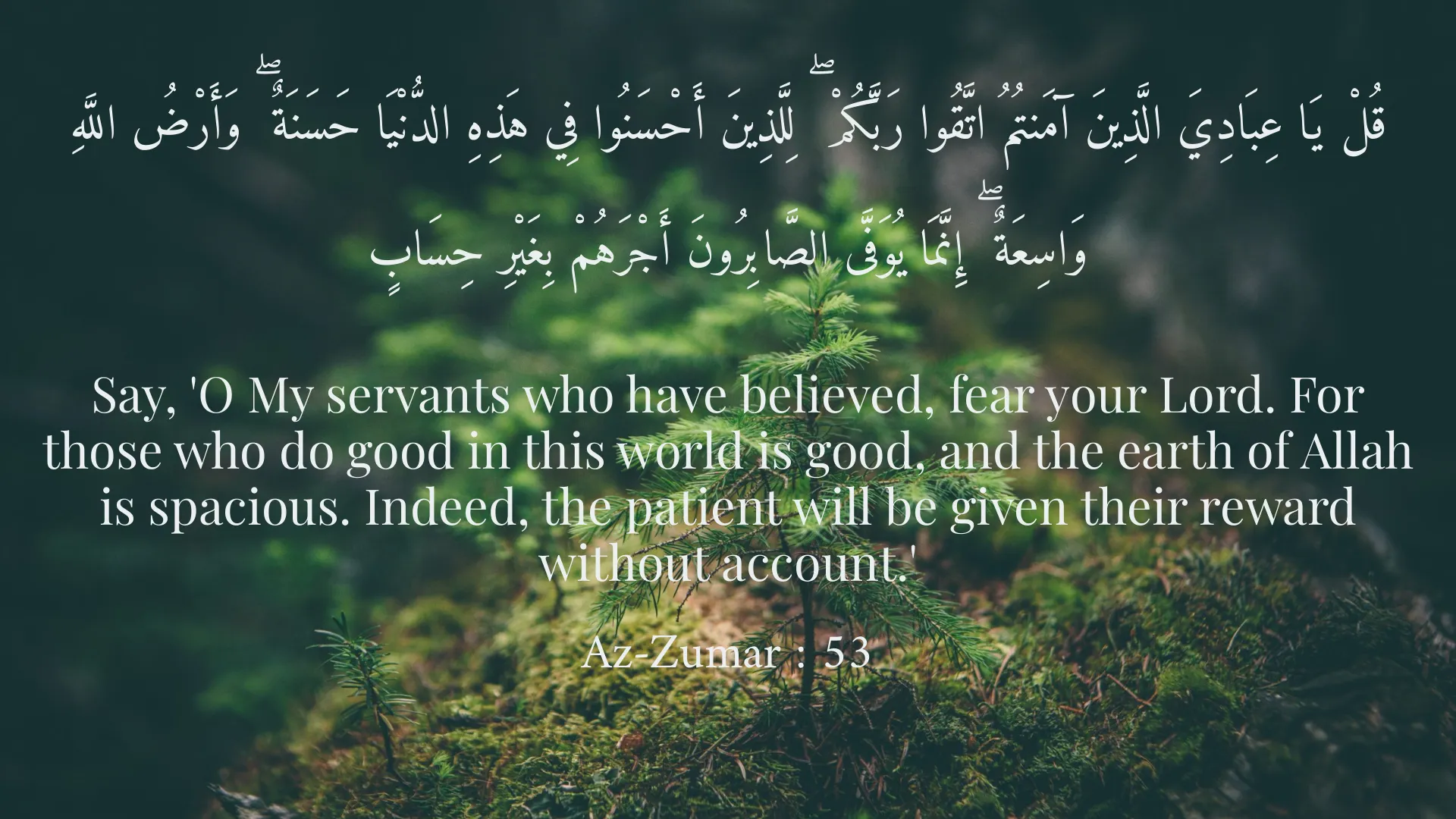
The concept of mercy and forgiveness is central to the teachings of Islam, as laid out in the Holy Quran. Allah, the Almighty, repeatedly emphasizes His compassion towards His creation, illustrating that no sin is too great to be forgiven as long as the individual turns back to Him with a sincere heart. The prominent theme of mercy in the Quran serves as a beacon of hope for believers, guiding them towards repentance and paving the way for spiritual rejuvenation. One of the most striking verses in the Quran that highlights the boundless mercy of Allah is found in Surah Az-Zumar, verse 53. In this verse, Allah instructs His Prophet Muhammad to convey a crucial message to His servants who have faith: "Say, O My servants who have believed, fear your Lord. For those who do good in this world is good, and the earth of Allah is spacious. Indeed, the patient will be given their reward without account." This powerful verse carries a profound message that transcends time and speaks to the hearts of believers. It reminds them to maintain their fear of Allah, not in a state of despair, but as a means to establish a stronger connection with their Creator. The assurance that goodness will be rewarded in this world and the hereafter creates an encouraging environment for individuals striving to mend their ways. The phrase "the earth of Allah is spacious" metaphorically alludes to the vast opportunities available for repentance and the myriad chances to do good in life. This serves as a reminder that despite the hardships one may face, the path to righteousness is always attainable. Moreover, the mention of patience serves as a testament to the understanding that the journey of faith is often fraught with challenges. It acknowledges human imperfections while also promising immense rewards for perseverance. The message of unwavering mercy and forgiveness is particularly vital for those who may become disheartened by their repeated sins. It is not uncommon for individuals to falter and stumble along their spiritual path, leading to feelings of hopelessness and despair. However, a notable aspect of the Quran's teachings is that repentance is always welcomed, and the doors of mercy are perpetually open for those who earnestly seek forgiveness. The assurance that one can always return to Allah, regardless of their past misdeeds, is a powerful motivator for believers to embrace repentance as a fundamental part of their faith. Another key verse that addresses the nature of repentance can be found in Surah An-Nisa, verse 17. This verse explicitly states, "Repentance is not for those who commit evil deeds and then continue in them until death comes to one of them." This segment emphasizes that true repentance requires a sincere acknowledgment of wrongdoing, coupled with a genuine intent to turn away from sinful behavior. The Quran encourages believers to recognize their faults and strive to rectify their actions instead of continuing in sinful habits until their time on earth expires. The importance of sincerity in seeking forgiveness cannot be overstated; Allah knows the innermost thoughts of each individual, and true repentance must stem from a heartfelt desire to change. The overarching theme present within the verses of the Holy Quran is a testament to Allah's mercy and compassion towards His servants. It is evident that Allah recognizes the inherent frailties of human beings and the complexity of their emotions in relation to sin and repentance. He extends His forgiveness to those who genuinely seek it, nurturing a spiritual relationship between Himself and His creation. This divine foundation of mercy encapsulates the core of Islamic belief, fostering a sense of inner peace and tranquility among believers. It cultivates an atmosphere where individuals are not consumed by guilt or regret for their past, but instead, are encouraged to embark on a transformative journey towards spiritual growth. The understanding that one can always return to God, no matter how grave their wrongdoings may be, fosters a profound relationship between the believer and their Creator, enabling a continuous cycle of love, repentance, and forgiveness. Moreover, the emphasis on mercy in the Quran inspires believers to embody the same compassion towards others. It serves as a reminder to forgive those around them and exercise kindness, understanding that every individual is capable of change and redemption. The teachings of the Quran encourage Muslims to overlook the faults of others and extend a hand towards those in need, reflecting the divine mercy that Allah bestows upon His creation. In fulfilling this duty, a believer not only strengthens their spiritual bond with Allah but also fosters a community centered around forgiveness, support, and love. In conclusion, the Holy Quran serves as a profound guide for believers, illuminating the path of mercy and forgiveness throughout its verses. Allah’s unwavering compassion reassures humanity that no sin is beyond redemption. The call for sincere repentance not only emphasizes the promise of divine forgiveness but also highlights the transformative power of returning to Allah. The recurrent theme of mercy in the Quran should inspire individuals to hold onto hope, strive for goodness, and cultivate a community that exemplifies love and compassion. While the human spirit may face trials, the messages found in the Quran remain a steadfast reminder that the journey of faith is one of continuous growth, opportunities for forgiveness, and an unending connection with the divine.
Related Verses
قُلْ يَا عِبَادِيَ الَّذِينَ آمَنتُمُ اتَّقُوا رَبَّكُمْ ۖ لِلَّذِينَ أَحْسَنُوا فِي هَذِهِ الدُّنْيَا حَسَنَةٌ ۖ وَأَرْضُ اللَّهِ وَاسِعَةٌ ۖ إِنَّمَا يُوَفَّى الصَّابِرُونَ أَجْرَهُمْ بِغَيْرِ حِسَابٍ
Say, 'O My servants who have believed, fear your Lord. For those who do good in this world is good, and the earth of Allah is spacious. Indeed, the patient will be given their reward without account.'
Az-Zumar : 53
إِنَّمَا التَّوْبَةُ عَلَى اللَّهِ لِلَّذِينَ يَعْمَلُونَ السُّوءَ بِجَهَالَةٍ ثُمَّ يَتُوبُونَ مِن قَرِيبٍ ۚ أُولَـٰئِكَ يَتُوبُ اللَّهُ عَلَيْهِمْ ۗ وَكَانَ اللَّهُ عَلِيمًا حَكِيمًا
Repentance is not for those who commit evil deeds and then continue in them until death comes to one of them. But repentance is for those who do evil in ignorance and then repent soon thereafter. It is those whom Allah will forgive, and Allah is Knowing and Wise.
An-Nisa : 17
Short Story
One day, a man named Abdullah repeatedly made mistakes in his life that led him to despair. He wondered if Allah would forgive him. One day, he decided to visit the mosque, where he realized that Allah always keeps the door open for those who repent. With a broken heart, he sincerely repented and felt a heavy weight lifted off his shoulders. After that, Abdullah continued his life, striving to walk the path of goodness and divine grace.