Quranic Answer
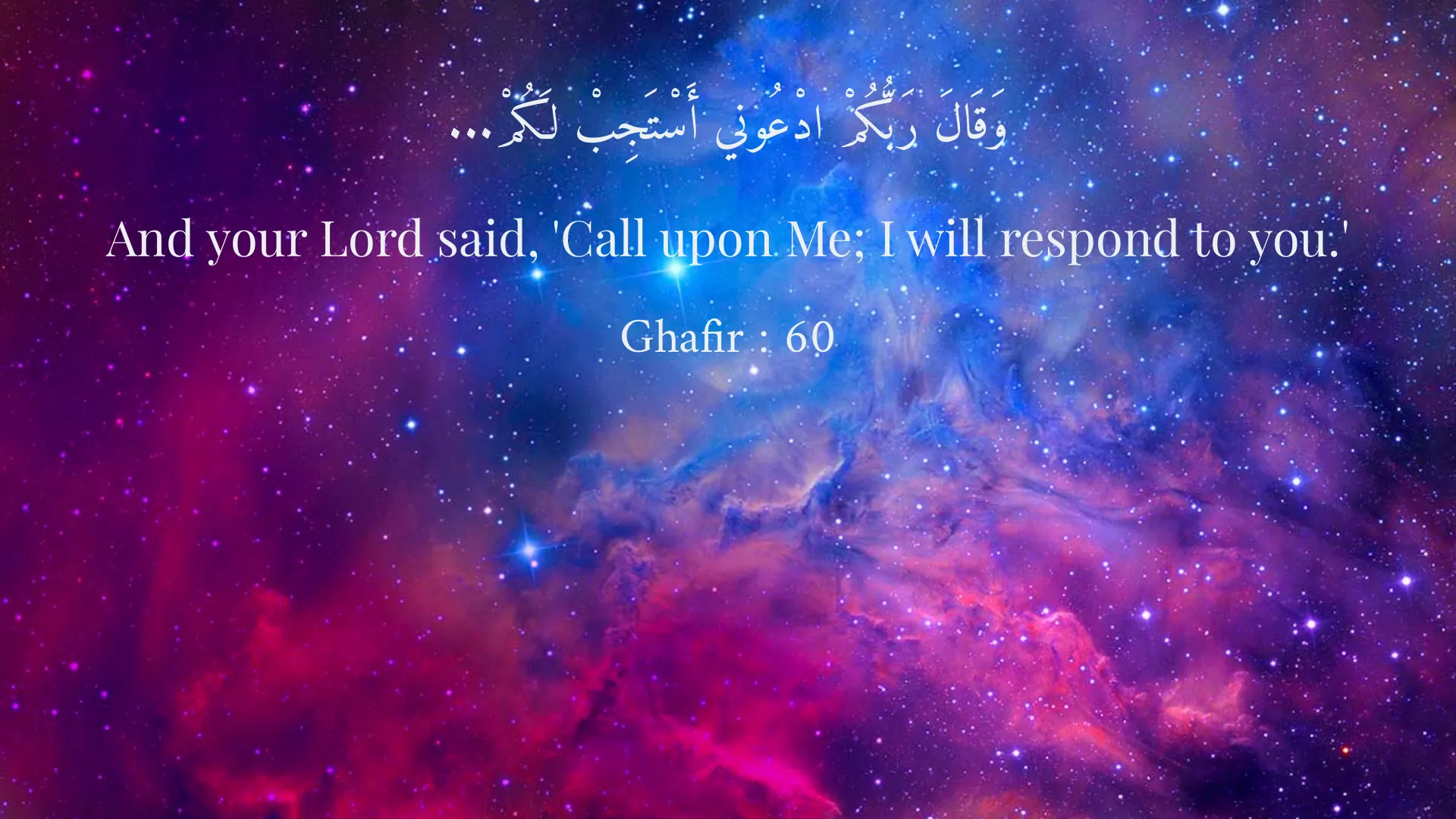
The Holy Quran, as the central religious text of Islam, underscores the significance of prayer (dua) and the connection between human beings and Allah. It is a vital practice that transcends mere words; it is a profound expression of faith, humility, and dependence on the Divine. Allah has explicitly invited His servants to call upon Him, assuring them that their prayers will be heard and answered. This fundamental principle of prayer is articulated in Surah Ghafir (40:60): "And your Lord says, 'Call upon Me; I will respond to you...'" This verse encapsulates the essence of prayer as a core tenet of faith, illustrating Allah's responsiveness and compassion towards His creations. Prayer in Islam is not merely an act of requesting needs or desires; rather, it embodies a holistic approach to spirituality, allowing the believer to connect intimately with the Creator. When one turns to Allah, they may do so with tears, cries of despair, or simply with a humble heart. The act of supplication is multifaceted, with varying degrees of expression and emotion. In many Islamic communities, there is a belief that tears shed during prayer signify genuine emotion and a deep connection to God. Although this perspective emphasizes the spiritual intensity of supplication, it does not imply that prayers offered without tears are any less valid. Ultimately, what matters most in prayer is the intention and the sincerity of the heart of the individual praying. This theme of divine proximity and responsiveness is echoed in Surah Al-Baqarah (2:186): "And when My servants ask you concerning Me, indeed I am near. I respond to the invocation of the supplicant when he calls upon Me..." This verse reaffirms the notion that Allah is ever-present and accessible. No matter the state of one's emotions or circumstances, the door to communication with the Creator remains open. Thus, it can be concluded that prayers offered without visible signs of emotion, such as tears, are also accepted, because the essence of prayer lies in the faith and attention directed towards Allah, rather than external expressions of grief or joy. The Nature of Prayer in Islamic Teachings In Islamic theology, prayer is more than just a ritualistic act; it represents a dynamic interaction between the believer and Allah. Muslims are encouraged not only to ask for tangible things—like health, wealth, and guidance—but also to seek solace, forgiveness, and understanding. The profound wisdom of the Quran teaches that Allah knows the needs and desires of every individual, even before they are expressed. Dua is often depicted as a pathway through which believers can seek mercy, forgiveness, and guidance. It is an act of worship that can take on many forms, characterized by individual circumstances, emotions, and states of being. This diversity in forms and expressions of prayer is essential in allowing believers to cultivate a personal relationship with Allah. It also signifies the acceptance of the varied emotional landscapes that individuals navigate in their lives. The Role of Intention in Prayer The concept of intention (niyyah) plays a crucial role in the act of praying. In Islam, intentions must accompany every action, and this is equally true for supplication. A sincere intention can transform an ordinary request into an extraordinary act of worship that brings one closer to the Divine. This principle highlights that the true measure of prayer's acceptance lies not in outward expressions but in the internal sincerity and devotion of the individual. Thus, even a simple, heartfelt prayer, spoken quietly in a moment of solitude, can carry immense weight in the sight of Allah. The focus shifts towards the heart, revealing that one’s relationship with the Divine is not contingent upon external manifestations but rather on the purity of one’s intention. Emotional Expressions in Prayer The discussion on emotional expressions in prayer raises intriguing considerations. While some may believe that tears and outward expressions are indicative of a powerful prayer, others may find comfort in expressing their thoughts in stillness and silence. Both forms of expression are valid and recognized within Islamic teachings. The Quran acknowledges the diversity of human experience—comprising joy, sorrow, hope, and despair—and encourages believers to express their feelings honestly during prayers. In Islamic tradition, the Prophet Muhammad (peace be upon him) is often cited as a model of humility and emotional integrity in prayer. His supplications were filled with deep emotion, yet he also exhibited moments of quiet, reflective prayer. His behavior illustrates that a relationship with God can be cultivated through various forms of connection, be it exuberant expressions of joy or quiet sorrows shared in solitude. Practical Aspects of Prayer For many Muslims, prayer is not limited to moments of distress or need; it is a daily practice that frames their life. Incorporating prayer into daily routines can enhance a sense of spirituality and mindfulness, providing opportunities for introspection and self-reflection. It encourages believers to remain connected with their faith amid the challenges of contemporary life. The act of regularly engaging in prayer cultivates a sense of discipline and commitment to spiritual growth. It serves as a reminder of the transient nature of worldly affairs and positions the spiritual journey as central in one’s personal development. Ultimately, the beauty of prayer is that it creates a space for conversation with Allah, thereby strengthening faith and community. Conclusion In conclusion, the concept of prayer in Islam transcends mere words and rituals. It serves as a vital link between the believer and Allah, embodying the principles of humility, sincerity, and devotion. The Quran provides numerous assurances of Allah's willingness to listen and respond to prayers, highlighting the importance of intention and emotional authenticity. Whether one sheds tears or speaks softly, the essence of supplication lies in faith and the heart's connection to the Creator. As believers navigate their spiritual paths, understanding the multifaceted nature of prayer can offer both comfort and strength, reinforcing the notion that Allah's mercy and compassion are ever-present for those who call upon Him.
Related Verses
وَقَالَ رَبُّكُمْ ادْعُوني أَسْتَجِبْ لَكُمْ...
And your Lord said, 'Call upon Me; I will respond to you.'
Ghafir : 60
وَإِذا سَأَلَكَ عِبَادِي عَنِّي فَإِنِّي قَرِيبٌ ۖ أُجِيبُ دَعْوَةَ الدَّاعِ إِذا دَعَانِ...
And when My servants ask you concerning Me, indeed I am near. I respond to the invocation of the supplicant when he calls upon Me.
Al-Baqarah : 186
Short Story
One day, Maryam decided to ask God to resolve a problem she had been facing for a long time. She went to the shrine of a holy figure and sat in a corner. She thought that perhaps if she wept, God would respond to her prayers. However, after a moment of reflection, she realized that her pure intention was more important than tears. So she prayed with a calm heart and deep contemplation. Days later, it was amazing to see that her problem was magically resolved, and she learned that even tearless prayers are accepted by God.