Quranic Answer
In the modern era, where communication technology has reached its peak and social networks seemingly connect people, a phenomenon called 'modern loneliness' has increasingly plagued humanity. This loneliness does not stem from a lack of people around us, but rather from the absence of deep connections, a feeling of not belonging, and a spiritual void. Modern individuals might feel like strangers even amidst a crowd. The question then arises: Does the Holy Quran, revealed thousands of years ago, offer solutions for this contemporary problem? The answer is a resounding yes. The Quran, as a book of divine guidance, lays out profound principles for spiritual tranquility and genuine connection with oneself, the Creator, and others, which can effectively combat the roots of modern loneliness. One of the central Quranic solutions to combat loneliness is strengthening one's relationship with Allah. The Quran repeatedly emphasizes the importance of Dhikr (remembrance of God) and worship. In Surah Ar-Ra'd, verse 28, we read: “Those who have believed and whose hearts are assured by the remembrance of Allah. Unquestionably, by the remembrance of Allah hearts are assured.” This verse clearly states that true tranquility and freedom from anxiety and loneliness depend on the remembrance and constant presence of God in the heart. Dhikr is not merely the repetition of words; rather, it is a state of mindfulness and perpetual awareness of the Lord’s existence. The five daily prayers serve as daily appointments with the Creator, providing an opportunity to renew one's covenant and establish a profound connection with the source of existence. During prostration (sujood), one experiences the peak of closeness to the Lord, and this feeling of proximity eradicates any sense of loneliness. Supplication (Du'a) and intimate conversation with God allow an individual to share all their secrets and longings with the 'Highest Companion' without any veil. This direct and constant connection with Allah saves the individual from feeling alone in a vast universe and assures them that they always have a strong refuge and a stable support who will never abandon them. This sense of divine presence, in contrast to the instability of human relationships and the transience of the material world, brings eternal and profound peace. Another Quranic solution is seeking help through patience and prayer when facing difficulties. In Surah Al-Baqarah, verse 153, Allah says: “O you who have believed, seek help through patience and prayer. Indeed, Allah is with the patient.” Loneliness often intensifies during difficult times and life challenges, where an individual feels no one is there to understand or help them. Patience (Sabr) is not about being passive or giving up; rather, it means steadfastness and resilience in the face of adversities and hope for divine relief. Prayer, as mentioned, is a powerful tool for connecting with the infinite source of power. With patience and reliance on Allah (Tawakkul), individuals realize that even in hardships, they are not alone, and divine grace and support are always with them. This assurance of God's help and companionship, even in the midst of crises, diminishes the deep feeling of loneliness and provides the necessary strength to overcome challenges. Beyond the connection with Allah, the Quran strongly emphasizes the importance of human relationships and a healthy community structure. Unlike the prevalent individualistic approach in the modern era, Islam is a religion of community and congregation. Quranic injunctions repeatedly refer to the importance of Silat al-Rahim (maintaining ties with relatives), being kind to parents, showing goodness to neighbors, and helping the poor, orphans, and the needy. In Surah An-Nisa, verse 36, Allah states: “And worship Allah and associate nothing with Him, and to parents do good, and to relatives, orphans, the needy, the near neighbor, the distant neighbor, the companion by your side, the traveler, and those whom your right hands possess. Indeed, Allah does not like those who are conceited and boastful.” This verse and many others highlight the importance of social responsibility and building a strong support network. Congregational prayers, participation in religious gatherings, and social activities in mosques and Islamic centers provide invaluable opportunities for establishing real and deep connections with like-minded individuals. Helping others and feeling useful to the community is also one of the strongest antidotes to loneliness. When individuals see themselves as active and effective parts of a larger whole, they develop a sense of belonging and self-worth, which naturally eradicates loneliness. Finally, the Quran imbues human life with a higher purpose and meaning beyond mere material existence. In Surah Adh-Dhariyat, verse 56, it states: “And I did not create the jinn and mankind except to worship Me.” This verse defines the primary purpose of human creation as the worship of Allah. When life gains a meaning beyond daily routines and fleeting pleasures, the inner emptiness and futility that often underlie modern loneliness are filled. By understanding this noble purpose, individuals see themselves as part of a grand divine plan, and in this path, they move forward with continuous motivation and purpose. This sense of purpose, instead of feelings of emptiness and meaninglessness, bestows upon them an enthusiasm and joy that leaves no room for loneliness. In summary, the Holy Quran offers comprehensive and effective solutions to combat modern loneliness by emphasizing the strengthening of one's individual relationship with Allah (through remembrance, supplication, and prayer), encouraging patience and reliance on Him in the face of difficulties, and promoting active participation in the community and maintaining deep human relationships. These teachings are more than mere religious instructions; they are a roadmap for achieving inner peace and finding one's true place in existence, applicable in all times and places, including the challenging modern era.
Related Verses
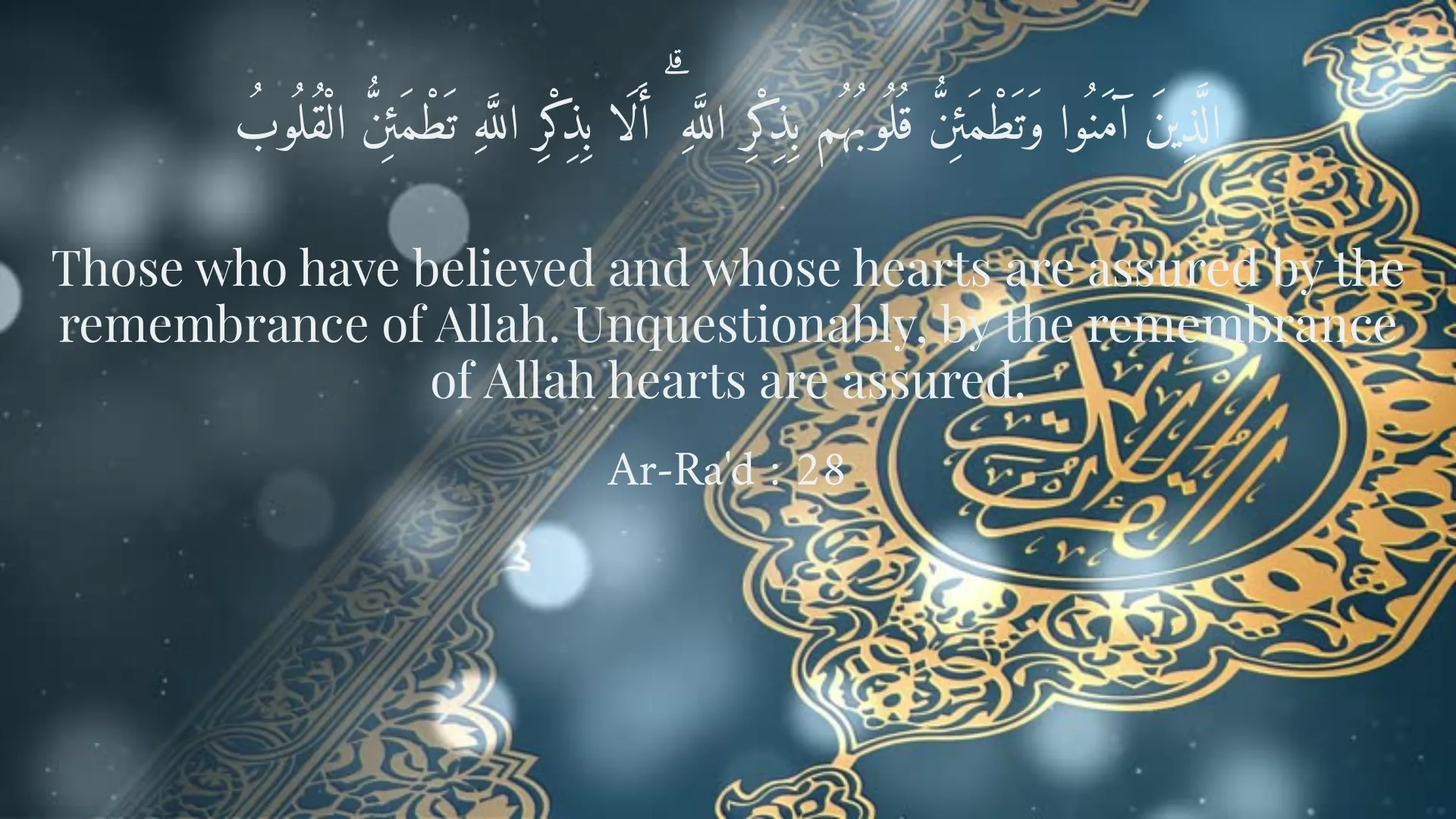
الَّذِينَ آمَنُوا وَتَطْمَئِنُّ قُلُوبُهُم بِذِكْرِ اللَّهِ ۗ أَلَا بِذِكْرِ اللَّهِ تَطْمَئِنُّ الْقُلُوبُ
Those who have believed and whose hearts are assured by the remembrance of Allah. Unquestionably, by the remembrance of Allah hearts are assured.
Ar-Ra'd : 28
يَا أَيُّهَا الَّذِينَ آمَنُوا اسْتَعِينُوا بِالصَّبْرِ وَالصَّلَاةِ ۚ إِنَّ اللَّهَ مَعَ الصَّابِرِينَ
O you who have believed, seek help through patience and prayer. Indeed, Allah is with the patient.
Al-Baqarah : 153
وَاعْبُدُوا اللَّهَ وَلَا تُشْرِكُوا بِهِ شَيْئًا ۖ وَبِالْوَالِدَيْنِ إِحْسَانًا وَبِذِي الْقُرْبَىٰ وَالْيَتَامَىٰ وَالْمَسَاكِينِ وَالْجَارِ ذِي الْقُرْبَىٰ وَالْجَارِ الْجُنُبِ وَالصَّاحِبِ بِالْجَنبِ وَابْنِ السَّبِيلِ وَمَا مَلَكَتْ أَيْمَانُكُمْ ۗ إِنَّ اللَّهَ لَا يُحِبُّ مَن كَانَ مُخْتَالًا فَخُورًا
And worship Allah and associate nothing with Him, and to parents do good, and to relatives, orphans, the needy, the near neighbor, the distant neighbor, the companion by your side, the traveler, and those whom your right hands possess. Indeed, Allah does not like those who are conceited and boastful.
An-Nisa : 36
Short Story
It is narrated that in a city lived a merchant named Faridoun, who was immensely wealthy and possessed countless treasures. His house was grand, and his servants were many, yet his heart felt constricted and lonely. Amidst the clamor of the bazaar and the multitude of superficial friends, he felt like a stranger. One night, the sorrow of loneliness so overwhelmed him that sleep eluded his eyes. He mused, "What good is all this wealth to me? I have neither peace nor a true companion." The next day, troubled, he sought out a wise man and confessed his plight. The sage smiled and said, "O Faridoun, loneliness stems not from a lack of people, but from a lack of light within you. Your treasures are external, but true peace lies within. If you wish your heart to find tranquility and be freed from this alienation, extend the hand of benevolence and bring joy to a heart. Sometimes, a smile on an orphan's face, or assisting a needy person, kindles such a light within you that hundreds of treasures cannot surpass it. And do not neglect the remembrance of God, for He is the companion of every lonely soul, and His remembrance brings peace to hearts." Faridoun heeded the wise man's advice. He began to help the poor and spent time in the remembrance of God and prayer. It was not long before he found his heart expanding, and the loneliness that tormented him gave way to tranquility and a sense of belonging. Whenever he held the hand of a needy person, it was as if an invisible hand caressed his own heart. From then on, Faridoun no longer felt lonely, neither among people nor in his solitude, for his heart was illuminated by the light of God's remembrance and the warmth of love for His creation.