Quranic Answer
Can enduring pain lead to human growth? This is a profound question that has occupied the human mind for centuries. From the perspective of the Holy Quran, the answer to this question requires a subtle and precise understanding of the concepts of "pain" and "growth." The Quran does not directly advocate for "staying in pain" as a deliberate goal for growth. Instead, it meticulously explains how individuals can achieve spiritual and personal development when confronted with hardships, trials, and challenges—experiences that inevitably bring about pain and suffering. In essence, growth does not emanate from the pain itself, but rather from the manner in which an individual reacts to and deals with it; pain acts as a catalyst, not the ultimate destination. The Holy Quran frequently describes worldly life as an arena of trials and tests (ibtila). In numerous verses, Allah Almighty emphasizes that believers will inevitably be put to the test to gauge their faith and reveal their true essence. These trials can manifest in various forms, such as fear, hunger, loss of wealth, lives, and fruits, and illnesses—all of which entail pain and suffering. In Surah Al-Baqarah, verse 155, Allah states: "And We will surely test you with something of fear and hunger and a loss of wealth and lives and fruits, but give good tidings to the patient" [Al-Baqarah: 155]. This verse explicitly indicates that difficulties and deficiencies are an unavoidable part of life's journey, and their purpose is to test and measure one's faith. Therefore, pain and suffering, from a divine perspective, serve as instruments in Allah's decree for human growth and perfection. These bitter experiences provide an opportunity for the purification of the soul and the deepening of the roots of faith, guiding humanity towards a stronger and more authentic version of themselves. The central pillar for navigating these trials is the virtue of "patience" (sabr). The Quran repeatedly enjoins believers to practice patience, portraying it as the key to divine assistance and ultimate triumph. In Surah Al-Baqarah, verse 153, we read: "O you who have believed, seek help through patience and prayer. Indeed, Allah is with the patient" [Al-Baqarah: 153]. This verse clearly elucidates that patience is far from a passive resignation; rather, it is an active and dynamic force for confronting difficulties. Patience, in its comprehensive Islamic sense, encompasses steadfastness in the face of calamities, refraining from undue complaint, and placing unwavering trust in divine wisdom. When an individual clings to the rope of patience amidst pain and suffering, their soul undergoes a profound purification, their resolve is strengthened, and their understanding of their own being and their Lord deepens significantly. This intricate process plants the seeds of spiritual and moral growth within them, enabling them to blossom. Pain acts as a crucible that burns away impurities from the human soul, polishing the pure essence of faith and humanity, so that afterwards, the individual becomes more refined and resilient than before. Another crucial dimension of growth in the face of pain is seeking refuge in Allah and strengthening one's bond with Him. When individuals find themselves at the peak of weakness and despair, feeling isolated and helpless, they naturally extend their hands in supplication to the Self-Sufficient Creator. These moments represent the pinnacle of sincerity in prayer and heartfelt pleading. Prayer (Salat), supplication (Du'a), and remembrance (Dhikr) serve as invaluable havens that protect individuals against the storms of pain and suffering, bestowing upon them tranquility and strength of heart from Allah. This deepened connection with the Creator is, in itself, the zenith of spiritual growth, a depth that might not be easily attainable during times of ease and comfort. In pain, humanity realizes its inherent dependence on Allah's absolute sufficiency, leading to complete reliance (Tawakkul), which is one of the highest stages of faith and perfection. The experience of pain liberates individuals from arrogance and undue self-reliance, connecting them to the infinite source of divine power. Furthermore, the Quran promises: "For indeed, with hardship [will be] ease. Indeed, with hardship [will be] ease" [Al-Inshirah: 5-6]. These verses offer a profound message of hope and solace amidst adversity. Pain and suffering are not eternal; after every hardship, there will be ease and relief. This perspective instills in individuals the motivation to persevere through challenges with patience and optimism. Understanding that pain is temporary and that there is profound wisdom behind it helps individuals utilize it as a stepping stone for ascension. The growth that emerges from this hope and perseverance is enduring and deeply rooted, providing the individual not only with the ability to overcome current problems but also with preparedness to face future challenges. Ultimately, from the Quranic perspective, pain and suffering are not intended for "staying" in them but rather as a means of "passing through" them to reach higher stages of faith and self-knowledge. Pain compels individuals to reflect and ponder, awakens them from heedlessness, and reminds them that this world is but a transient abode. These difficult experiences bestow upon individuals insight and wisdom that are not easily acquired during times of comfort. Through confronting pain, individuals discover their hidden capacities, their resilience increases, and their character is refined. This process transforms them into a more complete and self-aware version of themselves. Therefore, pain itself does not directly cause growth, but it provides a fertile ground and an opportune context for growth, provided that the individual utilizes this context wisely, with patience, and with complete reliance on Allah, moving forward towards perfection. Pain can be likened to a fire that strengthens metal, rather than destroying it, provided the metal is of good quality and can withstand the heat. Pain acts as a mirror, reflecting our weaknesses and strengths, and offering an opportunity for repair and reinforcement. It is through this rigorous process that the most sublime human growths emerge from the most challenging experiences, guiding humanity towards divine proximity.
Related Verses
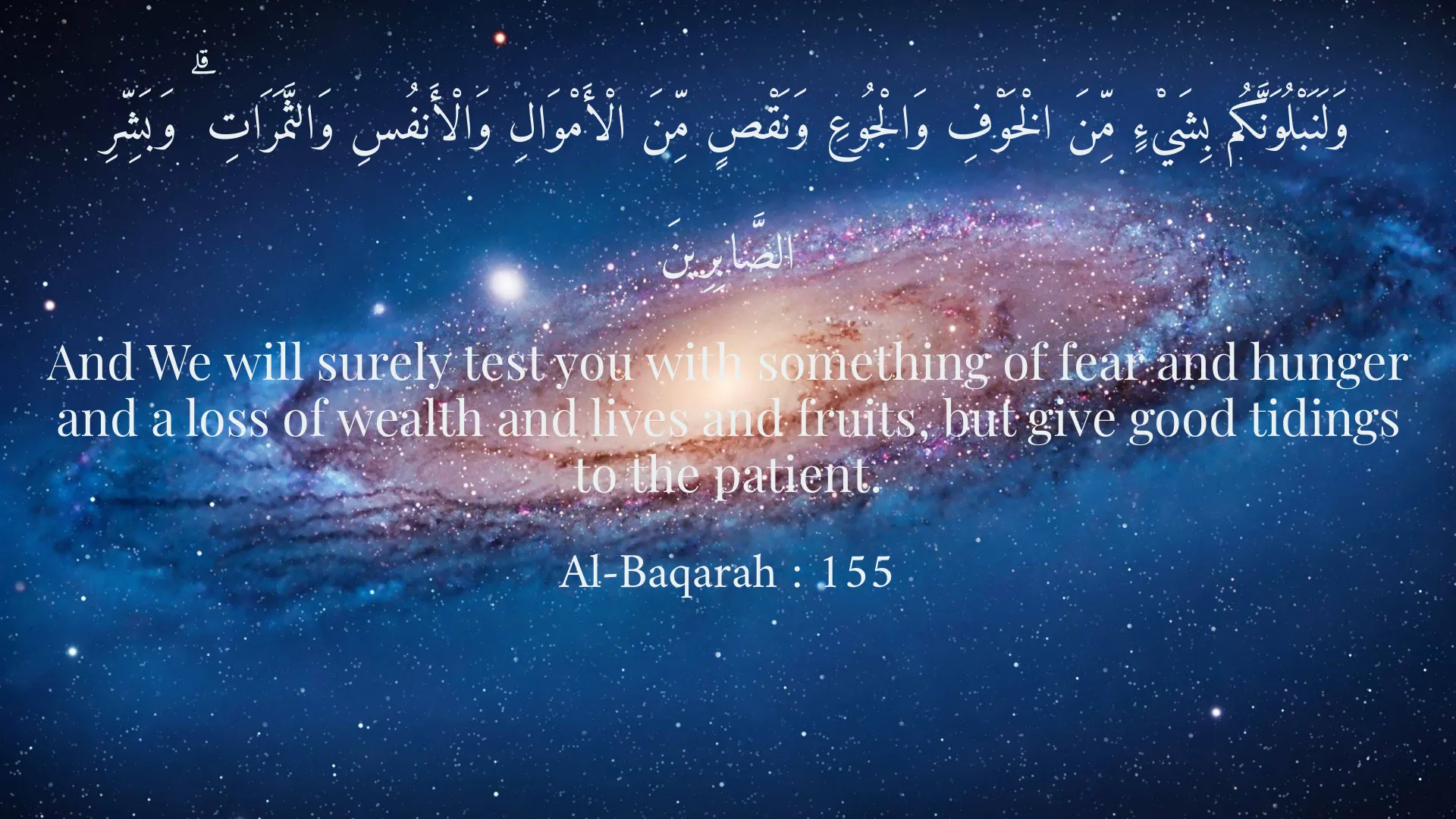
وَلَنَبْلُوَنَّكُم بِشَيْءٍ مِّنَ الْخَوْفِ وَالْجُوعِ وَنَقْصٍ مِّنَ الْأَمْوَالِ وَالْأَنفُسِ وَالثَّمَرَاتِ ۗ وَبَشِّرِ الصَّابِرِينَ
And We will surely test you with something of fear and hunger and a loss of wealth and lives and fruits, but give good tidings to the patient.
Al-Baqarah : 155
يَا أَيُّهَا الَّذِينَ آمَنُوا اسْتَعِينُوا بِالصَّبْرِ وَالصَّلَاةِ ۚ إِنَّ اللَّهَ مَعَ الصَّابِرِينَ
O you who have believed, seek help through patience and prayer. Indeed, Allah is with the patient.
Al-Baqarah : 153
فَإِنَّ مَعَ الْعُسْرِ يُسْرًا
For indeed, with hardship [will be] ease.
Al-Inshirah : 5
إِنَّ مَعَ الْعُسْرِ يُسْرًا
Indeed, with hardship [will be] ease.
Al-Inshirah : 6
أَحَسِبَ النَّاسُ أَن يُتْرَكُوا أَن يَقُولُوا آمَنَّا وَهُمْ لَا يُفْتَنُونَ
Do the people think that they will be left to say, "We believe" and they will not be tried?
Al-Ankabut : 2
Short Story
In ancient times, Sa'di narrates a story of a dervish who had been bedridden for many years, suffering from various ailments. One day, his friends came to visit and inquired about his well-being. With tranquility, he replied, "I thank God, I am well." His friends, astonished, asked, "How can you thank God and say you are well in such a state of suffering?" The dervish smiled and said, "I am grateful that I am enduring this physical pain and have not been afflicted by greater misfortunes like disbelief or heedlessness of my Lord. This pain has awakened me from my negligence and constantly reminds me of my Creator." This beautiful anecdote illustrates how, even in the midst of the most severe pains, if one's perspective is accompanied by faith and insight, it can transform suffering into an opportunity for gratitude, remembrance of God, and spiritual growth. Pain is fleeting, but its lessons are enduring.