Quranic Answer
The gate of divine mercy and forgiveness is always open to servants, and the Holy Quran repeatedly emphasizes that human beings can move past their past sins and begin a new life full of peace and hope. This possibility not only exists, but Allah Almighty invites His servants to repentance and return, promising forgiveness and the transformation of bad deeds into good ones for those who truly repent. To understand this more deeply, we must delve into the concept of 'Tawbah' (repentance) in the Quran, which is more than just simple regret. Tawbah means a sincere return to Allah, remorse for past actions, abandoning the sin in the present, and a firm resolve not to return to it in the future. If the rights of others (Huquq al-Nas) are involved, making amends is also essential for complete repentance. The Holy Quran is full of verses that ignite hope in the hearts of sinners. Allah introduces Himself as 'Al-Ghafur' (The All-Forgiving), 'Ar-Rahim' (The Most Merciful), and 'At-Tawwab' (The Acceptor of Repentance). These divine attributes assure us that no sin is too great for Allah's forgiveness to encompass it, provided that the servant returns to Him with sincerity and devotion. Despair and hopelessness in Allah's mercy is itself a grave sin that is strongly condemned in the Quran. In Surah Az-Zumar, verse 53, Allah says: "Say, 'O My servants who have transgressed against themselves [by committing sins], do not despair of the mercy of Allah. Indeed, Allah forgives all sins. Indeed, it is He who is the Forgiving, the Merciful.'" This verse clearly indicates that even those who have committed excessive sins should not despair of Allah's mercy, and Allah forgives all sins. This is a general invitation to repentance, an invitation that expresses the boundless expanse of divine forgiveness. Repentance is not merely erasing the slate of deeds; it is a deep spiritual and emotional transformation. A person who repents is not only freed from the burden of sin but also turns their heart towards Allah and finds true peace in this return. Allah not only forgives sins but, in some cases, for sincere repenters, He transforms their bad deeds into good ones. In Surah Al-Furqan, verse 70, we read: "Except for those who repent, believe and do righteous work. For them, Allah will change their evil deeds into good ones. And Allah is ever Forgiving and Merciful." This unparalleled promise instills immense motivation and hope in a person that their dark past will not only be cleansed but can also be transformed into goodness through repentance and righteous deeds. This means that a repenting individual can not only be free from guilt but can also attain a status higher than before the sin, because true repentance accompanied by faith and good deeds is divinely valued. To move past past sins and find peace, there are several practical and spiritual steps. The first step is genuine remorse and a firm resolve to abandon the sin. This remorse must come from the depths of one's being and not merely be spoken words. Second, seeking forgiveness from Allah (Istighfar). Repeating the invocation "Astaghfirullah Rabbi wa atubu ilayh" (I seek forgiveness from Allah, my Lord, and I repent to Him) with a humble heart is a way to draw closer to Allah and seek His forgiveness. Third, performing good deeds and acts of kindness. The Quran and Islamic traditions emphasize that good deeds erase bad ones. Therefore, after repentance, one should strive to purify and illuminate their record of deeds by performing prayers, fasting, giving charity, helping those in need, and any other good action. Fourth, changing one's environment and avoiding factors that led to sin. Sometimes, to maintain repentance, it is necessary to leave bad company or corrupt environments. Fifth, maintaining hope and trust in Allah. Satan's whispers might cause a person to despair again because of their past, but one must always have faith in Allah's boundless mercy and continue on the right path. Sixth, continuous prayer and supplication. One should ask Allah for help to remain steadfast and firm on the path of repentance and righteous deeds. This path is a continuous journey towards Allah, and each day can bring new steps towards spiritual growth and perfection. True peace is achieved not by denying the past but by confronting it, repenting from it, and moving forward with reliance on Allah. Therefore, every human being, regardless of the magnitude of their past sins, can, through a sincere return to Allah, not only be forgiven but also rebuild their life and attain lasting peace.
Related Verses
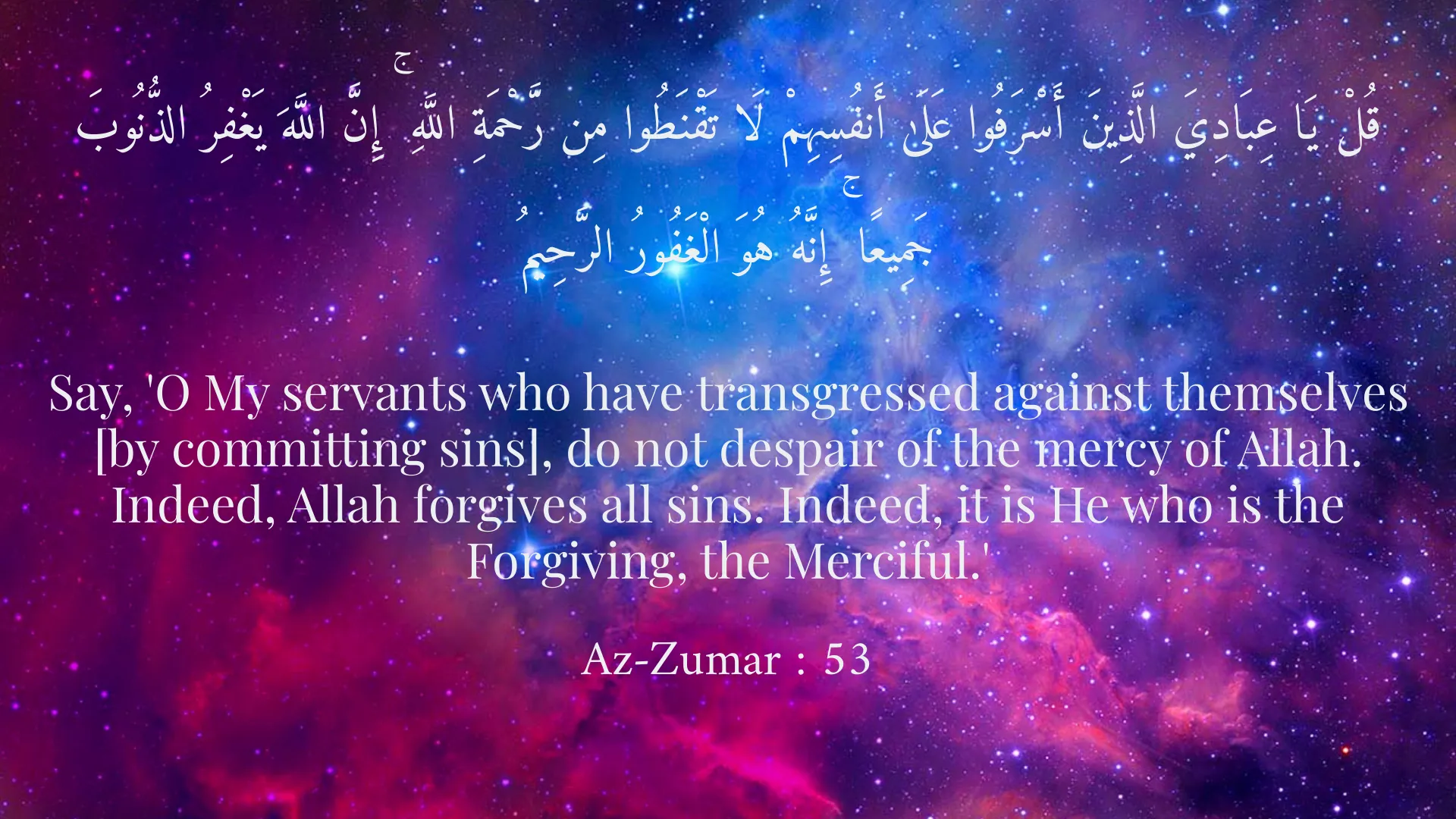
قُلْ يَا عِبَادِيَ الَّذِينَ أَسْرَفُوا عَلَىٰ أَنفُسِهِمْ لَا تَقْنَطُوا مِن رَّحْمَةِ اللَّهِ ۚ إِنَّ اللَّهَ يَغْفِرُ الذُّنُوبَ جَمِيعًا ۚ إِنَّهُ هُوَ الْغَفُورُ الرَّحِيمُ
Say, 'O My servants who have transgressed against themselves [by committing sins], do not despair of the mercy of Allah. Indeed, Allah forgives all sins. Indeed, it is He who is the Forgiving, the Merciful.'
Az-Zumar : 53
إِلَّا مَن تَابَ وَآمَنَ وَعَمِلَ عَمَلًا صَالِحًا فَأُولَٰئِكَ يُبَدِّلُ اللَّهُ سَيِّئَاتِهِمْ حَسَنَاتٍ ۗ وَكَانَ اللَّهُ غَفُورًا رَّحِيمًا
Except for those who repent, believe and do righteous work. For them, Allah will change their evil deeds into good ones. And Allah is ever Forgiving and Merciful.
Al-Furqan : 70
يَا أَيُّهَا الَّذِينَ آمَنُوا تُوبُوا إِلَى اللَّهِ تَوْبَةً نَّصُوحًا عَسَىٰ رَبُّكُمْ أَن يُكَفِّرَ عَنكُمْ سَيِّئَاتِكُمْ وَيُدْخِلَكُمْ جَنَّاتٍ تَجْرِي مِن تَحْتِهَا الْأَنْهَارُ يَوْمَ لَا يُخْزِي اللَّهُ النَّبِيَّ وَالَّذِينَ آمَنُوا مَعَهُ ۖ نُورُهُمْ يَسْعَىٰ بَيْنَ أَيْدِيهِمْ وَبِأَيْمَانِهِمْ يَقُولُونَ رَبَّنَا أَتْمِمْ لَنَا نُورَنَا وَاغْفِرْ لَنَا ۖ إِنَّكَ عَلَىٰ كُلِّ شَيْءٍ قَدِيرٌ
O you who have believed, repent to Allah with sincere repentance. Perhaps your Lord will remove from you your misdeeds and admit you into Gardens beneath which rivers flow [on] the Day when Allah will not disgrace the Prophet and those who believed with him. Their light will proceed before them and on their right; they will say, 'Our Lord, perfect for us our light and forgive us. Indeed, You are over all things competent.'
At-Tahrim : 8
Short Story
It is narrated that in ancient times, there was a man who had spent his life in heedlessness and wrongdoing. One day, he passed by a scholar who was preaching. The scholar said, "The door of repentance is always open, and God's mercy is boundless." Upon hearing this, the man sighed deeply and thought to himself, "Is there still hope for me, who has committed so many sins?" With a broken heart and great remorse, he went home and whispered to himself every night, "My God! I regret my deeds." And from then on, he turned to good deeds every day and shunned every sin. After some time, the townspeople found him to be a virtuous and pious man and were astonished at how the former man had transformed so completely. With the peace in his heart, he smiled and said, "The door that God has opened for return is never closed to sincere servants. One can move past the past, provided one turns their heart back to the Lord."