Quranic Answer
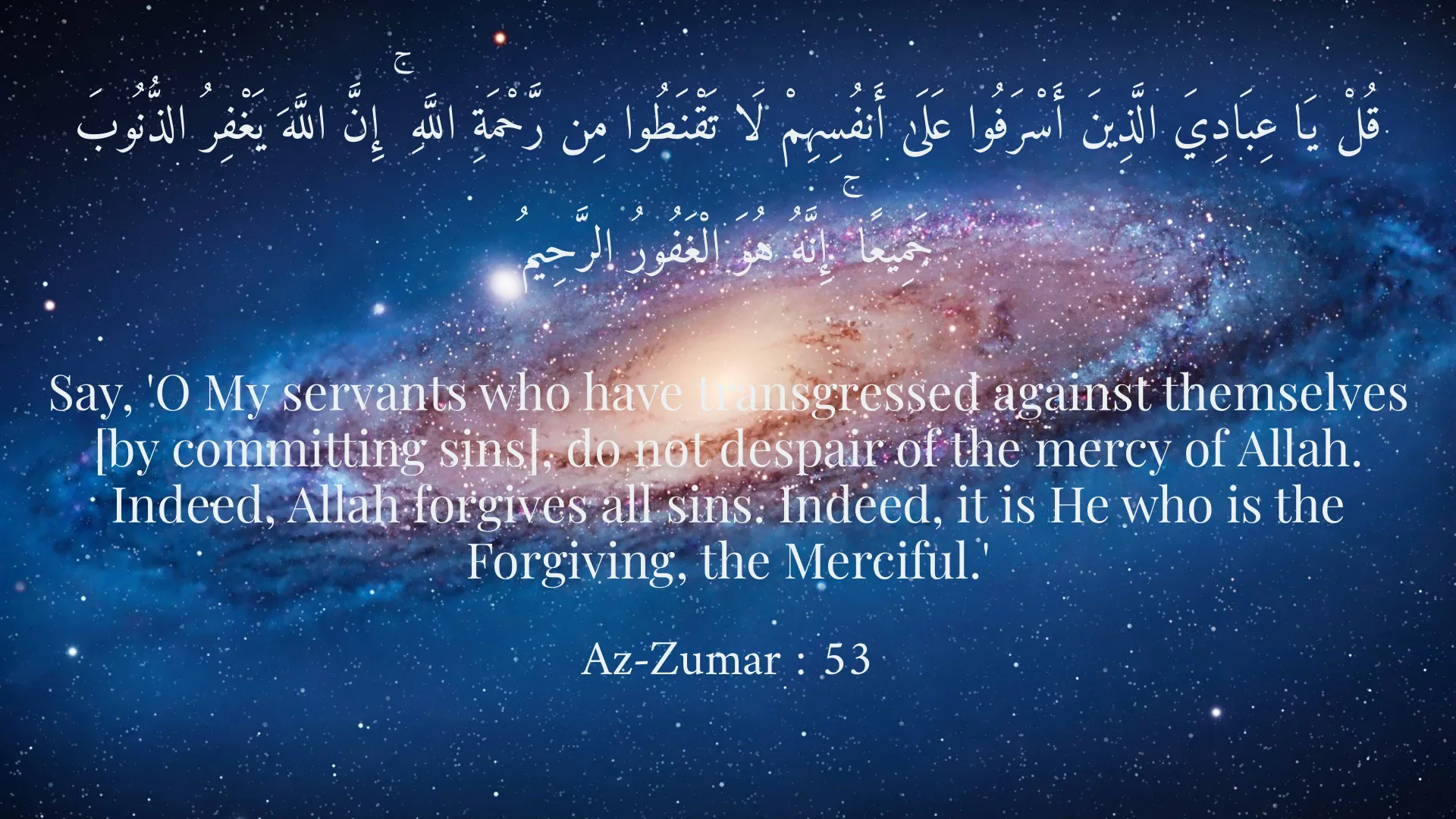
Can one be purified again after a major sin? This is a profound and vital question that delves into the essence of hope and boundless divine mercy. The unequivocal answer from the Holy Quran is a resounding and hopeful 'Yes.' Almighty Allah, in numerous verses throughout the Quran, emphasizes the vastness of His mercy, forgiveness, and infinite pardon. Even the gravest of sins, if accompanied by sincere repentance (Tawbah Nasuh) and a genuine return to Allah, are capable of being forgiven and purified. This truth is one of the most beautiful and comforting teachings of Islam, and one should never despair of it, for despairing of Allah's mercy is itself considered a major sin. The Quran explicitly states that the door of divine mercy is always open to His servants, and no sin is so great that it cannot be forgiven, unless a servant insists on that sin and dies without repenting. In Surah Az-Zumar, verse 53, Allah says: “Say, 'O My servants who have transgressed against themselves [by committing sins], do not despair of the mercy of Allah. Indeed, Allah forgives all sins. Indeed, it is He who is the Forgiving, the Merciful.'” This verse serves as a beacon of guidance and hope for every human being who, knowingly or unknowingly, has fallen into the trap of sin. The emphasis on the word 'all' (جمیعا) indicates that no sin – no matter how great – is outside the scope of divine forgiveness, provided that the servant truly repents and returns to his Lord. This hopeful call is an invitation to a return that liberates the heart from the darkness of sin and illuminates the soul with divine light. Repentance (Tawbah) in Islam is not merely a verbal acknowledgment or a fleeting emotion; rather, it is a comprehensive and transformative process that involves several fundamental and vital pillars, which must be accompanied by sincere intention and firm resolve: 1. Heartfelt Remorse: The individual must genuinely regret the sin committed from the depths of their heart and feel profound contrition. This remorse is not just an emotional state but a powerful driving force for abandoning the sin and returning to Allah. True remorse is the first step in the spiritual purification of the soul. 2. Immediate Abandonment of the Sin: The sinner must cease the sin immediately and sever ties with any factor or environment that leads them back to that sin. This practical action demonstrates the sincerity of repentance and the desire to move away from disobedience. Repentance without abandoning the sin has no real meaning. 3. Firm Resolve Not to Return: There must be a strong and unwavering intention and resolve not to return to that sin in the future. This determination indicates the seriousness and permanence of repentance. This part of repentance requires continuous self-discipline and struggle against one's lower self. 4. Rectification of People's Rights (if applicable): If the sin involved the rights of others (e.g., injustice towards someone, usurping property, backbiting, slander, or damaging reputation), in addition to repenting to Allah, the individual must also rectify the rights of those wronged or seek their forgiveness. This is an essential part of repentance, and without it, repentance is not complete or fully accepted, because Allah forgives His own rights, but the rights of His servants are only forgiven with the consent of those servants. Upon the fulfillment of these conditions, the servant who repents is not only forgiven for their sins, but sometimes, by Allah's boundless grace and generosity, those sins are transformed into good deeds. In Surah Al-Furqan, verse 70, we read: “Except for those who repent, believe and do righteous deeds; for those, Allah will change their evil deeds into good ones. And Allah is ever Forgiving, Most Merciful.” This divine promise demonstrates the highest level of mercy and forgiveness, which not only pardons the sin but also eradicates its negative impact and transforms it into the most positive outcome possible. This shows that repentance is not only a purifier of sin but can also elevate a person's status in the sight of their Lord and usher in a new life filled with goodness and blessings. The philosophy behind the possibility of being purified from major sins lies in the concepts of Allah's 'Rububiyah' (Lordship and Nurturing) and 'Rahmaniyah' (All-Encompassing Mercy). Allah is the Sustainer and Nurturer of the universe, and He does not wish for His servants to drown in despair and hopelessness. He keeps the door of return and rectification always open so that humanity has the opportunity to amend its mistakes and change the course of its life towards perfection and happiness. This indicates a divine system built on forgiveness, second chances, and encouragement towards reform, not on unceasing punishment and absolute despair. This offers a glimmer of hope for all those who feel there is no turning back and that their lives have been ruined by major sins. Imagine an individual who has spent their life in disobedience and sin; is there no path for them? The Quran says there is, provided that this repentance is genuine and from the depths of one's being. Tawbah Nasuh means a return from which there is no return to that sin. This repentance not only purifies the human heart and soul but also changes one's outlook on this world and the hereafter, guiding them towards righteous deeds and a pious life. The result of this repentance is inner peace, liberation from the heavy burden of sin, and hope for a brighter future under divine pleasure. This process is akin to a spiritual cleansing that removes all impurities and refreshes and purifies the soul anew, preparing it for a truly spiritual life. Allah loves those who return to Him and purify themselves. Therefore, anyone who has committed a major sin should not surrender to despair. They must turn back to Allah, sincerely repent with all their being, abandon the sin, and make a firm resolve not to return to it. Allah has promised that He loves those who repent and that He forgives them. This divine mercy is boundless and encompasses all servants who turn to Him with sincere intention and seek His forgiveness. This is the fundamental message of the Quran for every human being seeking purity and salvation, regardless of the magnitude of the sins they have committed. Being purified from major sins is not only possible but is one of Allah's great promises that gives humanity the chance to begin a new life and attain proximity to Allah. This is a universal invitation to return and hope, which excludes no one and calls everyone to the loving embrace of their Lord.
Related Verses
قُلْ يَا عِبَادِيَ الَّذِينَ أَسْرَفُوا عَلَىٰ أَنفُسِهِمْ لَا تَقْنَطُوا مِن رَّحْمَةِ اللَّهِ ۚ إِنَّ اللَّهَ يَغْفِرُ الذُّنُوبَ جَمِيعًا ۚ إِنَّهُ هُوَ الْغَفُورُ الرَّحِيمُ
Say, 'O My servants who have transgressed against themselves [by committing sins], do not despair of the mercy of Allah. Indeed, Allah forgives all sins. Indeed, it is He who is the Forgiving, the Merciful.'
Az-Zumar : 53
وَمَن يَعْمَلْ سُوءًا أَوْ يَظْلِمْ نَفْسَهُ ثُمَّ يَسْتَغْفِرِ اللَّهَ يَجِدِ اللَّهَ غَفُورًا رَّحِيمًا
And whoever does evil or wrongs himself but then seeks forgiveness of Allah will find Allah Forgiving and Merciful.
An-Nisa : 110
إِلَّا مَن تَابَ وَآمَنَ وَعَمِلَ عَمَلًا صَالِحًا فَأُولَٰئِكَ یُبَدِّلُ اللَّهُ سَیِّئَاتِهِمْ حَسَنَاتٍ ۗ وَكَانَ اللَّهُ غَفُورًا رَّحِیمًا
Except for those who repent, believe and do righteous deeds; for those, Allah will change their evil deeds into good ones. And Allah is ever Forgiving, Most Merciful.
Al-Furqan : 70
Short Story
It is said that in days of old, there was a man who, in his youth, had committed many wrongful deeds and had caused sorrow to many hearts. When he reached old age, the burden of his sins weighed heavily upon him, and he spent his days and nights in grief and regret. One day, he sought refuge with a wise sage and said: "O wise master, for years I have been submerged in the mire of sin, and now I see no light of hope. Is there any way for me to be purified?" The sage smiled and said: "My friend, the door of divine mercy is never closed. If you regret your sins with all your being, abandon them, and return to the straight path, Allah will accept you. Have you not heard what Sa'di said: 'Whether you are a devout worshipper or a sinner and a penitent, this is the threshold of God, and its door is never closed'?'" Upon hearing these words, the man's heart found peace, and he resolved to spend the rest of his life making amends and serving God. He repented with such sincerity and did so much good for people that he eventually found a tranquility he had never experienced before, and everyone came to know him as a pure and virtuous man.