Quranic Answer
The answer to this question, from the perspective of the Holy Quran and Islamic teachings, is unequivocally positive: Yes, one can be wealthy and not forget God. In fact, one can even achieve higher levels of piety and devotion through their wealth. The Quran never condemns wealth in itself. Instead, Islam's view of wealth and possessions is balanced and realistic. In the Islamic worldview, wealth is neither inherently bad nor inherently praiseworthy; rather, it is a tool whose value depends on how it is acquired and how it is spent. Wealth can be a means of corruption, transgression, and forgetting God, just as it can be a means of attaining divine proximity, helping fellow human beings, and spreading goodness and welfare in society. The Holy Quran refers to wealth and children as "adornment of the life of this world," but then adds that "the enduring good deeds are better with your Lord for reward and better for [one's] hope" (Surah Al-Kahf, verse 46). This verse beautifully expresses that worldly possessions are transient, and what is lasting and valuable are the righteous deeds performed with them, which keep the remembrance of God alive in the heart. Forgetting God usually does not stem from merely possessing wealth, but from excessive attachment and greed for it; that is, when the love of this world takes precedence over the love of the Hereafter and the love of God, a person falls into heedlessness. One of the most important Quranic teachings in this regard is the concept of "wealth as a divine trust and test." In numerous verses, God indicates that the wealth and possessions placed at human disposal are a trust from Him, and people are tested on how they use this trust. This test includes how wealth is acquired (through lawful and legitimate means), how it is managed, and especially how it is spent. Does a person spend their wealth in the way of God and to help the needy? Do they pay the obligatory divine rights such as Zakat and Khums? Do they avoid extravagance and waste? Do they pay attention to the poor and the destitute? These are questions that define the path to the correct use of wealth. The Quran explicitly warns that wealth and children should not distract from the remembrance of God. In Surah Al-Munafiqun, verse 9, it states: "O you who have believed, let not your wealth and your children divert you from remembrance of Allah. And whoever does that - then those are the losers!" This verse is a clear warning that forgetting God by becoming overly preoccupied with wealth and children results in nothing but eternal loss. Therefore, the problem is not in wealth itself, but in the heedlessness that can arise from it. A believing wealthy person is someone whose heart is constantly engaged in the remembrance of God, even amidst prosperity and abundance, and who considers wealth not as an ultimate goal but as a means to achieve higher, transcendental objectives. Quranic strategies for combining wealth with the remembrance of God: 1. Lawful Earning and Avoiding the Unlawful (Halal and Haram): Islam places great emphasis on earning a lawful livelihood. Wealth acquired through legitimate and ethical means is blessed and less likely to lead a person to transgression. God-consciousness in business dealings is a primary condition for preserving the remembrance of God alongside wealth. 2. Spending and Giving in the Way of God (Infaq fi Sabilillah): The Quran repeatedly encourages believers to spend in charity. Spending includes obligatory Zakat, voluntary Sadaqah, helping relatives, orphans, and the needy. Charity not only purifies wealth and blesses it but also frees the heart from worldly attachments and brings it closer to God. In Surah Al-Baqarah, verse 261, it states: "The example of those who spend their wealth in the way of Allah is like a seed [of grain] which grows seven spikes; in each spike is a hundred grains. And Allah multiplies [His reward] for whom He wills. And Allah is all-Encompassing and Knowing." This verse demonstrates the immense reward of charity, which has both material (blessing in wealth) and spiritual (divine pleasure) aspects. 3. Gratitude and Appreciation (Shukr): A believing wealthy person always shows gratitude for divine blessings and knows that everything they possess is from God's favor. This gratitude prevents arrogance and transgression, inviting humility and servitude. Being grateful for blessings increases them and keeps a person away from heedlessness. 4. Constant Remembrance of God (Dhikr): A true believer, whether in poverty or wealth, in hardship or ease, always keeps the remembrance of God in their heart and on their tongue. The remembrance of God, prayer, recitation of the Quran, and contemplation of divine verses form a shield that protects a person from the snare of forgetfulness and excessive worldly attachment. 5. Moderation and Balance in Life: The Holy Quran emphasizes maintaining a balance between this world and the Hereafter. Surah Al-Qasas, verse 77, states: "But seek, through that which Allah has given you, the home of the Hereafter; and [yet], do not forget your portion of the world." This verse beautifully illustrates that Islam does not advocate asceticism and permits enjoying a share of this world, but it prioritizes the Hereafter and divine pleasure. Islamic history is full of shining examples of wealthy individuals who never neglected the remembrance of God. Companions like Uthman ibn Affan, Abdurrahman ibn Awf, and Khadijah al-Kubra were among the most prominent merchants and wealthy individuals of their time, yet they used their wealth to strive for the cause of Islam, aided the needy, and never let this world divert them from the remembrance of God. They are role models demonstrating that wealth can not only be not an obstacle to spirituality but can become a launchpad for achieving divine perfections, provided that one's heart is not bound to the world and always remains attentive to the Originator of existence. Ultimately, it is each individual's choice how to deal with their wealth. Wealth is like flowing water; if guided in the right direction, it brings prosperity and life, but if it is dammed or flows in an inappropriate direction, it brings destruction and corruption. A vigilant believer is one who, despite worldly blessings, never forgets their ultimate destination, which is the encounter with Allah, and uses wealth in the path of the Creator's pleasure.
Related Verses
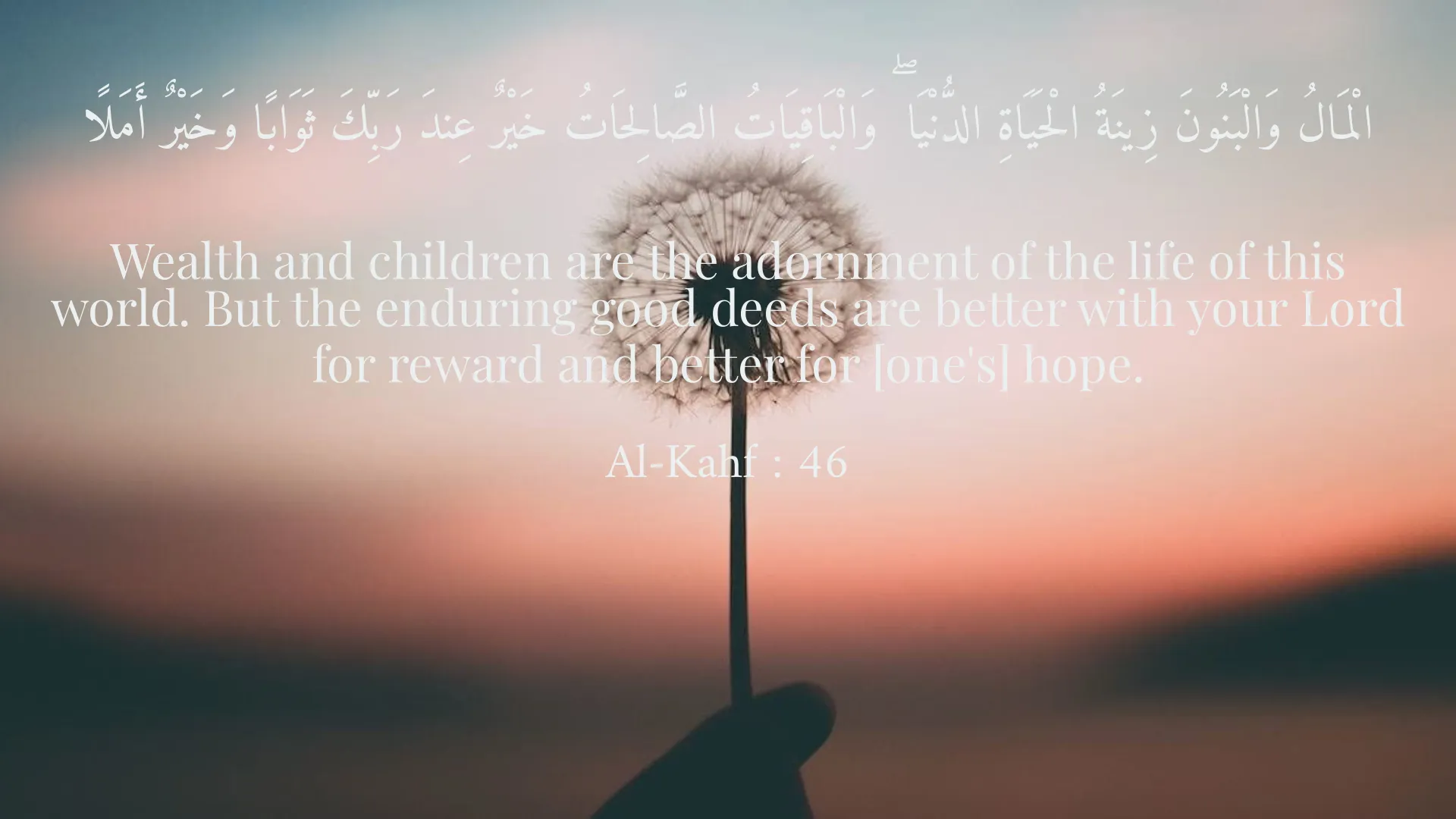
الْمَالُ وَالْبَنُونَ زِينَةُ الْحَيَاةِ الدُّنْيَا ۖ وَالْبَاقِيَاتُ الصَّالِحَاتُ خَيْرٌ عِندَ رَبِّكَ ثَوَابًا وَخَيْرٌ أَمَلًا
Wealth and children are the adornment of the life of this world. But the enduring good deeds are better with your Lord for reward and better for [one's] hope.
Al-Kahf : 46
يَا أَيُّهَا الَّذِينَ آمَنُوا لَا تُلْهِكُمْ أَمْوَالُكُمْ وَلَا أَوْلَادُكُمْ عَن ذِكْرِ اللَّهِ ۚ وَمَن يَفْعَلْ ذَٰلِكَ فَأُولَٰئِكَ هُمُ الْخَاسِرُونَ
O you who have believed, let not your wealth and your children divert you from remembrance of Allah. And whoever does that - then those are the losers.
Al-Munafiqun : 9
وَابْتَغِ فِيمَا آتَاكَ اللَّهُ الدَّارَ الْآخِرَةَ ۖ وَلَا تَنسَ نَصِيبَكَ مِنَ الدُّنْيَا ۖ وَأَحْسِن كَمَا أَحْسَنَ اللَّهُ إِلَيْكَ ۖ وَلَا تَبْغِ الْفَسَادَ فِي الْأَرْضِ ۖ إِنَّ اللَّهَ لَا يُحِبُّ الْمُفْسِدِينَ
But seek, through that which Allah has given you, the home of the Hereafter; and [yet], do not forget your portion of the world; and do good as Allah has done good to you. And desire not corruption in the land. Indeed, Allah does not like corrupters.
Al-Qasas : 77
Short Story
It is narrated that there was a wealthy merchant who possessed innumerable assets, houses, gardens, and caravans. Yet, his heart was always anxious lest his wealth vanish one day, and this distress deprived him of sleep and peace. Whenever he visited a wise elder, he would ask him, 'O Sage, how can I find peace with all this wealth and not forget God?' The wise elder smiled and said, 'O young man, wealth is like seawater; the more you drink, the thirstier you become. But if you take from it only what you need and generously give to others, not only will your thirst be quenched, but you will remain pure and clear, and your heart will be filled with the remembrance of Truth.' The merchant was moved by the elder's words. He began to help the needy, build schools and hospitals, and spent his profits in the way of God. It was not long before his heart found peace, and amidst abundant wealth, he did not forget God. He realized that true happiness lies not in accumulating wealth, but in giving and being grateful.