Quranic Answer
Can one start anew? This is a profound question, brimming with hope, that resonates in the hearts of many individuals, regardless of their beliefs. Within the rich teachings of Islam and by relying on the illuminating verses of the Holy Quran, the answer to this question is unequivocally clear: Yes, absolutely, one can start anew! This possibility is not merely a probability, but a divine promise and an unparalleled opportunity for every human being who desires to return, to rectify, and to move towards perfection. The Holy Quran opens countless doors for returning to Allah and commencing a new chapter in life, portraying the boundless mercy of the Divine in the most beautiful way possible. One of the most central concepts in the Quran is "Tawbah," or repentance. Tawbah means returning from sin, regretting past actions, and possessing a firm resolve not to repeat mistakes. Allah (SWT) in numerous verses calls upon His servants to repent and guarantees that with sincere and genuine repentance (Tawbah Nasuh), all sins, even the gravest ones, will be forgiven. This unparalleled opportunity is the greatest testament to the Lord's infinite mercy and grace. In Surah Az-Zumar, verse 53, Allah addresses His servants with a tone full of love and hope: "Say, 'O My servants who have transgressed against themselves [by sinning], do not despair of the mercy of Allah. Indeed, Allah forgives all sins. Indeed, it is He who is the Forgiving, the Merciful.'" This verse serves as a beacon of light for all who feel submerged in sin and believe there is no way back. Allah, with words full of hope, forbids despair and explicitly states that no sin is too great to be forgiven in the face of His mercy. This means that every moment can be the beginning of a great transformation and a fresh start. The Quran also teaches us that true repentance not only erases sins but can also transform them into good deeds. This astounding concept is clearly articulated in Surah Al-Furqan, verse 70: "Except for those who repent, believe and do righteous work. For them Allah will replace their evil deeds with good. And ever is Allah Forgiving and Merciful." This verse goes beyond the simple forgiveness of sins; it signifies a complete metamorphosis. Imagine that actions that once distanced you from Allah can now, through sincere repentance, be converted into good deeds in your book of records! This demonstrates the magnitude and transformative power of repentance and divine mercy, which grants humans the opportunity not only to compensate for their past but to transform it into a stepping stone for spiritual and moral elevation. This is the true meaning of a "fresh start"; a beginning that not only cleanses the past but propels it towards a brighter future. For a fresh start to be truly effective, the Quran emphasizes "Tawbah Nasuh." In Surah At-Tahrim, verse 8, we read: "O you who have believed, repent to Allah with sincere repentance. Perhaps your Lord will remove from you your misdeeds and admit you into Gardens beneath which rivers flow..." Tawbah Nasuh means repentance that stems from the depths of one's being, encompassing genuine regret for the sin, its complete abandonment, and a strong determination not to return to it. This repentance is not merely a verbal confession but a profound change of heart and action. When an individual wholeheartedly returns to Allah, they truly begin a new life built upon servitude and obedience to the Almighty. A fresh start is not just about being cleansed of sins; it is also an opportunity for growth, learning, and self-perfection. Every human being is prone to making mistakes in the journey of life. The crucial aspect is to learn from these errors and not allow despair to divert one from the right path. The Quran guides us by showing that even prophets, after their mistakes (such as Adam and Eve who repented after eating from the forbidden tree, and Allah accepted their repentance), had the opportunity to return and rectify themselves. This indicates that human nature is fallible, but divine mercy is always ready to accept the return of its servants. From a psychological and social perspective, this concept of a "fresh start" is also critically important. An individual who knows they can start anew sheds the heavy burden of guilt and shame. This instills in them energy and motivation to build a better life for themselves and those around them through positive thoughts and righteous conduct. A society built upon these teachings would be forgiving, dynamic, and constantly striving for self-improvement, as it offers wrongdoers a chance to return and actively participate in building a healthy community, rather than ostracizing them. To achieve a successful "fresh start," in addition to heartfelt repentance, practical steps are also necessary. These measures include: 1. Prayer and Supplication: Maintaining a continuous connection with Allah and seeking His help for steadfastness on the new path. 2. Performing Righteous Deeds: Striving to compensate for the past through good actions, helping others, and fulfilling religious obligations. 3. Abandoning Sinful Environments and Factors: Staying away from elements that lead one to sin, such as bad company or unhealthy surroundings. 4. Acquiring Knowledge and Understanding: Gaining a deeper understanding of Allah and religious teachings to strengthen faith and insight. 5. Patience and Perseverance: The path of transformation and starting anew may be accompanied by challenges; steadfastness on this path is essential. Ultimately, the Quran's message regarding a "fresh start" is one of hope, forgiveness, and humanity's infinite potential for transformation. No moment is too late to return to Allah, and every sunrise offers a new opportunity to begin a fresh chapter in life. Allah is always waiting for His servants to return, and the doors of His mercy are never closed. So, with confidence and trust in Allah, step forth on the path of rectification and a new beginning, for divine mercy is vaster than any sin.
Related Verses
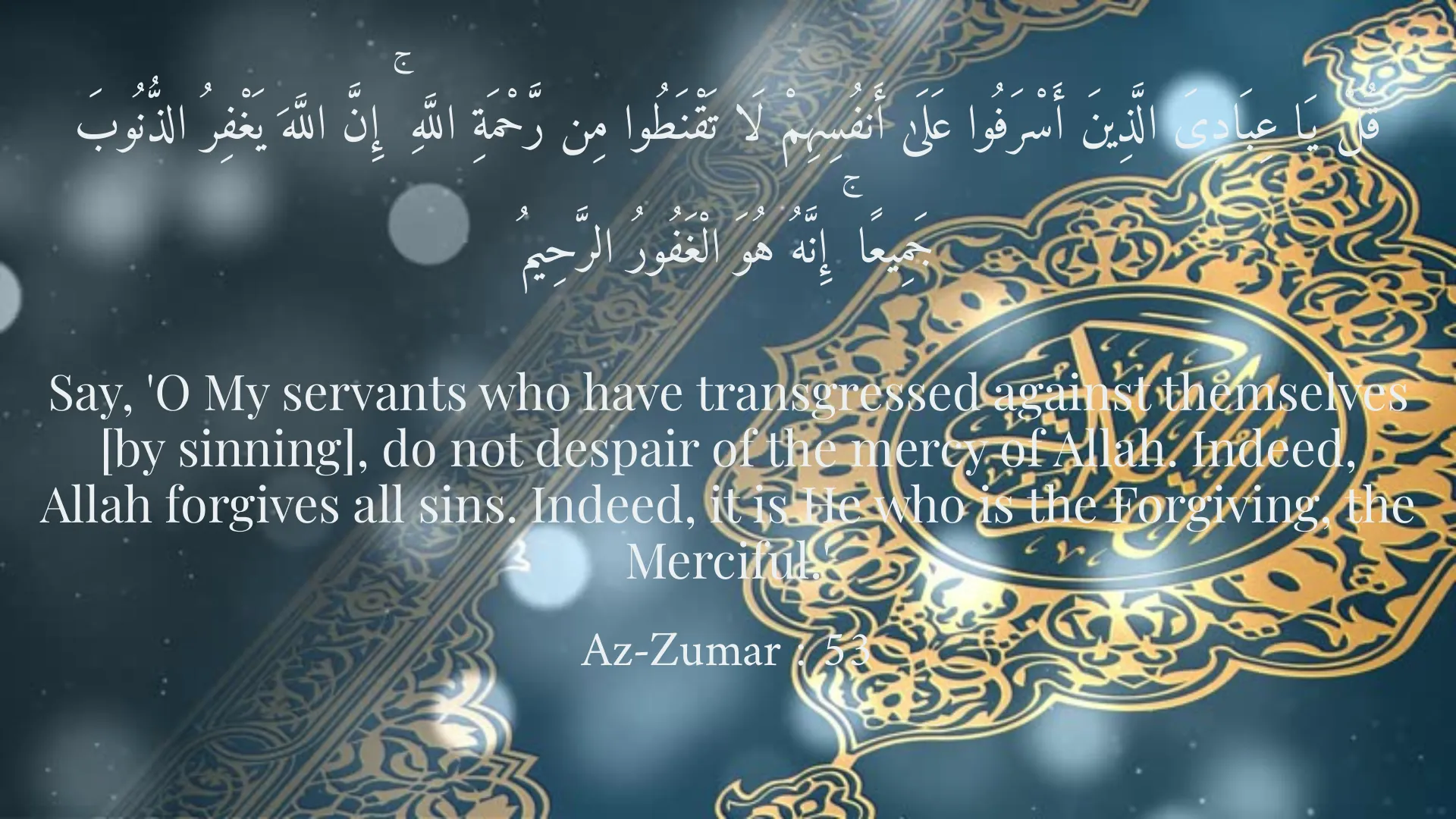
قُلْ یَا عِبَادِیَ الَّذِینَ أَسْرَفُوا عَلَىٰ أَنفُسِهِمْ لَا تَقْنَطُوا مِن رَّحْمَةِ اللَّهِ ۚ إِنَّ اللَّهَ یَغْفِرُ الذُّنُوبَ جَمِیعًا ۚ إِنَّهُ هُوَ الْغَفُورُ الرَّحِیمُ
Say, 'O My servants who have transgressed against themselves [by sinning], do not despair of the mercy of Allah. Indeed, Allah forgives all sins. Indeed, it is He who is the Forgiving, the Merciful.'
Az-Zumar : 53
إِلَّا مَن تَابَ وَآمَنَ وَعَمِلَ عَمَلًا صَالِحًا فَأُولَٰئِكَ يُبَدِّلُ اللَّهُ سَيِّئَاتِهِمْ حَسَنَاتٍ ۗ وَكَانَ اللَّهُ غَفُورًا رَّحِيمًا
Except for those who repent, believe and do righteous work. For them Allah will replace their evil deeds with good. And ever is Allah Forgiving and Merciful.
Al-Furqan : 70
يَا أَيُّهَا الَّذِينَ آمَنُوا تُوبُوا إِلَى اللَّهِ تَوْبَةً نَّصُوحًا عَسَىٰ رَبُّكُمْ أَن يُكَفِّرَ عَنكُمْ سَيِّئَاتِكُمْ وَيُدْخِلَكُمْ جَنَّاتٍ تَجْرِي مِن تَحْتِهَا الْأَنْهَارُ...
O you who have believed, repent to Allah with sincere repentance. Perhaps your Lord will remove from you your misdeeds and admit you into Gardens beneath which rivers flow...
At-Tahrim : 8
Short Story
It is narrated in Saadi's "Gulistan" that a just king had a vizier who, at the beginning of his service, had wrongfully taken some wealth from the treasury due to error and negligence. Years passed, and he became remorseful, ashamed of his actions. Nights he spent sleepless in regret. One day, he pondered how he could rectify this sin and begin a new life. Having repented with all his heart, he returned all of that wealth, and even more, to the treasury. Thereafter, he dedicated his entire life to serving the people with utmost honesty and integrity. The king, astonished by the vizier's goodness and trustworthiness, honored him even more. The vizier would say to himself, "This earthly king forgave me and forgot my past transgressions; then how could the true King of the universe, the Forgiving and Merciful God, not forgive me when I have repented from the bottom of my heart?" With this thought, he became even firmer in his servitude to God, demonstrating that no sin is so great that it can deprive a person of the opportunity for a fresh start in the face of sincere repentance.