Quranic Answer
Spirituality in Islam, understood as a deep and conscious connection with God, transcends any physical location and is essentially a state of the heart and soul. The Holy Quran repeatedly emphasizes that God is very near to His servants and hears the supplication of every individual, without the need for an intermediary or a specific place. Verse 186 of Surah Al-Baqarah explicitly states: "And when My servants ask you concerning Me, then [answer them], I am indeed near. I respond to the invocation of the supplicant when he calls upon Me. So let them respond to Me [by obedience] and believe in Me that they may be rightly guided." This verse clearly indicates that the connection with God is direct and unmediated, and a believer can turn to their Lord and call upon Him at any time and in any place. Furthermore, in verse 16 of Surah Qaf, we read: "And We are closer to him than [his] jugular vein," affirming God's absolute closeness to humanity. Therefore, the core of spirituality – including remembrance (dhikr), supplication (du'a), reflection, repentance, and acting upon divine commands – can be nurtured anywhere, be it at home, at work, or in nature. Allah has made the entire earth a place of prostration (sajdah) and purification for the Prophet's (PBUH) Ummah, meaning any clean place can be used for prayer and communion. Nevertheless, the role of the mosque in the spiritual lives of believers is profoundly vital and unique, and the Quran also emphasizes its importance. A mosque is not merely a place for congregational prayer; it is a center for gathering, education, and strengthening social bonds and Islamic brotherhood. Verse 36 of Surah An-Nur describes mosques as houses that Allah has permitted to be elevated and where His name is remembered: "In houses [mosques] which Allah has ordered to be raised and that His name be remembered therein are men who exalt Him morning and evening." This verse highlights the significance of mosques as focal points for remembrance and worship. Attending congregational prayers, especially the Friday prayer, which is called for in verse 9 of Surah Al-Jumu'ah: "O you who have believed, when [the adhan] is called for the prayer on the day of Jumu'ah, then proceed to the remembrance of Allah and leave trade. That is better for you, if you only knew," not only carries greater reward but also helps foster unity and solidarity among Muslims. These gatherings provide opportunities for learning, exchanging ideas, addressing problems, and strengthening the collective identity of Muslims. Mosques serve as venues for religious lessons, Quranic circles, ceremonial events for Eid and other significant occasions, and charitable activities, all of which contribute to individual and collective spiritual growth. Thus, while the essence of spirituality is an internal matter accessible anywhere, the mosque, as the backbone of the Islamic community and a sacred space, plays a crucial role in reinforcing, establishing, and collectively manifesting this spirituality. One can indeed live a spiritual life without constant physical presence in a mosque, but deriving the blessings and virtues of mosques, particularly for men, is strongly recommended and considered part of the completeness of spirituality. A mosque is a place that detaches one from worldly attachments and ushers them into a sacred space filled with tranquility. This environment, with its spiritual ambiance, helps individuals focus more on worship and feel part of a community of believers, a sense of belonging and solidarity that itself strengthens faith. Ultimately, integrating personal spirituality with communal presence in mosques is a path to a comprehensive and fruitful Islamic life, nourishing both the soul and guiding the body on the path of God. Therefore, in truth, spirituality can be lived without a mosque, but it is not complete without it and deprives one of many social and spiritual blessings. To elaborate further, imagine a seed that requires sunlight and water to grow; this seed can grow in any soil, but if placed in rich soil within an ideal environment, it will yield more abundant fruits. Spirituality is similar; its roots are in the human heart and can be nourished anywhere, but the mosque acts as that rich soil and ideal environment that helps it reach its peak bloom. The atmosphere of mosques, due to their sanctity and the collective presence of believers, possesses a special spiritual energy that helps individuals detach from worldly concerns and focus more intensely on the remembrance of God. This not only enhances the quality of individual worship but also strengthens the sense of unity and connection with other Muslims. Therefore, although God is present everywhere and has a direct connection with every human being, mosques are special places established to strengthen this connection and manifest it in the form of a believing community. These sacred spaces offer an unparalleled opportunity to cultivate various dimensions of spirituality and achieve true inner peace. Beyond being a mere building, the mosque is a symbol of the unity of the Islamic Ummah and a pillar for preserving religious identity. Within its walls, not only are prayers established in congregation, but religious knowledge is disseminated, social issues are discussed, and mutual aid is extended. These social interactions are a complementary and enriching aspect of individual spirituality, without which an individual might feel isolated and disconnected. This communal gathering, especially in the current era where individual isolation is increasing, gains even greater importance. Thus, one can pursue spirituality in their solitude and anywhere, but to reach its peak and benefit from all dimensions of Islamic spirituality, which has both individual and social aspects, presence in the mosque and participation in its activities is highly beneficial and even necessary. This not only aids in the individual's spiritual growth but also places them on the path of serving society and strengthening Islamic values. In conclusion, the mosque and spirituality are two sides of the same coin that complete each other, and together, they form a comprehensive and fruitful Islamic life.
Related Verses
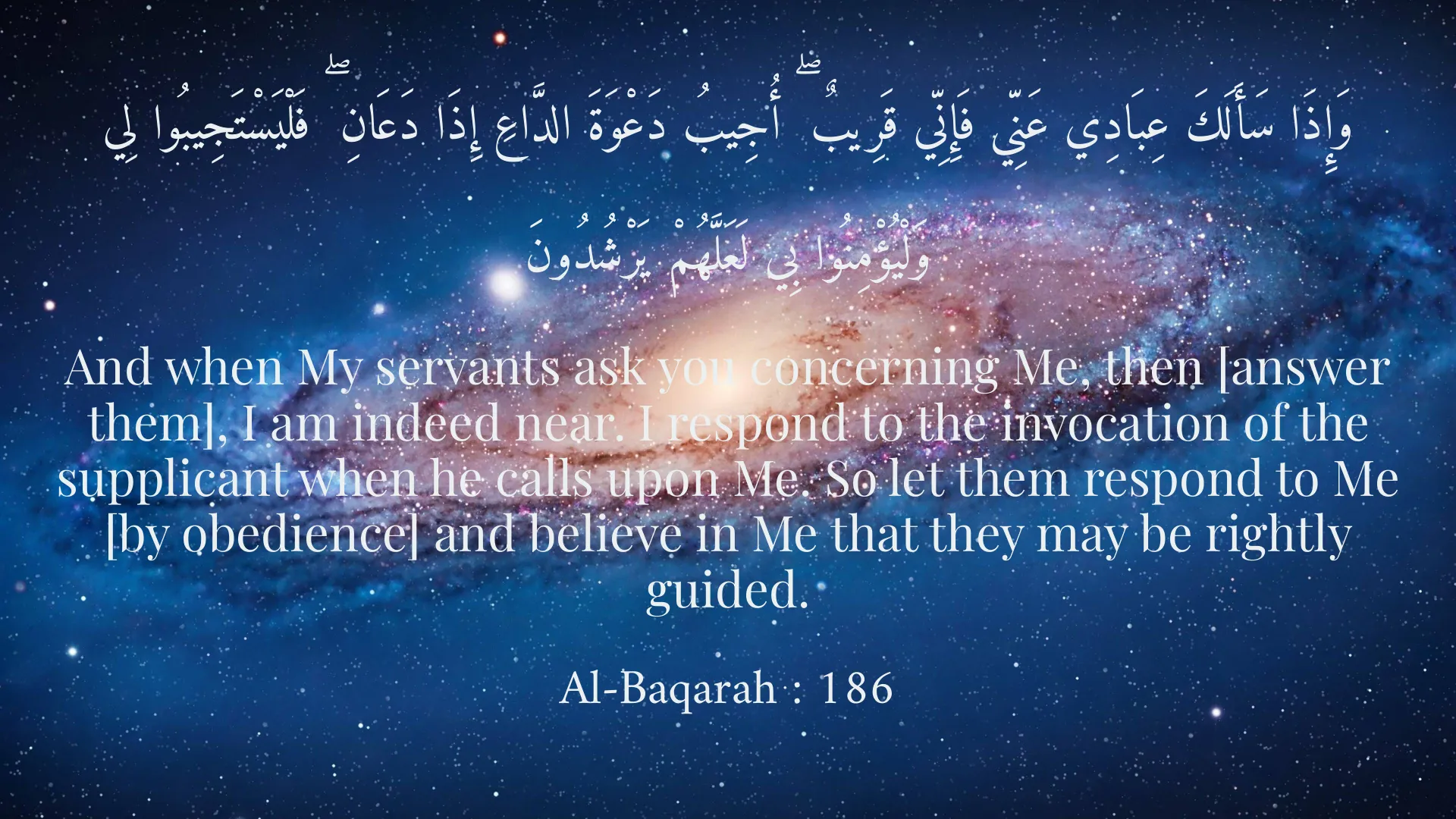
وَإِذَا سَأَلَكَ عِبَادِي عَنِّي فَإِنِّي قَرِيبٌ ۖ أُجِيبُ دَعْوَةَ الدَّاعِ إِذَا دَعَانِ ۖ فَلْيَسْتَجِيبُوا لِي وَلْيُؤْمِنُوا بِي لَعَلَّهُمْ يَرْشُدُونَ
And when My servants ask you concerning Me, then [answer them], I am indeed near. I respond to the invocation of the supplicant when he calls upon Me. So let them respond to Me [by obedience] and believe in Me that they may be rightly guided.
Al-Baqarah : 186
وَلَقَدْ خَلَقْنَا الْإِنسَانَ وَنَعْلَمُ مَا تُوَسْوِسُ بِهِ نَفْسُهُ ۖ وَنَحْنُ أَقْرَبُ إِلَيْهِ مِنْ حَبْلِ الْوَرِيدِ
And We have already created man and know what his soul whispers to him, and We are closer to him than [his] jugular vein.
Qaf : 16
فِي بُيُوتٍ أَذِنَ اللَّهُ أَن تُرْفَعَ وَيُذْكَرَ فِيهَا اسْمُهُ يُسَبِّحُ لَهُ فِيهَا بِالْغُدُوِّ وَالْآصَالِ
[Illumination is] in houses [mosques] which Allah has ordered to be raised and that His name be remembered therein are men who exalt Him morning and evening.
An-Nur : 36
يَا أَيُّهَا الَّذِينَ آمَنُوا إِذَا نُودِيَ لِلصَّلَاةِ مِن يَوْمِ الْجُمُعَةِ فَاسْعَوْا إِلَىٰ ذِكْرِ اللَّهِ وَذَرُوا الْبَيْعَ ۚ ذَٰلِكُمْ خَيْرٌ لَّكُمْ إِن كُنتُمْ تَعْلَمُونَ
O you who have believed, when [the adhan] is called for the prayer on the day of Jumu'ah, then proceed to the remembrance of Allah and leave trade. That is better for you, if you only knew.
Al-Jumu'ah : 9
Short Story
It is narrated that one day, Sheikh Sa'di was traveling and came across a caravan. A man from that caravan, who considered himself very pious and always frequented the mosque, asked Sa'di: "O Sheikh, can one attain the truth of spirituality without setting foot in a mosque?" Sa'di smiled and said: "My brother, do you imagine that the House of God is merely this stone building constructed in cities? The House of God is a heart in which His love and remembrance reside. Whoever has the light of faith and sincerity burning in their heart, wherever they may be, that place is their mihrab and their prostration ground. Perhaps there are those who go to the mosque every day, yet their hearts are far from God; and perhaps there is one who, in a lonely corner, with a pure heart and sincere intention, whispers to God and is more beloved than a thousand mosque-goers. The mosque is a place for gathering and strengthening faith, but the true ascent (mi'raj) begins from the heart." The caravan man was astonished by Sa'di's words and realized the depth of spirituality, that it lies not in walls, but in hearts.