Quranic Answer
The question, "Can the past be changed?" is one of the most fundamental inquiries that has occupied the human mind, extensively debated in philosophical, psychological, and theological domains. From the perspective of the Holy Quran and Islamic teachings, the answer to this question is clear and definitive: No, events that have occurred in the past cannot be physically or actually altered or erased. The past is a bygone era, with all its details and occurrences recorded, and it is irreversible. This impossibility of changing the past is not merely a physical and logical truth; it also possesses deeper dimensions within the Quranic worldview, reflecting divine wisdom, the order of creation, and human accountability. Divine Wisdom and Predestination (Qadar): The Quran emphasizes that everything, from the smallest incident to the greatest calamities, unfolds according to divine knowledge and predestination. Allah (SWT) has complete knowledge of all events before they occur, and everything is recorded in the "Preserved Tablet" (Al-Lawh Al-Mahfuz). This concept of divine decree (Qada and Qadar) does not imply that humans are forced to perform their actions; rather, it signifies that Allah encompasses all things, and everything that happens is within the framework of His boundless knowledge. When Allah states in the Quran: "No disaster strikes upon the earth or among yourselves except that it is in a register before We create it – indeed that, for Allah, is easy." (Surah Al-Hadid, 57:22), this verse clearly indicates that events are recorded before their occurrence. Once an event has transpired, it becomes part of the past, and it cannot be erased or altered from the tablet of divine decree. This permanence of the past is one of the pillars of the cosmic order established by Allah. Recording of Deeds and Accountability: Another reason why the past is unchangeable is the concept of "recording of deeds." In Islam, it is believed that every individual's actions, whether good or bad, are meticulously recorded by angels (Kiraman Katibin, "honorable scribes") and will be presented as a "book of deeds" on the Day of Judgment. The Quran states: "And the record [of deeds] will be placed [before them], and you will see the criminals fearful of that within it, and they will say, 'Oh, woe to us! What is this book that leaves neither a small thing nor a great but that it has enumerated it?' And they will find what they did present [before them]. And your Lord does injustice to no one." (Surah Al-Kahf, 18:49). This verse explicitly shows that past deeds are fixed and will be presented exactly as they occurred on the Day of Reckoning. If the past could be changed, the very foundation of divine accountability and justice would be undermined. Human responsibility for one's actions necessitates a fixed and undeniable past. Divine Mercy and the Possibility of Changing Past Consequences: While the past events themselves cannot be altered, this does not mean that individuals are utterly helpless against their consequences and ramifications. Allah's expansive mercy has opened a path for humans to change the "effects" and "outcomes" of the past, especially concerning sins and mistakes. This is where the concept of "Tawbah" (repentance) comes into play. Tawbah signifies a sincere return to Allah from sins. The Holy Quran emphasizes the importance and impact of repentance in numerous verses: "Say, 'O My servants who have transgressed against themselves [by sinning], do not despair of the mercy of Allah. Indeed, Allah forgives all sins. Indeed, it is He who is the Forgiving, the Merciful.'" (Surah Az-Zumar, 39:53). True repentance involves remorse for the past, cessation of the sin in the present, and a firm resolve not to return to it in the future. Through sincere repentance (Tawbah Nasuh), Allah can forgive past sins and even transform them into good deeds, as stated in Surah Al-Furqan, verse 70: "Except for those who repent, believe and do righteous work. For them Allah will replace their evil deeds with good. And ever is Allah Forgiving and Merciful." This transformation of sins into good deeds does not mean the physical erasure of the event from history, but rather the cleansing of its negative spiritual effects and its punishment in the afterlife. This demonstrates the immense greatness and boundless compassion of Allah, who grants humans the opportunity to rectify their past wrongs and change the course of their lives, thereby improving their eternal destiny. Learning from the Past and Hope for the Future: Another crucial aspect is the utilization of the past as a source of lessons and admonition. The Quran narrates many stories of past nations to enable people to learn from their mistakes and avoid similar fates. This approach implies that the past is fixed, and it can be used to improve the future. A believer, understanding that the past cannot be changed, refrains from excessive self-blame and dwelling in regret. They know that focusing on remorse and regret over what has passed, without acting to rectify the present and future, is a waste of energy and opportunity. Instead, by accepting responsibility for past actions, they learn from them and, through repentance and good deeds, move towards a better future. Conclusion: Therefore, from a Quranic perspective, the past is a fixed and unchangeable reality. Time is linear, and events, once they occur, become part of history that cannot be undone or altered. However, this does not imply despair or fatalism. Rather, Allah (SWT), with His infinite mercy, has granted humanity the power and opportunity to change the "consequences" of the past, particularly in the afterlife, through repentance, righteous deeds, and making amends. With this understanding, an individual accepts responsibility for their actions, learns from the past, and moves towards building a brighter present and future with hope in divine forgiveness. This approach is not only realistic but also paves the way for spiritual growth and eternal felicity.
Related Verses
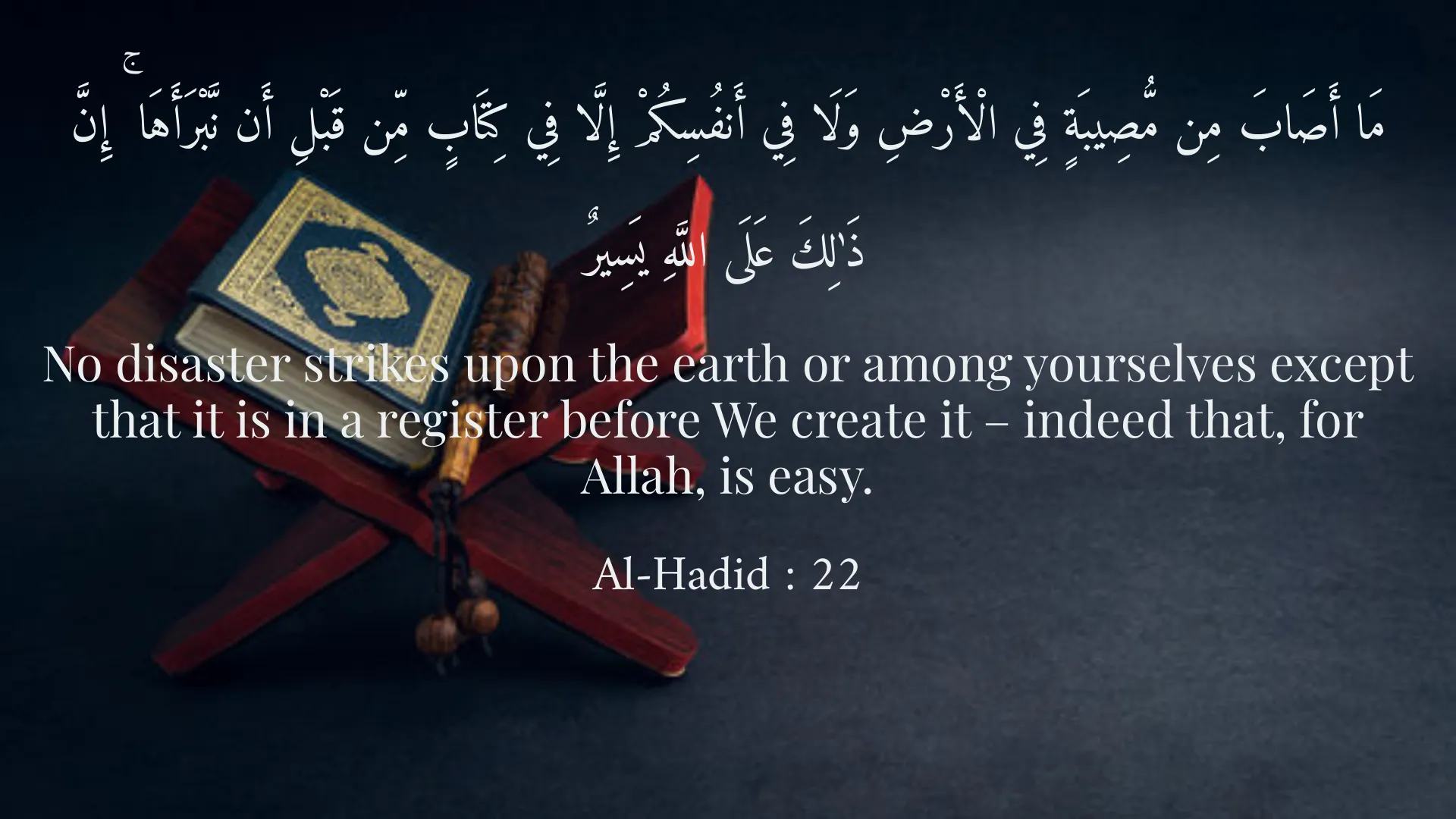
مَا أَصَابَ مِن مُّصِيبَةٍ فِي الْأَرْضِ وَلَا فِي أَنفُسِكُمْ إِلَّا فِي كِتَابٍ مِّن قَبْلِ أَن نَّبْرَأَهَا ۚ إِنَّ ذَٰلِكَ عَلَى اللَّهِ يَسِيرٌ
No disaster strikes upon the earth or among yourselves except that it is in a register before We create it – indeed that, for Allah, is easy.
Al-Hadid : 22
وَوُضِعَ الْكِتَابُ فَتَرَى الْمُجْرِمِينَ مُشْفِقِينَ مِمَّا فِيهِ وَيَقُولُونَ يَا وَيْلَتَنَا مَالِ هَٰذَا الْكِتَابِ لَا يُغَادِرُ صَغِيرَةً وَلَا كَبِيرَةً إِلَّا أَحْصَاهَا ۚ وَوَجَدُوا مَا عَمِلُوا حَاضِرًا ۗ وَلَا يَظْلِمُ رَبُّكَ أَحَدًا
And the record [of deeds] will be placed [before them], and you will see the criminals fearful of that within it, and they will say, 'Oh, woe to us! What is this book that leaves neither a small thing nor a great but that it has enumerated it?' And they will find what they did present [before them]. And your Lord does injustice to no one.
Al-Kahf : 49
قُلْ يَا عِبَادِيَ الَّذِينَ أَسْرَفُوا عَلَىٰ أَنفُسِهِمْ لَا تَقْنَطُوا مِن رَّحْمَةِ اللَّهِ ۚ إِنَّ اللَّهَ يَغْفِرُ الذُّنُوبَ جَمِيعًا ۚ إِنَّهُ هُوَ الْغَفُورُ الرَّحِيمُ
Say, 'O My servants who have transgressed against themselves [by sinning], do not despair of the mercy of Allah. Indeed, Allah forgives all sins. Indeed, it is He who is the Forgiving, the Merciful.'
Az-Zumar : 53
Short Story
It is narrated that a just king, in his youth, made a mistake and, in a moment of anger, commanded an injustice. Later, when he grew old, regret for that act took root in his heart, and he daily asked himself: "Is there any way to erase that moment?" He had a wise vizier who told him: "O King, the passage of time has no return, and whatever has happened is recorded in the book of deeds. However, Allah is the Most Merciful, and He has opened the gate of repentance. If you truly regret that injustice and now, instead, spread justice and aid the oppressed, then that past act, though it will not be erased, divine mercy will cover it and mitigate its consequences. The past cannot be changed, but the future can be built with remorse and righteous deeds." The king rejoiced at this counsel and spent the rest of his life in justice and benevolence, leaving behind a good name.