Quranic Answer
From the perspective of the Holy Quran, the answer to this question is unequivocally "yes." Hardships, challenges, and adversities are not merely an unavoidable part of human life; rather, they serve as potent and vital instruments in the journey of human growth, maturity, and spiritual and personal development. The Noble Quran repeatedly emphasizes the reality that this world is a realm of trials and tests, and Allah the Almighty tests His servants through various difficulties and tribulations. The purpose of these tests is both to gauge their faith and to provide a fertile ground for their growth and elevation. Although these trials may appear daunting and overwhelming on the surface, they inherently contain profound divine wisdom and unparalleled opportunities for self-discovery, strengthening of resolve, and drawing closer to the Creator of the universe. This Quranic view transforms hardships from mere unfortunate events into constructive tools for the elevation of the soul and the purification of intention. In the Quran, Allah clearly articulates the philosophy behind ibtila (testing) and fitna (trial). These trials are not because Allah is unaware of His servants' conditions – far be it from Him, for He is the Knower of the seen and the unseen – but rather, their objective is to reveal the inner truth of individuals, distinguish the truly faithful from the insincere, and unleash their hidden potentials. Just as gold must pass through fire to be purified, the human soul also needs to endure the crucible of events and hardships to achieve perfection and purity. This process cleanses a person of impurities, making them stronger, more patient, and more reliant on Allah. In this journey, individuals learn that instead of relying on material and superficial means, their true refuge and support is Allah alone. This reliance on Allah, especially during moments of despair and difficulty, paves the way for their spiritual ascent and bestows upon them a deep sense of peace that cannot be found in any comfort. Indeed, hardships are silent teachers that impart invaluable lessons to humans, lessons that would never have been learned under normal circumstances. The Holy Quran considers patience (sabr) to be the key to overcoming these trials. In numerous verses, believers are instructed to cultivate patience in the face of calamities and to seek help through prayer and the remembrance of Allah. Patience here does not mean passive surrender to fate, but rather perseverance, active resistance, striving to find solutions, and maintaining peace of heart amidst turmoil. Patience helps a person understand the hidden wisdom behind difficulties and realize that every hardship is a lesson to be learned and an opportunity for the soul to be refined. This insight transforms a person's perspective on problems; they no longer view difficulties as destructive obstacles but rather as opportunities for blossoming and flourishing. This proactive and trusting approach not only aids in overcoming the problem but also leads to unprecedented personal and spiritual growth. One of the most beautiful expressions in the Quran regarding this matter is the promise "Indeed, with hardship [will come] ease," which is repeated twice in Surah Al-Inshirah (Al-Sharh). This repetition is a definitive affirmation of the principle that no hardship is eternal, and after every period of difficulty, relief and ease will follow. This promise keeps hope alive in the human heart and empowers individuals to pass through the dark tunnel of problems with reliance on Allah. This ease might manifest as the resolution of the problem, or as a change in perspective and inner growth that makes the hardship more bearable, or even as an immense reward in the hereafter for the patience shown in this world. This principle assures us that sufferings are not purposeless and always have an end that is for our good, whether we comprehend it or remain unaware at the present moment. Another benefit of hardships, according to the Quranic teachings, is the strengthening of empathy and compassion in a person. An individual who has personally suffered and tasted the bitter flavor of calamities can better understand the pain of others and empathize with them. These experiences steer them away from self-centeredness and towards altruism and helping their fellow human beings. In other words, hardships can serve as a catalyst for awakening social conscience and cultivating noble moral qualities. They unveil life's realities and make humans appreciate blessings they previously took for granted. Losing health makes one grateful for well-being; financial loss teaches the value of contentment and reliance on Allah; and separations reveal the importance of relationships and bonds. These insights transform a person into a deeper and more compassionate being. In summary, the verses of the Quran clearly indicate that hardships are formative. They not only test and strengthen a person's faith but also shape their character. These experiences solidify willpower, make the heart reliant on Allah, teach patience, and deepen a person's insight into the truth of life. An individual who emerges successfully from these trials is a more mature, resilient, and spiritually richer person who, instead of fearing challenges, welcomes them, knowing that every obstacle is a stepping stone to higher peaks of perfection. This process, though difficult, will inevitably lead to nothing but growth and elevation, preparing the individual to reach the status of closeness to Allah and reminding them that this world is transient and the true reward awaits in the eternal afterlife.
Related Verses
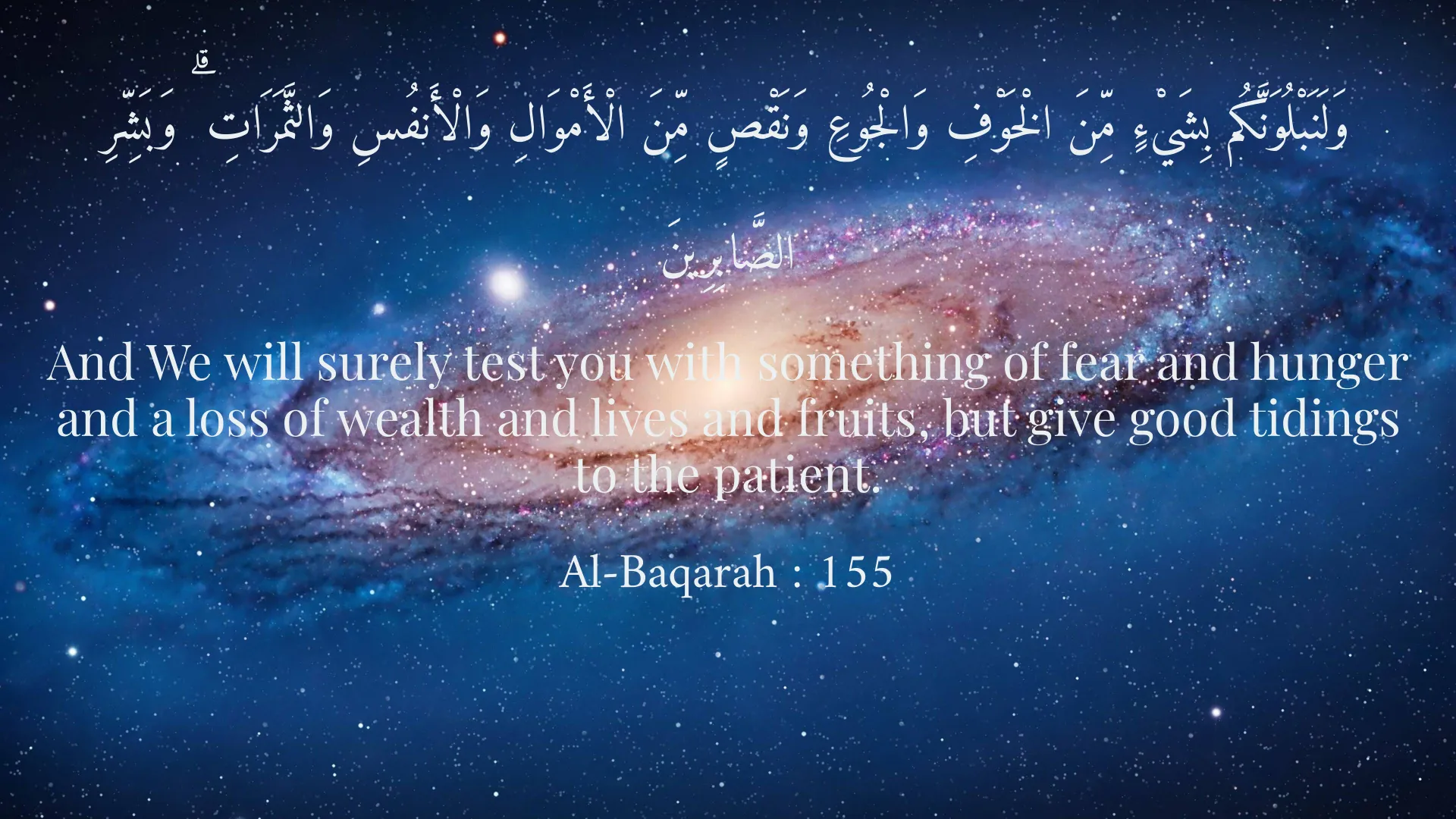
وَلَنَبْلُوَنَّكُم بِشَيْءٍ مِّنَ الْخَوْفِ وَالْجُوعِ وَنَقْصٍ مِّنَ الْأَمْوَالِ وَالْأَنفُسِ وَالثَّمَرَاتِ ۗ وَبَشِّرِ الصَّابِرِينَ
And We will surely test you with something of fear and hunger and a loss of wealth and lives and fruits, but give good tidings to the patient.
Al-Baqarah : 155
أَحَسِبَ النَّاسُ أَن يُتْرَكُوا أَن يَقُولُوا آمَنَّا وَهُمْ لَا يُفْتَنُونَ
Do people think that they will be left alone because they say, 'We believe,' and will not be tested?
Al-Ankabut : 2
وَلَقَدْ فَتَنَّا الَّذِينَ مِن قَبْلِهِمْ ۖ فَلَيَعْلَمَنَّ اللَّهُ الَّذِينَ صَدَقُوا وَلَيَعْلَمَنَّ الْكَاذِبِينَ
But We have certainly tested those before them, and Allah will surely make evident those who are truthful and will surely make evident the liars.
Al-Ankabut : 3
فَإِنَّ مَعَ الْعُسْرِ يُسْرًا
For indeed, with hardship [will come] ease.
Al-Inshirah : 5
إِنَّ مَعَ الْعُسْرِ يُسْرًا
Indeed, with hardship [will come] ease.
Al-Inshirah : 6
Short Story
They say that in ancient times, a virtuous and wandering dervish embarked on a long journey. The path before him was thorny and rocky. With every step he took, a thorn pricked his foot, and a stone made him stumble. Tired and disheartened, he said to himself, "What kind of path is this, that brings nothing but pain and hardship? Will I ever reach my destination?" Just then, he encountered a wise old man who looked at him with a kind smile. The old man said, "My young friend! Do not imagine that the path to perfection is smooth and without toil. Every thorn that pricks your foot removes a speck of dust from your soul, and every stone that makes you stumble is a step towards maturity. These difficulties are not meant to hinder you, but to build you. Just like a flower that, through the hardship of water and soil, strengthens its roots and enhances its fragrance." Hearing these words, the dervish's heart found peace, and with renewed resolve, he continued on his way. He understood that every hardship is a ladder towards knowledge and perfection.