Quranic Answer
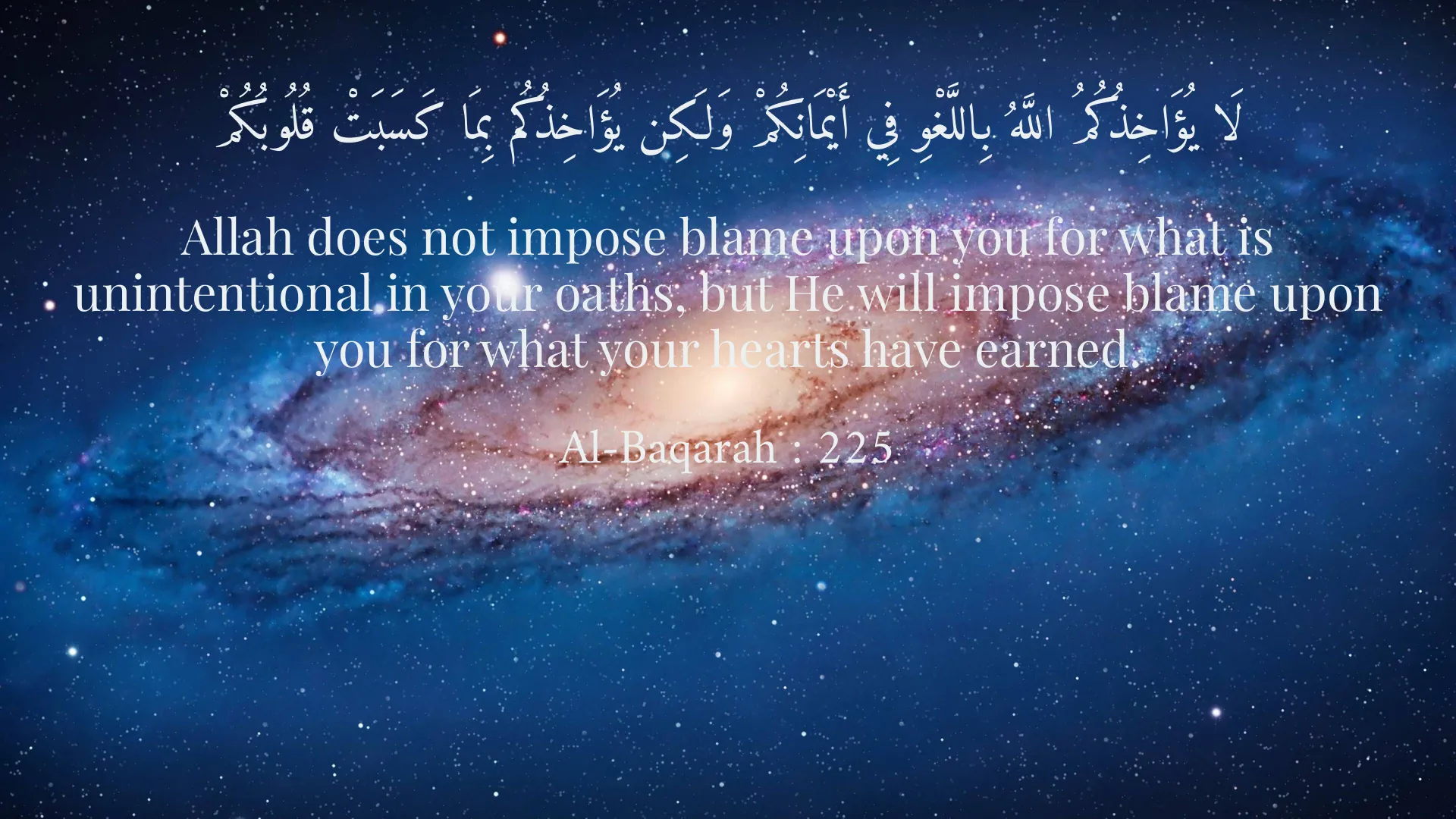
The role of intention and action within the realms of faith and morality has long been a topic of discussion and contemplation among scholars, theologians, and practitioners alike. In the Holy Quran, the significance of intention and action is clearly emphasized as being central to the moral fabric that governs human conduct. Allah, the Most High, asserts the importance of both intentions and deeds, emphasizing that the rewards and consequences in the life to come will be based upon these criteria. One of the most striking verses that encapsulates this understanding can be found in Surah Al-Baqarah, verse 225, where it is stated: 'Allah does not impose blame upon you for what is unintentional in your oaths, but He will impose blame upon you for what your hearts have earned.' This profound statement illustrates a critical element of Islamic doctrine: while actions are vital, the intentions behind those actions hold significant weight in divine judgment. In exploring this verse, we discern the intricate relationship between intention (niyyah) and action (amal). The heart's intentions are recognized as the cornerstone of righteous living. For instance, the concept elucidates that if an individual harbors the intention to do good—such as assisting someone in need—but due to circumstances beyond their control (like economic strain, health issues, or time constraints) fails to capitalize on that intention, they are still worthy of recognition. Allah’s understanding is far deeper and more encompassing than surface-level actions Moreover, the importance of this principle is reaffirmed in Surah Al-Mu’minun, verse 60, where it states: 'And those who give what they give while their hearts are fearful because they will be returning to their Lord.' This verse reinforces that even acts of charity and benevolence should stem from a place of authenticity and sincerity. The notion of doing good while being acutely aware of the eventual return to Allah emphasizes that Allah is not merely interested in the act itself, but in the inner motivations that drive such actions. Understanding the nature of intention also plays a critical role in how faith is conceptualized and practiced among Muslims. The Quran encourages believers to nurture a sincere heart, striving to align their intentions with the divine will, thus ensuring that their deeds are not just actions performed for social approval, but reflections of their inner commitment to fulfilling their religious and ethical obligations. The integration of pure intention with righteous action creates a pathway to spiritual elevation and moral integrity. Furthermore, it can be postulated that the recognition of good intentions holds societal significance. In day-to-day life, the impact of individuals' intentions can foster a sense of community and social responsibility. For example, when a person intends to provide assistance to a neighbor, even if obstacles prevent them from doing so, the mere intention can create a ripple effect. Others in the community are likely to be inspired by such genuine desires to help, leading to increased social cohesion and stronger bonds between individuals. This intertwining of intention and social action elucidates how benevolent intentions can ultimately enrich not just individual lives, but society as a whole. Additionally, we must consider the implications of intention in contrast to mere action. In a world that often prioritizes outcomes and visible achievements, the emphasis on the inner motivation can serve as a safeguard against superficiality. It encourages people to dig deeper and reflect on why they are pursuing certain actions. This self-reflection can lead to a more profound sense of purpose that transcends the immediate gratification often associated with visible success. The emphasis on intention assures that the process of striving towards righteousness is valued just as much as the end result. Islam teaches that intentions must be rectified and purified to ensure the actions they inspire are aligned with what is pleasing to Allah. This entails that individuals regularly engage in self-assessment and introspection, probing into the motivations behind their actions. Such self-examination fosters integrity, authenticity, and personal growth, setting an individual on a path towards spiritual enlightenment. Moreover, it is crucial to highlight that while the Quran reassures believers of Allah’s recognition of good intentions, it does not provide an excuse for negligence or inaction. Intentions alone are not sufficient; they must be accompanied by efforts toward implementation. In this regard, they must inspire concrete actions, reflective of the Islamic principles of responsibility and accountability. This is beautifully illustrated in the teachings of the Prophet Muhammad (peace be upon him), who emphasized that actions are evaluated by their intentions. The balance between intention and action mirrors the interplay between theory and practice in many facets of life, extending beyond religious contexts into personal and professional realms. In every area of life, the actions we take should resonate with our deeper motivations and authentic selves. This leads to reformed behaviors and practices that advocate for sincerity and truthfulness, fostering cultures of integrity. In conclusion, the role of intention in conjunction with action is a profound principle embodied in the teachings of the Holy Quran. It is a reminder that each individual's heart must be aligned with their deeds, cultivating virtues that not only benefit oneself but also serve to uplift society. Allah's awareness of human intentions provides hope and encouragement that even unfulfilled desires to do good are recognized and rewarded. Ultimately, excellent intentions lead to a fulfilling practice of faith that nurtures kindness, compassion, and a genuine connection with those around us. Thus, it can be asserted that both intention and action capture the essence of a life lived in sincerity, paving the way for personal fulfillment and a harmonious society.
Related Verses
لَا يُؤَاخِذُكُمُ اللَّهُ بِاللَّغْوِ فِي أَيْمَانِكُمْ وَلَكِن يُؤَاخِذُكُم بِمَا كَسَبَتْ قُلُوبُكُمْ
Allah does not impose blame upon you for what is unintentional in your oaths, but He will impose blame upon you for what your hearts have earned.
Al-Baqarah : 225
وَالَّذِينَ يُؤْتُونَ مَا آتَوْا وَقُلُوبُهُمْ وَجِلَةٌ أَنَّهُمْ إِلَى رَبِّهِمْ رَاجِعُونَ
And those who give what they give while their hearts are fearful because they will be returning to their Lord.
Al-Mu'minun : 60
Short Story
One day, a man intended to help an orphan but couldn't fulfill his intentions due to some obstacles. However, he thought of that orphan every day and wished well for him in his heart. One day, someone told him that your intention is valuable and that God is aware of hearts filled with good. He reflected that his good intention would never be forgotten, and he hoped to take action one day.