Quranic Answer
The prayer of mothers holds a unique significance in the Islamic faith, deeply resonating with the teachings of the Quran and the principles laid out in various Hadiths. Central to this concept is the understanding that the relationship between children and their parents, particularly mothers, forms a cornerstone of societal and spiritual values within Islam. The reverence that is afforded to mothers transcends mere familial obligations and enters the realm of divine endorsement. The Quran explicitly reiterates the importance of parents, especially in Surah Al-Ahqaf, verse 15, which states: 'And We have enjoined upon man, [care] for his parents. But if they endeavor to make you associate with Me that of which you have no knowledge, do not obey them. To Me is your return, and I will inform you about what you used to do.' This verse encapsulates the dual duties of respect and obedience towards parents, while also delineating the non-negotiable threshold of monotheism, showcasing the elevated status of a mother's role in a child's spiritual guidance. Mothers are often likened to the nurturing soil from which a child flourishes. The love, care, and sacrifices that a mother provides are not merely acts of kindness but are acts that greatly influence a child's upbringing and future actions. In Islam, the gravity of a mother’s role cannot be overstated. It is within her embrace that a child learns the values of compassion, empathy, and devotion—all of which are integral to subsequent character development. The prayers that a mother offers for her children are seen not only as expressions of love but also as powerful supplications that can influence the course of a child’s life. According to Islamic teachings, the prayers of mothers hold a distinctive weight in the eyes of Allah, demonstrating a direct link between maternal supplication and divine response. In many Islamic traditions, it is believed that the heart of a mother, filled with love and concern for her offspring, possesses an inherent power that renders her prayers among those most likely to be accepted by God. This concept suggests a profound relationship between a mother's emotional state, her intentions, and the efficacy of her prayers. The bond forged between a mother and child is unique, characterized by a depth of understanding that transcends verbal communication. It is said that when a mother prays for her child, she does so from a place that is devoid of selfishness and full of unconditional love—qualities that elevate the sincerity of her supplications. There are various narrations that emphasize the significance of a mother's prayer, particularly during difficult times. One such narration from the Prophet Muhammad (peace be upon him) conveys the message that the prayers of a mother for her child are undeniably heard and answered by Allah. This notion instills hope and solace in families, particularly in times of adversity. The prayer of a mother is perceived not only as a personal request for her child’s well-being but also as an overarching mechanism for divine intervention during periods of distress. Hence, in the face of hardship, a mother’s unwavering faith and continual prayers serve as both a comfort to her children and a vital source of strength that helps them navigate through life’s challenges. Additionally, Islamic scholars have often expounded upon the idea that the fervor and devotion exhibited by a mother in her prayers can act as a shield against misfortunes that befall her family. It is thought that a mother's prayer can repel calamities and invite blessings, establishing a protective aura around her children. This belief reflects the conjugal faith in the nurturing capacities of mothers that extends beyond physical care to spiritual guardianship. It is commonplace to hear families emphasize their reliance on the prayers of their mothers, particularly in times of uncertainty. Furthermore, the act of praying for one’s children is an intrinsic facet of motherhood that fosters a sense of closeness to the Divine. Many mothers partake in the ritual of prayer regularly, incorporating their children’s names into their supplications, thus making these moments not only personal but also a communal experience—a blend of individual spirituality and family ties. This regular practice reinforces the bonds of family and cultivates an environment imbued with faith and spirituality. Another important element is the reflection of a mother’s prayers in the actions and lives of her children. There exists a belief in Islam that children are often reflections of their parents’ actions, attitudes, and prayers. Therefore, loading one’s prayers with care and positive intentions can reap rewards in the form of morally upright and compassionate children. The intertwining of a mother’s mentality with her child’s future suggests that a mother's character and her spiritual practices significantly shape the destinies of her children, thereby stressing the importance of cultivating a prayerful life. In conclusion, the concept of a mother’s prayer within Islam reflects deep-seated spiritual beliefs that highlight the sacredness of motherhood. It portrays mothers as pivotal figures not just in the familial context but also in the divine connection one holds with Allah through prayer. The Quran’s emphasis on respect towards mothers, coupled with the belief that their prayers are answered, showcases the unique place mothers hold in the spiritual fabric of life. It becomes evident that a mother’s prayer is indeed one of the most influential factors in a child’s life, deserving special attention and reverence from both their children and Allah. Thus, the collective recognition of mothers as central figures in nurturing spiritual growth and stability is not just a cultural norm but a revered tenet of faith that reverberates through generations.
Related Verses
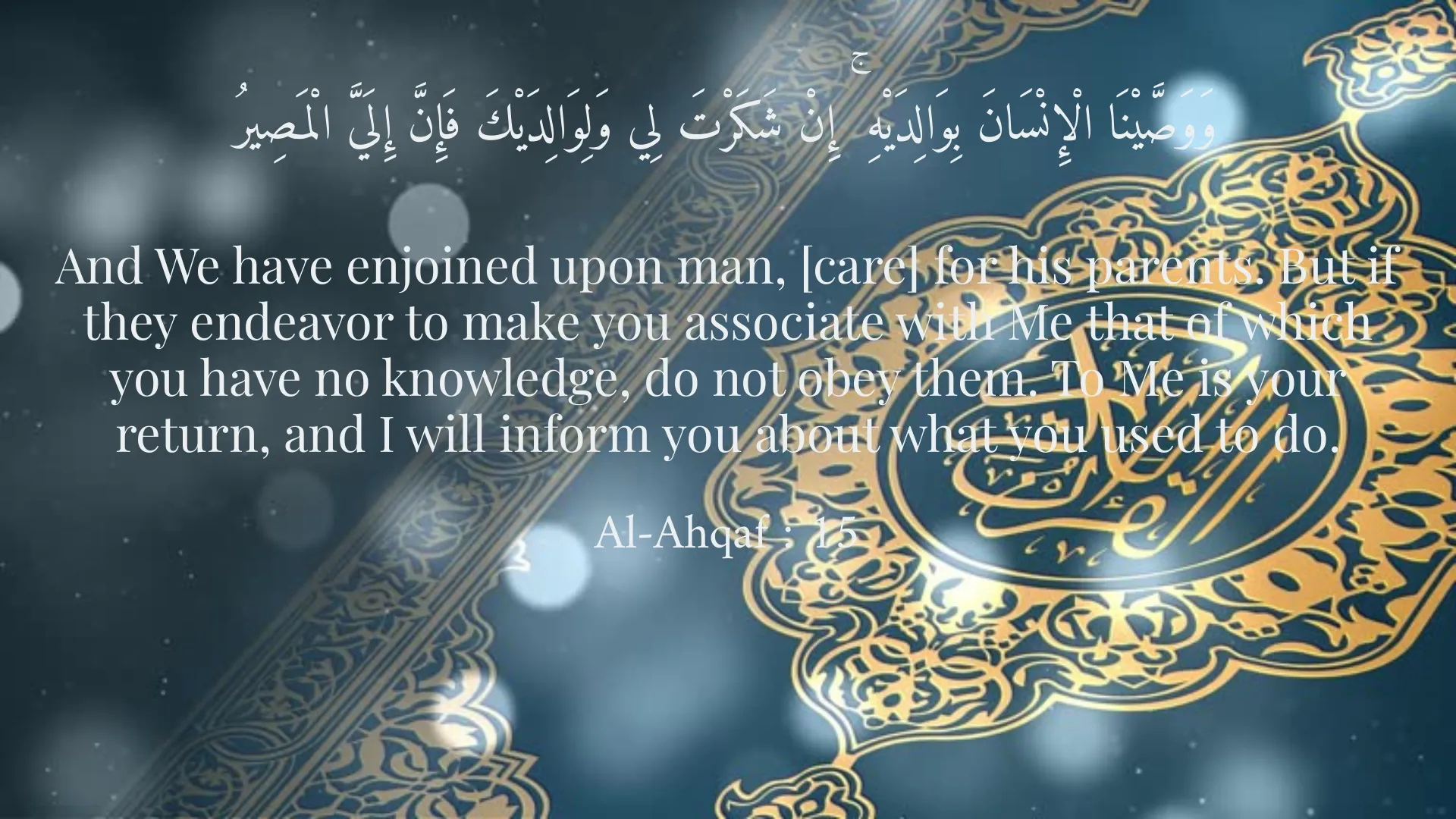
وَوَصَّيْنَا الْإِنْسَانَ بِوَالِدَيْهِ ۚ إِنْ شَكَرْتَ لِي وَلِوَالِدَيْكَ فَإِنَّ إِلَيَّ الْمَصِيرُ
And We have enjoined upon man, [care] for his parents. But if they endeavor to make you associate with Me that of which you have no knowledge, do not obey them. To Me is your return, and I will inform you about what you used to do.
Al-Ahqaf : 15
Short Story
Once, a little boy named Ali asked his mother, 'Mom, you always want me to pray. Why is prayer so important?' The mother smiled and replied, 'Dear, prayer is not just talking to God; it is a deep friendship with our feelings and aspirations. When you pray, you get closer to God.' Ali's eyes brightened, and from that day on, he always began his prayers with the love of his mother.