Quranic Answer
Title: The Importance of Intentions in Islamic Teachings Introduction The Holy Quran, the central religious text of Islam, delves deeply into the nuances of human intentions and actions. It emphasizes that the authenticity of one's faith and the righteousness of one’s deeds are largely contingent on the intentions behind them. This article aims to explore the Quranic perspectives on intentions and actions, elucidating their interconnectedness and illustrating how they shape one’s moral and spiritual standing in the eyes of God. Intentions: The Heart of Actions One of the most significant discussions in the Quran entails the relationship between intentions and actions. For instance, in Surah Al-Baqarah (2:225), God states, "Allah is All-Aware of the intentions in your hearts." This verse reinforces the notion that God not only observes human actions but is also fully aware of the motivations behind them. This divine scrutiny underscores the importance that Islam places on intentions (niyyah). In Islamic belief, a good deed performed with an insincere intention does not hold the same value as when it is performed with sincerity. This means that if an individual commits sinful acts but does so with a misguided or sinful intention, they may face spiritual consequences. The hadith of the Prophet Muhammad (peace be upon him) further corroborates this notion: "Actions are judged by intentions." Therefore, the heart's intent fundamentally influences the outcome of one's deeds. The Consequences of Evil Intentions Moreover, Surah Al-An'am (6:164) states, "No bearer of burdens shall bear the burden of another. And if a soul should be laden with burden of another, it would be cast off. No one can carry the sin of another, except for the one who intends it." This verse specifically highlights that only the individual who has the intention for an act, whether good or evil, will be accountable for their actions. Therefore, if someone harbors evil thoughts but refrains from executing them, they may not incur the same degree of punishment as those who follow through with the sinful act. However, this does not imply that ill intentions lack consequences altogether. The Quran teaches that harboring evil thoughts and intentions can lead to spiritual detriments, and individuals must strive to purify their hearts and align their intentions with righteousness. Even without action, bad intentions can detract from one’s spiritual purity, hence the importance of monitoring one’s thoughts and desires. Divine Mercy and Forgiveness It is crucial to note the compassionate nature of God in Islamic theology. Allah’s attributes include being ‘The Forgiving’ and ‘The Merciful’. This interplay between justice and mercy is delicately balanced in Quranic teachings. For example, if someone only intends to sin but does not carry it out, Allah, in His mercy, may forgive them due to their restraint. This is explicitly stated in several hadiths which emphasize that Allah rewards individuals even for the good they intended to do, not only for what they achieved. This concept of divine mercy also encourages believers to develop a self-reflective attitude, examining their intentions and striving to enhance them continuously. It serves as a reminder that while actions are crucial, the intentions behind them hold significant weight in determining one’s status in the hereafter. The Impact of Good Intentions Conversely, good intentions can have manifold positive effects, manifesting in blessings and rewards, even if the intended action does not come to fruition. The Quranic perspective nurtures the notion that the act of wishing to engage in good acts is itself meritorious. This is reflected in the saying of the Prophet Muhammad (peace be upon him), who stated, "Whoever intends to do a good deed but does not do it will have a good deed recorded for him." This principle has profound implications for personal motivation and moral responsibility within the Muslim community. It instills a sense of hope and encourages believers to aspire towards righteousness, aiming for good, and fostering an atmosphere of positing thinking and proactive behavior amongst Muslims. The Interplay Between Intentions and Actions The relationship that exists between intentions and actions can be understood in a comprehensive manner. While actions are vital for societal harmony and personal righteousness, they ought to be propelled by sound intentions to embody the true spirit of Islamic teaching. Each action performed should ideally be a reflection of the good intentions of the individual; thereby creating a cycle of moral behavior that fortifies one’s relationship with God and others. This harmonization eliminates hypocrisy and fosters a community built on ethical and moral values. Practical Implications for Muslims In light of the teachings of the Quran, Muslims are encouraged to cultivate sincerity in their intentions and to approach their daily actions with mindful consciousness. Self-awareness and the power to intend positively can dramatically influence a believer’s journey toward spiritual fulfillment and social responsibility. Practical steps include regular self-assessment of motives, seeking sincere repentance when one recognizes ill intentions, and surrounding oneself with a community that encourages righteousness. Conclusion In conclusion, the Quran reiterates the substantial importance of intentions in shaping human actions and their consequences. By emphasizing that intentions are assessed alongside deeds, Islamic teachings underscore the essence of sincerity in a believer’s actions. Being aware of one’s intentions is paramount, as these can lead to profound spiritual rewards or consequences. Muslims are encouraged to constantly refine their intentions, seek forgiveness, and strive to perform actions that not only comply with divine guidance but also reflect a pure heart aligned with noble values. Thus, through understanding and practicing the principles of intentions laid out in the Quran, Muslims can navigate through life with a clear moral compass, contributing positively to society while nurturing their spiritual well-being.
Related Verses
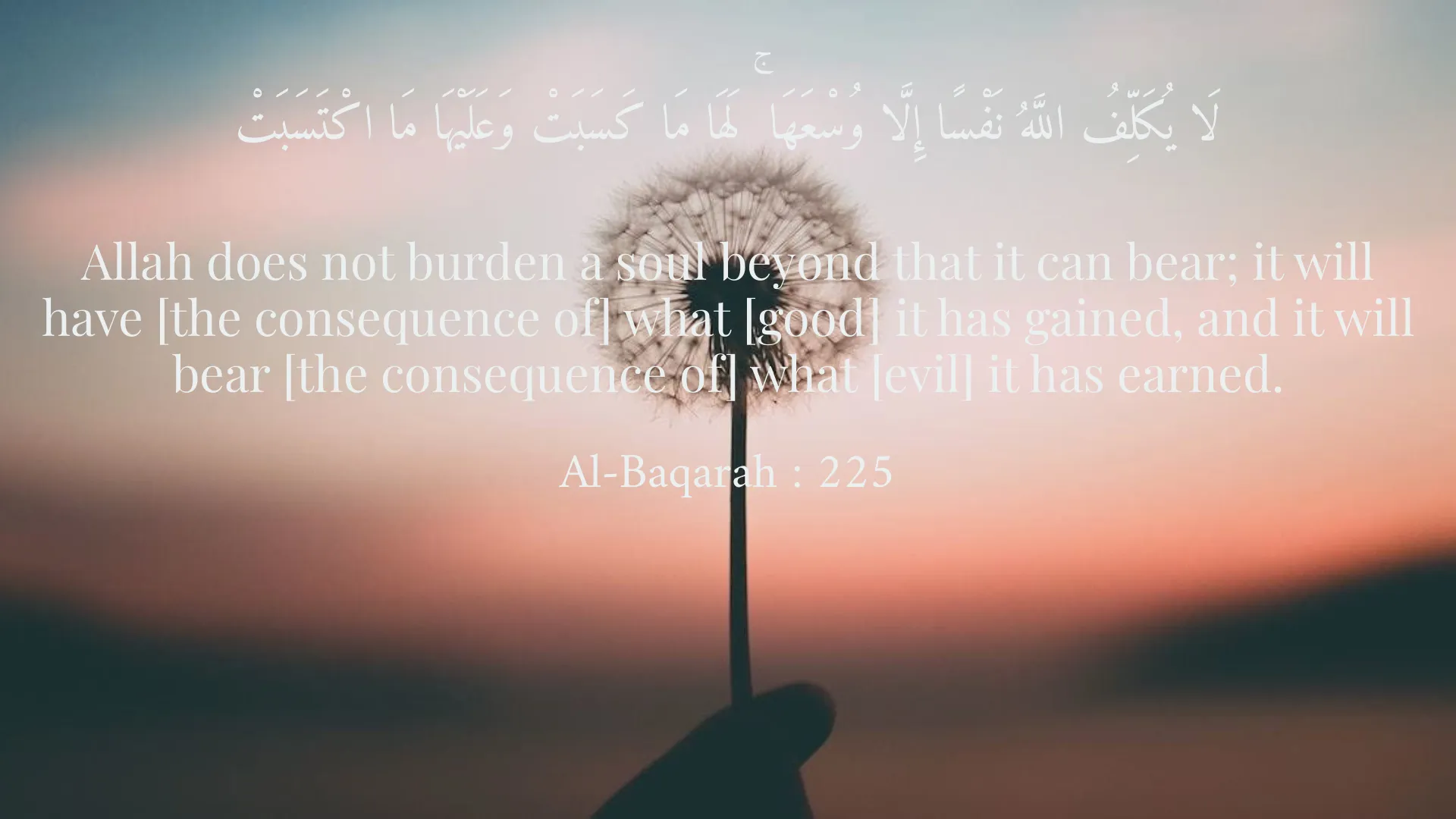
لَا يُكَلِّفُ اللَّهُ نَفْسًا إِلَّا وُسْعَهَا ۚ لَهَا مَا كَسَبَتْ وَعَلَيْهَا مَا اكْتَسَبَتْ
Allah does not burden a soul beyond that it can bear; it will have [the consequence of] what [good] it has gained, and it will bear [the consequence of] what [evil] it has earned.
Al-Baqarah : 225
قُلْ أَغَيْرَ اللَّهِ أَتَّخِذُ وَلِيًّا فَاطِرِ السَّمَاوَاتِ وَالْأَرْضِ وَهُوَ يُطْعِمُ وَلَا يُطْعَمُ ۚ قُلْ إِنِّي أُمِرْتُ أَنَ أَكُونَ أَوَّلَ مَن أَسْلَمَ ۖ وَلَا تَكُونَنَّ مِنَ الْمُشْرِكِينَ
Say, 'Should I take other than Allah as a protector, while He is the Creator of the heavens and the earth and He feeds but is not fed?' Say, 'Indeed, I have been commanded to be the first of those who submit.'
Al-An'am : 164
Short Story
One day, two friends were sitting in a garden. One of them said, 'I intend to do something wrong, but I haven't acted upon it yet.' His friend smiled and replied, 'Remember, sometimes our intentions are even more important than our actions.' He reminded him that Allah is aware of intentions and decides based on them. This conversation led them to ponder more deeply about their thoughts and intentions, striving to always maintain good intentions.