Quranic Answer
The Values of Kindness and Virtuous Behavior in the Holy Quran The Holy Quran, the sacred text of Islam, serves as a guide for Muslims around the world, outlining the principles of good conduct, moral values, and virtuous behaviors that are essential for leading a righteous life. While the Quran may not explicitly mention every virtuous act—such as the simple yet profound act of smiling at others—it lays the foundation for understanding the significance of kindness and good character. This article delves into the implications of these values as portrayed in the Quran and how they manifest in daily interactions, thus enriching both personal lives and society at large. Understanding Kindness in the Quran At the heart of Quranic teachings is the emphasis on kindness towards others. The Quran continually underscores the importance of good character, urging individuals to uphold values that promote harmony and affection within communities. In Surah Al-Baqarah, verse 177, Allah makes it clear that righteousness encompasses more than just ritual acts of worship; it also involves the ethical treatment of others. This verse serves as a reminder that the essence of faith is intertwined with how one interacts with fellow human beings. Good conduct, as emphasized in the Quran, signifies respect for others and fosters love for humanity. The simple act of smiling is a powerful expression of this respect and affection. Smiling can break down barriers, enhance social relationships, and create a warm atmosphere conducive to peace and understanding. Research in modern psychology supports this notion, demonstrating that a simple smile can lighten moods and improve interactions. Therefore, in the context of Islamic teachings, smiling is not just a social nicety but a reflection of one's character and a conduit of divine favor. The Concept of Righteousness A closer examination of verse 177 in Surah Al-Baqarah reveals that righteousness in the Quran encompasses a holistic approach to life. It is not limited to acts of worship or religious rites but extends to how one behaves towards others. This comprehensive definition underscores the importance of ethical living, including fostering love and compassion among people. It highlights the fact that one's relationship with God is reflected in one's dealings with others. When Muslims engage kindly with others, including the simple act of smiling, they embody the virtues of love and respect that the Quran advocates. This is fundamentally significant because it helps to build a cohesive society where individuals feel valued and appreciated. In this light, we can see how smiling is not only beneficial for social interactions but is also regarded as a virtuous deed in the eyes of God. The Prophet Muhammad's Exemplification of Good Character The life of the Prophet Muhammad (PBUH) serves as a living testament to the values laid out in the Quran. His unwavering commitment to demonstrating good character and virtuous behavior towards others provides a blueprint for Muslims seeking to embody these traits. Prophet Muhammad was known for his kindness, compassion, and ability to make people feel welcome and valued. Numerous historical accounts illustrate his warm interactions with individuals from all walks of life, as well as his ability to create a sense of belonging among his followers. One significant aspect of the Prophet’s teaching was his focus on moral education. In Surah Al-‘Alaq, verse 4, Allah states, "He who taught by the pen." This verse underscores the importance of education, not only in terms of knowledge and literacy but also in terms of moral development. By emphasizing the teaching of good behavior, the Quran invites believers to engage in a lifelong journey of learning that extends beyond academia. Smiling as an Expression of Virtue When we smile at others, it can be seen as an extension of our inner virtue—an embodiment of the love and respect taught in the Quran. Smiling acts as a non-verbal communication of goodwill that transcends linguistic and cultural barriers, creating connections among people. This simple yet often overlooked gesture can enhance interpersonal relationships and diminish social tensions. In a world rife with conflict and misunderstanding, a smile has the potential to foster unity and peace. As Muslims, embracing acts of kindness, including smiling, not only reflects our faith but also helps in creating a social environment that aligns with the principles outlined in the Quran. It promotes a sense of belonging and comfort that is vital for a harmonious community. Thus, the act of smiling transcends mere social etiquette; it is a practice grounded in spiritual significance and moral conduct. Conclusion In conclusion, while the Quran may not explicitly mention smiling as a specific virtue, it unequivocally promotes kindness, good character, and positive interactions among people. The act of smiling can be seen as a manifestation of the love and respect mandated by Islamic teachings, contributing to the overall goodness that defines righteous living. The Quran's comprehensive approach to righteousness calls upon individuals to not only connect with God through worship but also to reflect divine attributes in their behavior toward others. The example set by the Prophet Muhammad (PBUH) emphasizes the importance of developing good character and promoting virtuous behavior in society. Ultimately, embracing kindness and fostering love among individuals aligns with the core teachings of the Quran. Thus, as we navigate through life, let us remember the power of a smile—not just as a gesture of goodwill but as a profound expression of our values and our commitment to nurturing a compassionate world.
Related Verses
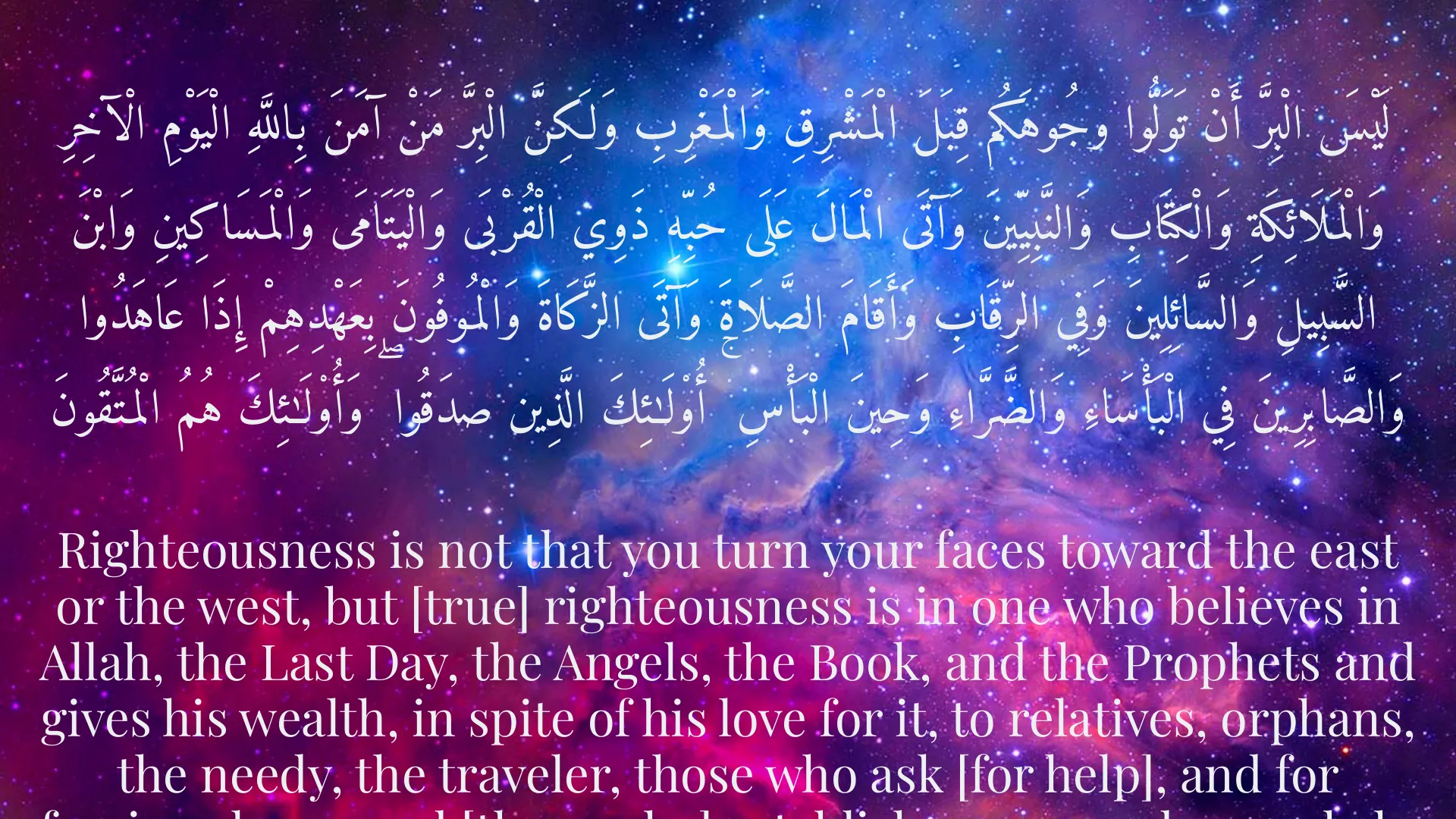
لَيْسَ الْبِرَّ أَنْ تَوَلُّوا وجُوهَكُم قِبَلَ الْمَشْرِقِ وَالْمَغْرِبِ وَلَكِنَّ الْبِرَّ مَنْ آمَنَ بِاللَّهِ الْيَوْمِ الْآخِرِ وَالْمَلَائِكَةِ وَالْكِتَابِ وَالنَّبِيِّينَ وَآتَى الْمَالَ عَلَى حُبِّهِ ذَوِي الْقُرْبَى وَالْيَتَامَى وَالْمَسَاكِينِ وَابْنَ السَّبِيلِ وَالسَّائِلِينَ وَفِي الرِّقَابِ وَأَقَامَ الصَّلَاةَ وَآتَى الزَّكَاةَ وَالْمُوفُونَ بِعَهْدِهِمْ إِذَا عَاهَدُوا وَالصَّابِرِينَ فِي الْبَأْسَاءِ وَالضَّرَّاءِ وَحِينَ الْبَأْسِ ۚ أُو۟لَـٰئِكَ الَّذِين صدَقُوا ۖ وَأُو۟لَـٰئِكَ هُمُ الْمُتَّقُونَ
Righteousness is not that you turn your faces toward the east or the west, but [true] righteousness is in one who believes in Allah, the Last Day, the Angels, the Book, and the Prophets and gives his wealth, in spite of his love for it, to relatives, orphans, the needy, the traveler, those who ask [for help], and for freeing slaves; and [those who] establish prayer and pay zakah; [those who] fulfill their promise when they promise; and [those who] are patient in times of hardship and adversity and during battle. Those are the ones who have been true, and it is those who are the righteous.
Al-Baqarah : 177
Short Story
One day, a person named Mahdi decided to focus his life on improving his social relations. He wrote notes for himself that included affectionate behaviors like smiling at people. Every day, he made an effort to approach others with a smile and felt the positive impact of this practice in his life. After some time, not only did his relationships with others improve, but he also felt a greater sense of happiness.