Quranic Answer
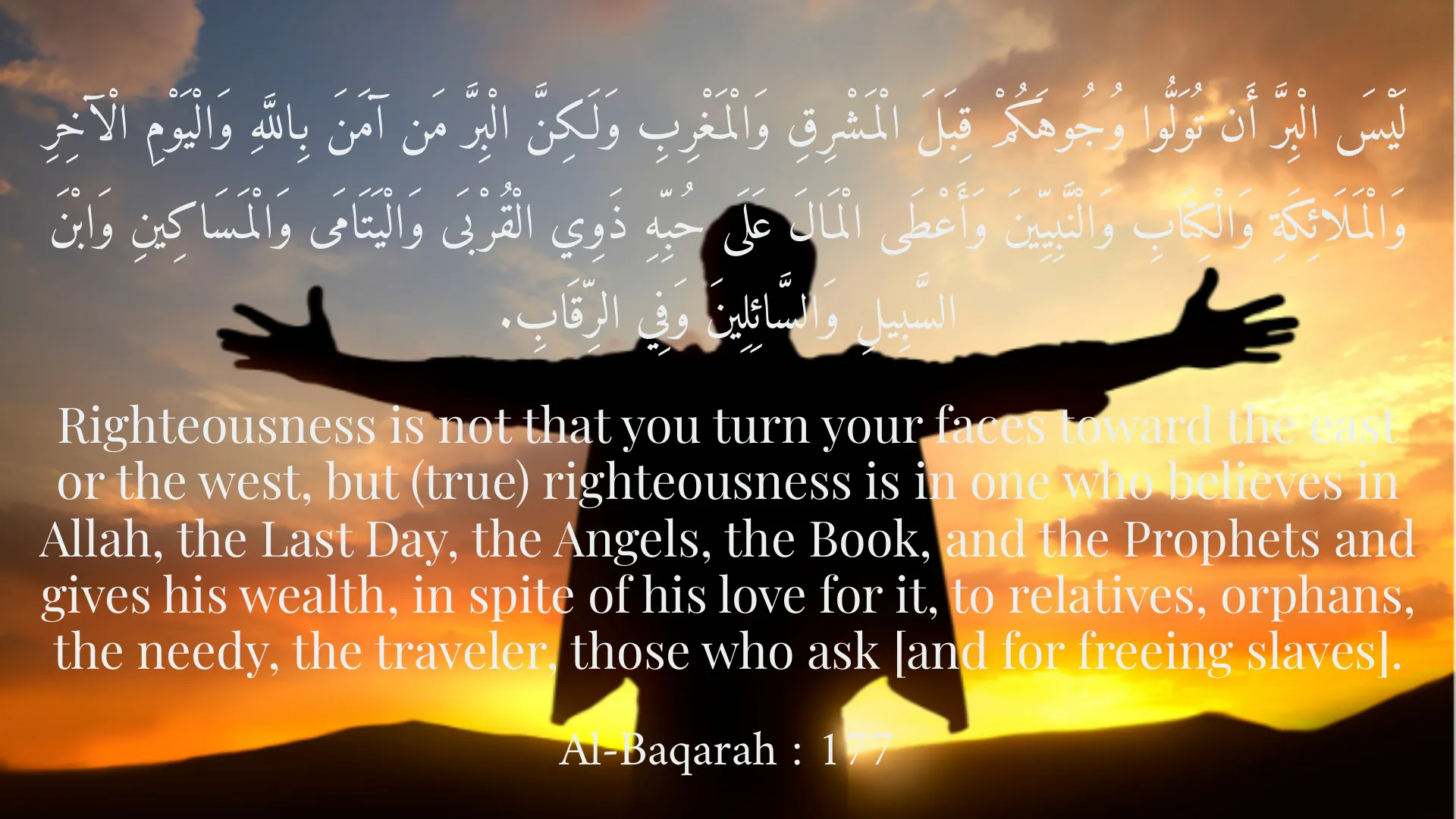
The Holy Quran, revered as the final scripture in Islam, serves as a comprehensive guide to all facets of life, urging followers towards ethical conduct and righteous behavior. One of the central themes emphasized within its verses is the intrinsic link between faith and moral uprightness. Simply put, the values of ethics and good behavior are not mere recommendations but are foundational to the practice of worship in Islam. This principle is succinctly encapsulated in Surah Al-Baqarah, verse 177, which proclaims that true righteousness transcends rituals and appearances. It states: 'Righteousness is not that you turn your faces toward the east or the west, but (true) righteousness is in one who believes in Allah, the Last Day, the Angels, the Book, and the Prophets and gives his wealth, in spite of his love for it, to relatives, orphans, the needy, the traveler, those who ask [and for freeing slaves].' This verse starkly illustrates that while performing acts of worship, such as prayer and fasting, is indeed crucial, such actions lose their meaning in the absence of ethical conduct. The notion of righteousness mentioned in the verse signifies a holistic approach to life, indicating that faith must manifest itself through actions that consider the well-being of others. This perspective on morality aligns with the broader Islamic teaching that the essence of one's character is shaped not only by how one worships God but also by how one treats fellow human beings. Furthermore, worship devoid of ethical behavior can be analogized to a river that has dried up, devoid of the life-giving properties that water provides. In the same way a river nourishes the ecosystem, ethical behavior enriches the spirit of worship, allowing it to flourish and resonate deeply within individuals. It is through acts of kindness, charity, and compassion that one embodies the principles of their faith and demonstrates a commitment to the moral imperatives laid out by Allah. In addition to the facets of righteousness encompassing charity and moral behavior, Surah Al-Isra, verse 37 further illuminates God's wisdom regarding human limits: 'And do not walk upon the Earth exultantly. Indeed, you will never tear the earth (apart), and you will never reach the mountains in height.' This verse imparts an important lesson that encourages moderation and humility in one's conduct. God is advising believers not to overexert themselves in the pursuit of worldly desires and ambitions. Instead, individuals are called to approach life with a balanced mindset that recognizes the importance of worship alongside ethical living. In doing so, believers honor both their spiritual commitments as well as their responsibilities to society. The implications of blending ethics with worship are profound. A person who embodies this duality will not only find favor in the sight of Allah but will also gain respect and affection from the community around them. This communal aspect recognizes that ethical behavior improves societal bonds, fosters mutual respect, and promotes peace. It is no doubt that a harmonious society is characterized largely by individuals who live with integrity and compassion, reflecting the values of their faith through their actions. Moreover, the integration of ethical behavior in worship extends beyond merely fulfilling social obligations. It also encompasses being mindful of intentions. The Quran repeatedly underscores the importance of sincere intention, known as 'Niyyah.' A believer's intention shapes their actions and, in turn, determines the spiritual value of their worship. Pure intentions coupled with ethical behavior amplify the sincerity of one’s acts, thus paving the way for divine acceptance. This brings forth the necessity of cultivating a conscious approach toward everyday actions, emphasizing that even mundane tasks can be transformed into acts of worship when imbued with the right intentions and a commitment to ethical principles. Consequently, the sacred teachings of Islam serve as a reminder that one’s journey of faith is not a solitary path of rituals but a comprehensive endeavor that encompasses both one’s relationship with God and fellow human beings. The transformative power of a faith that prioritizes morality creates ripples that influence individuals, families, and communities on a grand scale. By establishing a culture of ethical behavior rooted in the principles of Islam, believers can create an atmosphere where divine blessings flow abundantly. In conclusion, the Holy Quran's call for striving towards ethical behavior as an inseparable component of worship is paramount for all individuals seeking to fulfill their spiritual obligations. It is clear that divine blessings are reserved for those who keep the essence of purity and ethical constraint at the heart of their worship. In shaping our character through practice and abiding by ethical standards, we, in fact, pave the way for a life that is enriched both spiritually and socially. Thus, we must not only commit ourselves to acts of worship but must also endeavor to weave those practices into a lifestyle filled with compassion, empathy, and unwavering ethical integrity.
Related Verses
لَيْسَ الْبِرَّ أَن تُوَلُّوا وُجُوهَكُمْ قِبَلَ الْمَشْرِقِ وَالْمَغْرِبِ وَلَـكِنَّ الْبِرَّ مَن آمَنَ بِاللَّهِ وَالْيَوْمِ الْآخِرِ وَالْمَلَائِكَةِ وَالْكِتَابِ وَالْنَّبِيِّينَ وَأَعْطَى الْمَالَ عَلَى حُبِّهِ ذَوِي الْقُرْبَى وَالْيَتَامَى وَالْمَسَاكِينِ وَابْنَ السَّبِيلِ وَالسَّائِلِينَ وَفِي الرِّقَابِ.
Righteousness is not that you turn your faces toward the east or the west, but (true) righteousness is in one who believes in Allah, the Last Day, the Angels, the Book, and the Prophets and gives his wealth, in spite of his love for it, to relatives, orphans, the needy, the traveler, those who ask [and for freeing slaves].
Al-Baqarah : 177
وَلَا تَمْشِ فِي الْأَرْضِ مَرَحًا ۚ إِنَّكَ لَن تَخْرِقَ الْأَرْضَ وَلَن تَبْلُغَ الْجِبَالَ طُولًا.
And do not walk upon the earth exultantly. Indeed, you will never tear the earth, nor will you be as tall as the mountains.
Al-Isra : 37
Short Story
In ancient times, there was a man named Hasan who was absorbed in worship, but in his heart, there was no place for love and respect for others. One day, one of his neighbors said to him, 'Does your worship make you forget the needs of others?' Hasan thought about this question and realized the futility of worship without kindness towards others. From that day on, he decided to add a new flavor to his worship by treating others well and helping them alongside his acts of devotion.