Quranic Answer
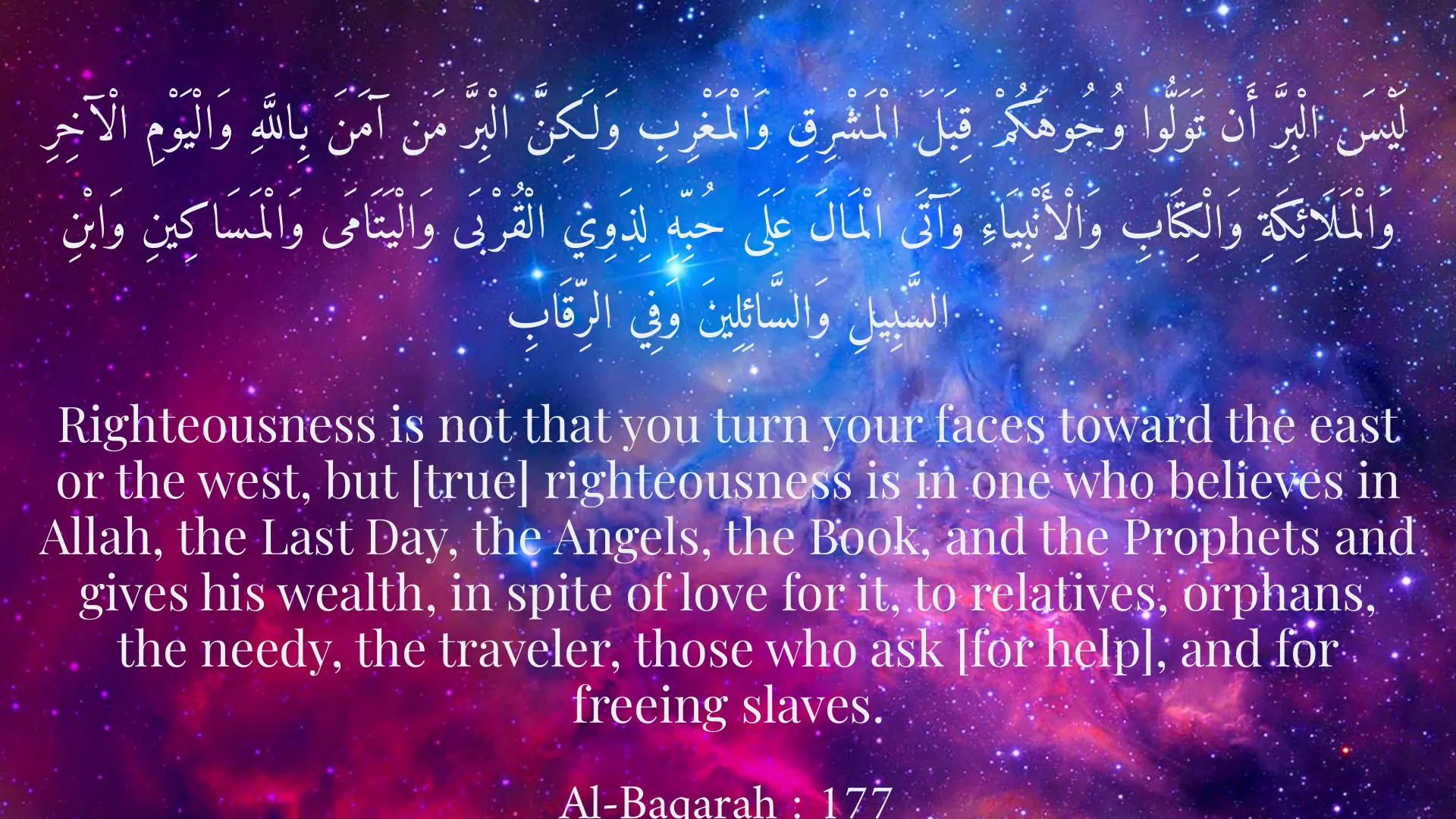
In the Holy Quran, many verses emphasize the importance of helping others and performing good deeds. One of the core teachings of Islam is the concept of righteousness, which is intricately linked to charity and social responsibility. Righteousness is not merely about engaging in ritual acts of worship; it extends to how one interacts with society, particularly those who are less fortunate. In Surah Al-Baqarah, verse 177, Allah states: 'Righteousness is not that you turn your faces toward the east or the west, but [true] righteousness is in one who believes in Allah, the Last Day, the Angels, the Book, and the Prophets and gives his wealth, in spite of love for it, to relatives, orphans, the needy, the traveler, those who ask [for help], and for freeing slaves.' This verse is rich in its implications, as it outlines not only the beliefs that constitute righteousness but also puts forth a clear mandate for altruism. The emphasis on giving, especially when it comes to those who need help, is a recurring theme in Islamic teachings. This guidance highlights that righteous conduct transcends mere belief; it finds practical expression in one's actions toward others. The Quran underscores this idea by explicitly stating that righteousness includes helping relatives, orphans, the needy, travelers, and even those who request assistance. The act of giving, especially when done out of one's deep sense of love and attachment to material possessions, is portrayed as a significant virtue. As such, charity is not only a means of supporting those in need, but it also reflects a person's character and priorities. Furthermore, these values resonate deeply with the broader moral framework established within Islam. The Quran encourages believers to view wealth and resources as a trust from Allah, implying a societal obligation to utilize these assets for the betterment of others. This societal fabric reinforces community bonds and creates a safety net for the vulnerable, enabling a more balanced social structure. In Surah Al-Mu’minun, verse 61, Allah hints further at the reward awaiting those who perform good deeds, assuring that they will be among His servants who receive mercy. This notion of divine mercy is pivotal, as it establishes a direct link between charitable acts and a believer's relationship with Allah. The promise of mercy serves as a motivator for individuals to engage in acts of kindness and support, planting the seeds of compassion firmly in the hearts of all Muslims. The discussions surrounding charity and good deeds in Islamic tradition are not limited to Quranic verses alone; they are also emphasized through various narrations from the Prophet Muhammad and the Imams, which strengthen this call to action. These narratives often highlight the significance of intending good for others, framing acts of kindness as forms of worship. For instance, in many hadiths, it is narrated that the Prophet Muhammad encouraged fostering communal ties and providing for the less fortunate, highlighting that such actions can lead to an increase in one's blessings and divine acceptance. One of the profound aspects of charity is that it doesn't solely focus on material support but encompasses emotional and spiritual aid as well. Helping others can often mean offering support in times of crisis or merely lending a listening ear. Actions that reflect empathy and understanding are equally valued and contribute significantly to the spiritual well-being of individuals within the community. On a broader scale, the concept of helping others is integral to the development of a cohesive and resilient society. When individuals actively engage in acts of charity, they foster an atmosphere of solidarity and compassion, which is critical for the overall health of communities. Moreover, as individuals work together for the common good, they cultivate a sense of unity, understanding, and shared responsibility. The connection between aiding others and the acceptance of prayers reflects the high esteem in which such noble actions are held in Islam. It is suggested in many Islamic traditions that prayers made for the welfare of others are more likely to be accepted. This idea creates a beautiful synergy: when one seeks to act altruistically, not only does it benefit the individuals receiving aid but it also enhances the spiritual state of the helper, creating a cycle of goodwill and divine reward. The implications of these teachings are manifold. For followers of Islam, understanding that charitable actions hold a special status in the eyes of Allah instills a profound sense of purpose. It inspires Muslims to incorporate giving into their daily lives, ensuring that acts of kindness are woven into the very fabric of their existence. By regularly contributing to social welfare, individuals can cultivate an attitude centered on compassion and selflessness. In conclusion, the Holy Quran and the sayings of the Prophet Muhammad illuminate the critical importance of performing good deeds and providing for others. The verses emphasize that charity is not merely an act of goodwill but a fundamental aspect of righteousness and moral conduct in Islam. As conveyed in the Quran, helping those in need transcends ritualistic worship; it is integral to one's faith and deeply connected to the acceptance of prayers by Allah. Thus, as believers seek to embody the virtues of compassion and support for their fellow beings, this commitment not only shapes their character but also enriches their spiritual lives, ensuring the delivery of divine mercy and blessings in their lives.
Related Verses
لَيْسَ الْبِرَّ أَن تَوَلُّوا وُجُوهَكُمْ قِبَلَ الْمَشْرِقِ وَالْمَغْرِبِ وَلَكِنَّ الْبِرَّ مَن آمَنَ بِاللَّهِ وَالْيَوْمِ الْآخِرِ وَالْمَلَائِكَةِ وَالْكِتَابِ وَالْأَنْبِيَاءِ وَآتَى الْمَالَ عَلَى حُبِّهِ لِذَوِي الْقُرْبَى وَالْيَتَامَى وَالْمَسَاكِينِ وَابْنِ السَّبِيلِ وَالسَّائِلِينَ وَفِي الرِّقَابِ
Righteousness is not that you turn your faces toward the east or the west, but [true] righteousness is in one who believes in Allah, the Last Day, the Angels, the Book, and the Prophets and gives his wealth, in spite of love for it, to relatives, orphans, the needy, the traveler, those who ask [for help], and for freeing slaves.
Al-Baqarah : 177
وَالَّذِينَ يُؤْتُونَ مَا آتَوْا وَقُلُوبُهُمْ وَجِلَةٌ أَنَّهُمْ إِلَى رَبِّهِمْ رَاجِعُونَ
And those who give what they give while their hearts are trembling because they will be returning to their Lord.
Al-Mu’minun : 61
Short Story
One day, a young man named Omid was shopping in the market. He encountered a needy person suffering from famine and financial crisis. Omid decided to give some of his money to him. After this kind act, he felt a special peace and joy in his heart. That night, Omid prayed to Allah to help him solve his problems. He sensed that his prayers were being answered, and his life began to change for the better. This feeling encouraged him to continue helping others and to perform more good deeds each day.