Quranic Answer
The Importance of Doing Good Deeds in Islam Introduction In the teachings of Islam, the concept of doing good deeds is underscored as a fundamental principle of faith and practice. The Quran, as the holy book of Islam, elucidates the significance of altruism, kindness, and support for others. Throughout the Quran, there are numerous verses that stress Allah's love for those who engage in good actions and extend assistance to others. This article delves into the teachings of the Quran concerning good deeds and highlights their importance in shaping an individual's relationship with Allah and the community. The Value of Life and Helping Others One of the most profound verses that encapsulate the importance of valuing human life and assisting those in need is found in Surah Al-Ma'idah, verse 32. Allah states: 'Because of that, We decreed upon the Children of Israel that whoever kills a soul unless for a soul or for corruption [done] in the land - it is as if he had slain mankind entirely. And whoever saves one - it is as if he had saved mankind entirely.' This verse is a powerful reminder of the sanctity of life and the responsibility of individuals to safeguard it. By likening the act of saving a single individual to saving all of humanity, Allah emphasizes the immense value of acts of kindness and benevolence. This perspective encourages Muslims to actively participate in the well-being of society, reinforcing the importance of community service. It also conveys a clear message that every small act of kindness can have monumental implications. For example, volunteering at local shelters, providing support to the elderly, or even offering a helping hand to a neighbor can contribute to the greater good of society, ultimately earning the pleasure of Allah. Good Deeds: A Reflection of True Faith In addition to the emphasis on saving lives, the Quran also explicitly states the rewards for good deeds in Surah Al-An'am, verse 160: 'Whoever brings a good deed will have a better than it.' This verse signifies that not only does Allah observe the deeds of His servants, but He also rewards them abundantly for their righteousness. The idea that good deeds will yield even greater rewards fosters a sense of motivation within believers to strive for excellence in their actions. The Prophet Muhammad (peace be upon him) further exemplified these teachings through his life and actions. His commitment to serving humanity and caring for the welfare of others set a precedent for Muslims around the world. The teachings of the Prophet urge individuals to become leaders in serving humanity, emphasizing that true faith is demonstrated through actions rather than mere words. In his Hadiths, he often recounted that the best of people are those who are most beneficial to others. This highlights that altruism is not just an option but a fundamental aspect of being a good Muslim. The Ripple Effect of Good Deeds Understanding the importance of good deeds transcends individual acts. When people commit to helping others, a ripple effect is created within communities. Acts of kindness can inspire others to engage in similar actions, fostering an environment of support and compassion. For instance, when a person witnesses a neighbor assist someone in need, they may feel compelled to do the same. This cycle of giving and receiving strengthens social bonds and creates a more empathetic society. Moreover, this interconnectedness illustrates the Islamic principle of Ummah, or community. In Islamic teachings, the well-being of one individual is tied to the well-being of the entire community. Therefore, engaging in good deeds can lead to communal harmony, reducing feelings of isolation and despair among individuals. The Quran instructs Muslims to assist those in distress, which includes supporting the poor, the marginalized, and anyone experiencing hardship. This collective responsibility underscores that helping others enriches not only the lives of those receiving help but also enhances the overall fabric of society. Mental and Spiritual Benefits of Doing Good Engaging in good deeds also provides numerous psychological benefits for the doer. Studies have shown that helping others can lead to increased feelings of happiness, fulfillment, and contentment. The act of giving can release endorphins in the brain, promoting what is often referred to as the 'helper's high.' In Islam, the psychological rewards of performing good deeds align perfectly with the spiritual satisfaction derived from fulfilling one's obligations to Allah. The feeling of being in favor with Allah creates a profound sense of belonging and purpose, reinforcing the individual's commitment to continue doing good. Conclusion In conclusion, the importance of doing good deeds in Islam is multifaceted, encompassing spiritual, psychological, and communal dimensions. The Quran provides explicit guidance on the significance of helping others, reiterating that such actions earn Allah's love and rewards. Through verses such as those found in Surah Al-Ma'idah and Surah Al-An'am, Allah establishes that acts of kindness and service to humanity are fundamental to a person's faith. Furthermore, the legacy of the Prophet Muhammad (peace be upon him) serves as a reminder that good deeds should be a guiding principle in the lives of Muslims. As we strive to live in accordance with these teachings, we must remember that every act of goodness has the potential to save lives and transform communities. By committing ourselves to doing good, we not only develop a closer relationship with Allah but also contribute to a more compassionate and humane society. It is in the pursuit of such acts that we find the true essence of our faith and purpose in life.
Related Verses
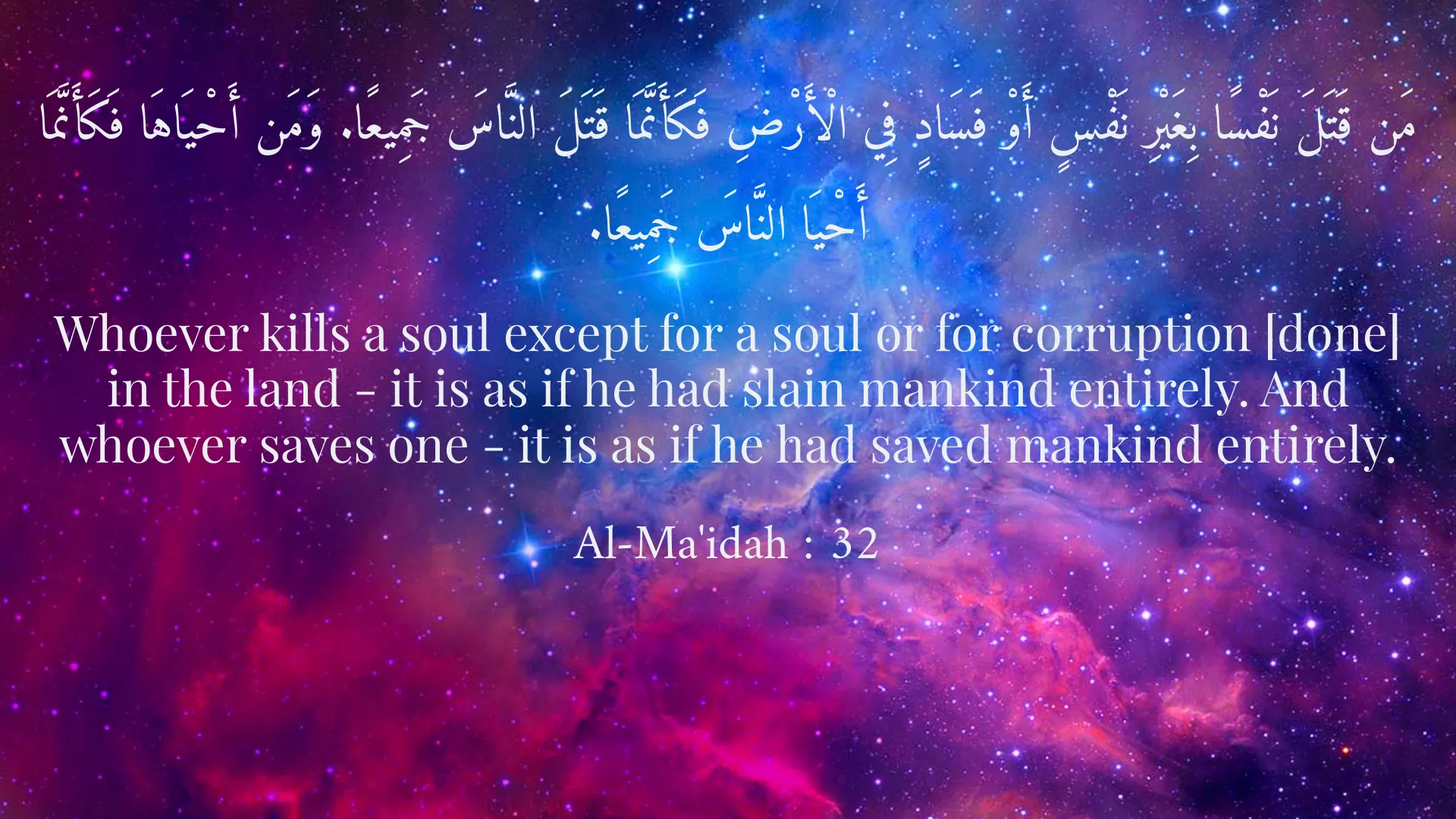
مَن قَتَلَ نَفْسًا بِغَيْرِ نَفْسٍ أَوْ فَسَادٍ فِي الْأَرْضِ فَكَأَنَّمَا قَتَلَ النَّاسَ جَمِيعًا. وَمَن أَحْيَاهَا فَكَأَنَّمَا أَحْيَا النَّاسَ جَمِيعًا.
Whoever kills a soul except for a soul or for corruption [done] in the land - it is as if he had slain mankind entirely. And whoever saves one - it is as if he had saved mankind entirely.
Al-Ma'idah : 32
وَمَن جَاءَ بِالْحَسَنَةِ فَلَهُ خَيْرٌ مِّنْهَا.
Whoever brings a good deed will have a better than it.
Al-An'am : 160
Short Story
Once upon a time, a man named Hassan had a deep desire to help others. He wanted to create a better life for those around him. One day, he decided to assist an orphan, and from that day on, he gradually made new friends and felt a sense of happiness blossoming in his heart. Hassan realized that helping others not only pleased Allah but also made him happier in life.