Quranic Answer
Wealth is a concept that has been debated across various cultures and religions, and in the Holy Quran, it is looked upon from a fundamentally spiritual lens. It is crucial to understand that wealth is introduced as a blessing and bounty from Allah rather than an inherent evil. This perspective is pivotal because it shifts the focus from wealth itself to the actions and intentions behind its use. The Quran emphasizes that it is not wealth that is inherently sinful, but rather the manner in which individuals utilize and regard that wealth. Indeed, affluence can be a double-edged sword, having the potential to lead to both prosperity and moral degradation, depending upon one’s intentions and actions. In Surah Al-Imran, verse 14, the Quran articulates, 'Beautified for them is the life of this world...' This poignant verse indicates the allure that worldly wealth can have, illustrating that for some individuals, an attachment to materialistic wealth may lead to wrongful actions. The call here is to be wary of this attachment, as it can cloud one’s judgment, leading to engagements in immoral or selfish behavior. The emphasis on the proper use of wealth is reiterated throughout various verses of the Quran, as Allah consistently underscores the importance of thoughtful and virtuous spending. In Surah Al-Anfal, verse 28, Allah reminds the believers, 'And know that your possessions and your children are but a trial...' This verse serves as a sober reminder that wealth and offspring can, at times, draw individuals into oblivion and pride. It reinforces the idea that both material and familial attachments can distract from remembering and obeying Allah. The verse serves to reiterate that while individuals may amass wealth or inherit it, they must remain conscious of the divine presence in their lives and the fiduciary responsibilities that come with both wealth and family connections. The awareness of being answerable to Allah is essential, suggesting that the indulgence in wealth should not come at the expense of one’s spiritual principles. The verse further suggests a level-headed attitude toward wealth; rather than succumbing to greed, believers are encouraged to acknowledge that their material possessions are merely a trial and should be treated with reverence and responsibility. The underlying warning against arrogance, which can arise through both wealth and offspring, calls for humility in all circumstances. It is imperative for individuals to approach wealth with a mindset that fosters generosity and aids in reminding themselves and others of their duty towards society. The Quran provides several examples of virtuous actions regarding wealth. In Surah Al-Qasas, verse 77, Allah commands Prophet Musa with the words, 'And seek by means of that which Allah has given you the home of the Hereafter, and do not forget your share of the world.' This verse encapsulates the balance that should be maintained between worldly pursuits and spiritual aspirations. The message is clear: use the resources Allah has granted wisely and for the betterment of both self and society, ensuring that spiritual and material needs are fulfilled in tandem. It highlights the significance of being a responsible steward of wealth rather than falling prey to unbridled accumulation. This balance, as highlighted in the Quran, is essential in shaping one's worldview and shaping the choices made during one's lifetime. When wealth is embraced as a resource intended for communal betterment, rather than merely personal gratification, it transforms into a vessel for good. Engaging in charitable acts, supporting the less fortunate, and fostering community spirit demonstrates an understanding of wealth’s purpose, one that strives for collective upliftment rather than individual entitlement. Conversely, the Quran points out that greed and the relentless pursuit of wealth for oneself can lead to numerous moral failings. It serves as a cautionary tale, reminding believers that wealth solely acquired for self-serving purposes can erode ethical foundations and establish a pattern of selfish behavior that can further alienate individuals from their moral duties. Testimonies of financial mismanagement, corruption, and social injustice across both contemporary and historical contexts can often be traced back to greed, leading humanity astray from their intended path. To summarize, it is vital to ensure that riches are spent in ways that are permissible and align with ethical values established in religious texts. This not only safeguards an individual’s integrity but also addresses the broader implications associated with wealth in society. The Quran implicitly and explicitly asks individuals to engage with their resources thoughtfully, reminding them of their obligations to themselves, their communities, and to Allah. A strong self-respect is intensified through this awareness of both worldly and eternal consequences. Therefore, as believers navigate their relationships with wealth, they are tasked with a dual responsibility: to cultivate personal prosperity without compromising their spiritual obligations and to uphold their duties toward others. Each individual's balance in these areas contributes to the broader societal dynamics, creating a tapestry of interactions that reflect both material abundance and moral fortitude. Through diligent reflection, responsibility, and sincere intent, wealth can indeed transform from a mere 'trial' into a beacon of generosity and benevolence in the world.
Related Verses
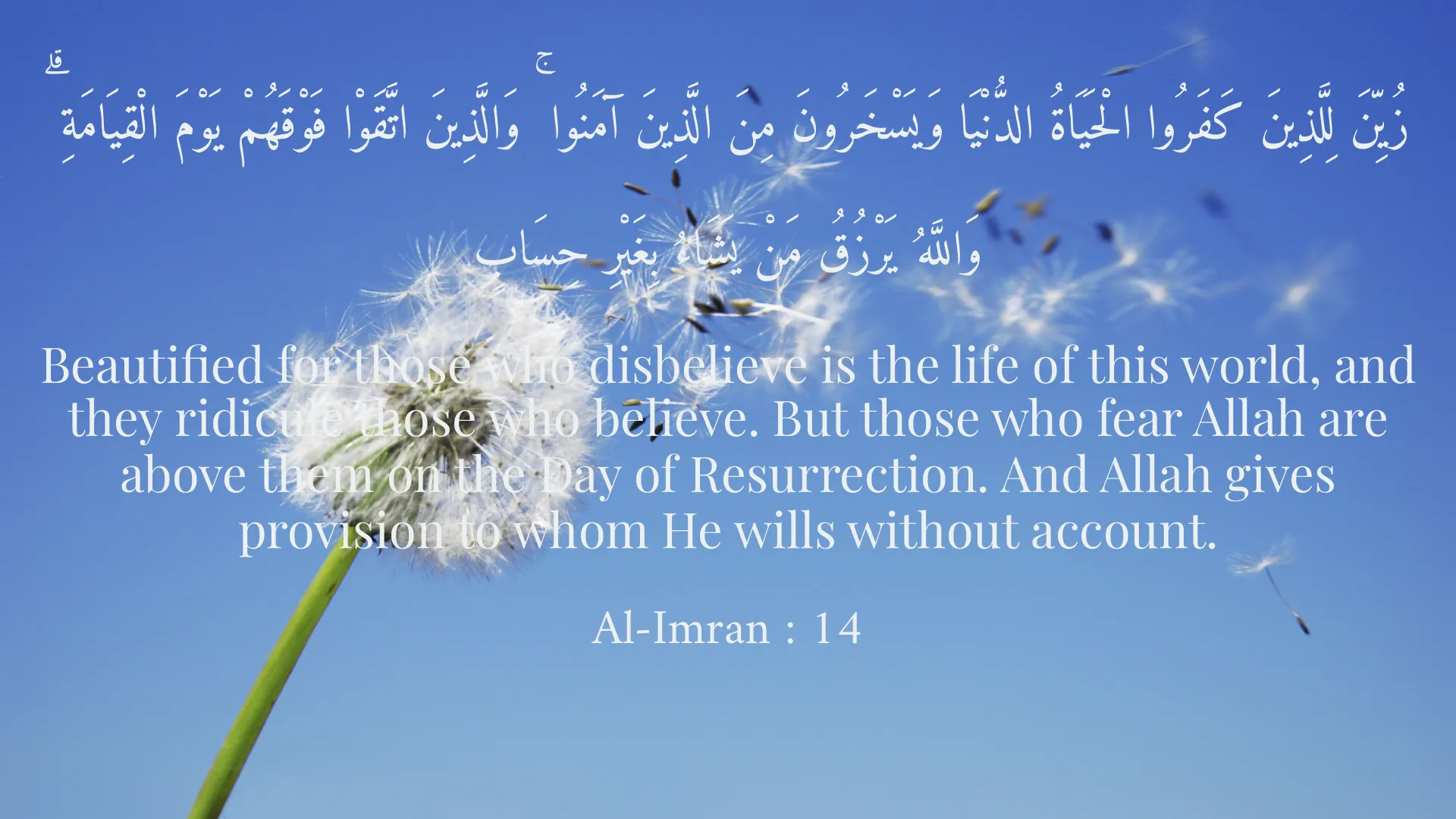
زُيِّنَ لِلَّذِينَ كَفَرُوا الْحَيَاةُ الدُّنْيَا وَيَسْخَرُونَ مِنَ الَّذِينَ آمَنُوا ۚ وَالَّذِينَ اتَّقَوْا فَوْقَهُمْ يَوْمَ الْقِيَامَةِ ۗ وَاللَّهُ يَرْزُقُ مَنْ يَشَاءُ بِغَيْرِ حِسَابٍ
Beautified for those who disbelieve is the life of this world, and they ridicule those who believe. But those who fear Allah are above them on the Day of Resurrection. And Allah gives provision to whom He wills without account.
Al-Imran : 14
وَاعْلَمُوا أَنَّمَا أَمْوَالُكُمْ وَأَوْلَادُكُمْ فِتْنَةٌ ۖ وَأَنَّ اللَّهَ عَندَهُ أَجْرٌ عَظِيمٌ
And know that your possessions and your children are but a trial, and that Allah has with Him a great reward.
Al-Anfal : 28
وَابْتَغِ فِيمَا آتَاكَ اللَّهُ الدَّارَ الْآخِرَةَ وَلَا تَنْسَ نَصِيبَكَ مِنَ الدُّنْيَا ۖ وَأَحْسِن كَمَا أَحْسَنَ اللَّهُ إِلَيْكَ ۖ وَلَا تَبْغِ الْفَسَادَ فِي الْأَرْضِ ۖ إِنَّ اللَّهَ لَا يُحِبُّ الْمُفْسِدِينَ
And seek by that which Allah has given you the abode of the Hereafter and do not forget your share of the world. And do good as Allah has done good to you. And desire not corruption in the land. Indeed, Allah does not like corrupters.
Al-Qasas : 77
Short Story
One day, a wealthy man went to a poor neighborhood and watched the lives of the people. Everyone envied him, but he decided to help them. He used his wealth to build a school and a library. The people respected him and remembered Allah. He realized that wealth, if used rightly and to help others, is a great blessing.