Quranic Answer
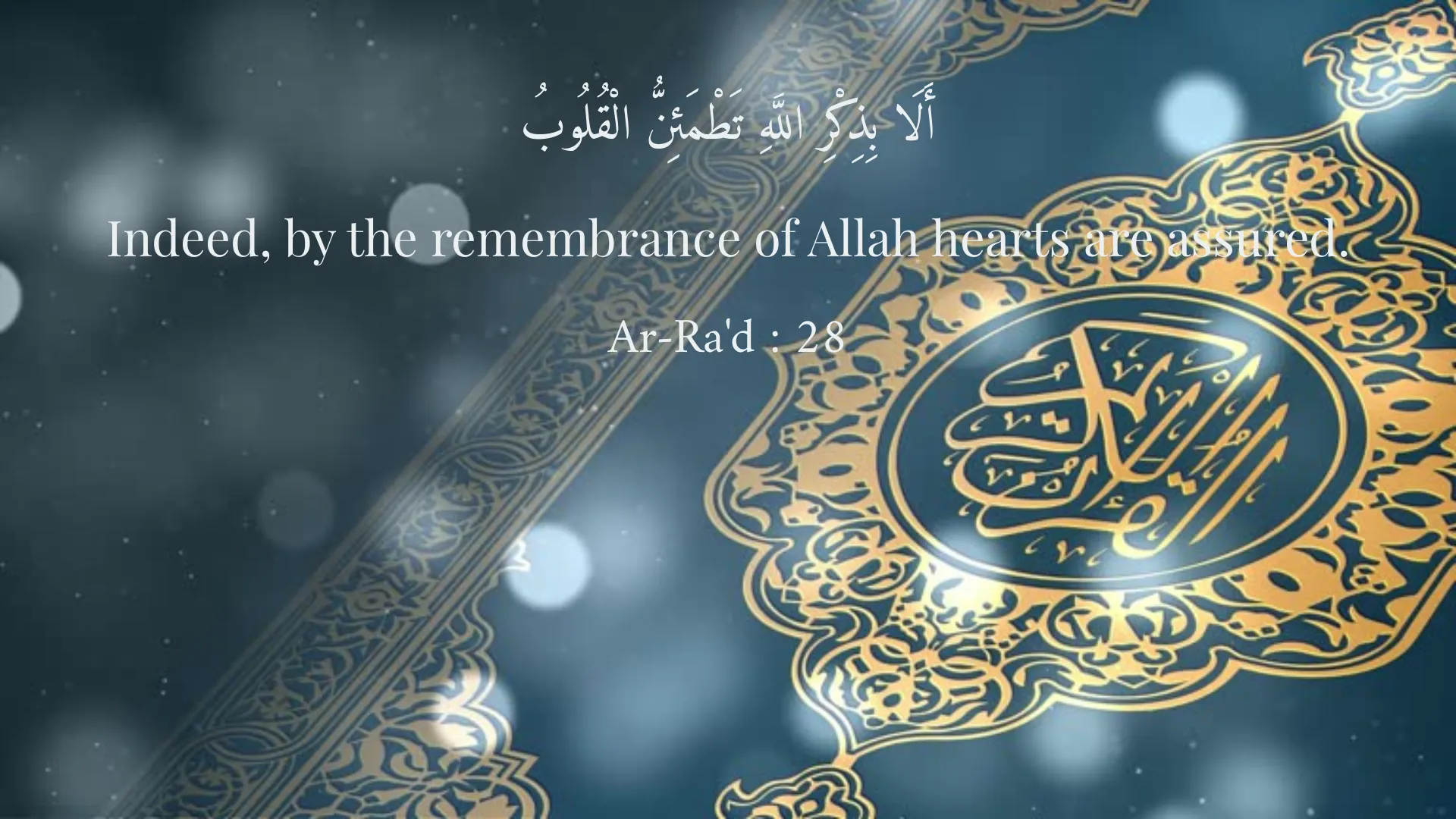
The concept of remembrance in Islam is deeply rooted in the teachings of the Holy Quran. It serves as a fundamental pillar for spiritual and psychological wellbeing among believers. The act of remembering Allah, or dhikr, is not merely a ritualistic expression but a profound form of worship that encompasses the essence of one’s faith. Through remembrance, believers strive to cultivate a stronger relationship with their Creator, ultimately leading to peace and tranquility within their hearts and minds. In Surah Ar-Ra'd, verse 28, it is asserted that 'Indeed, by the remembrance of Allah hearts are assured.' This profound statement encapsulates the essence of finding peace. The human heart, often troubled by the trials and tribulations of life, requires something more significant than worldly possessions for assurance and sufficiency. The verse implies that solace is found not in material wealth, but in spiritual connection—specifically, in the remembrance of Allah. This affirmation highlights the need for developing a deep, spiritual bond with God, which serves as an anchor in turbulent times. Furthermore, the dynamic relationship between God's remembrance and an individual’s mental state is wonderfully articulated in the Quran. The notion that remembrance can lead to 'tranquility' signifies that inner peace and comfort can be obtained, which is essential in today’s fast-paced and often chaotic world. This guidance serves to remind believers that true contentment cannot be sourced from external factors; instead, it emerges from within, through a conscious effort to reconnect with Allah regularly. The role of dhikr extends beyond mere spirituality; it also significantly impacts a person’s worldly existence. Islamic scholars articulate that the continual remembrance of Allah plays a crucial role in enhancing one’s sustenance and blessings in life. Surah Al-Baqarah, verse 152, brings this idea to light, stating: 'So remember Me; I will remember you.' This reciprocal relationship garners great significance. Allah’s promise to remember those who engage in His remembrance reveals a profound theological insight: spiritual practice directly correlates with divine favor and blessings. Remembering Allah is not confined to a mere act of utterance but encompasses a holistic lifestyle characterized by gratitude and mindfulness. Engaging in dhikr can manifest in various forms; from reciting Quranic verses and prayers to reflecting on His creations. Such practices imbue life with meaning and purpose, transforming the mundane into something beautiful and significant. There are numerous benefits associated with consistent remembrance of Allah beyond spiritual tranquility. It is believed that through dhikr, a believer can experience increased blessings in their personal and professional life. Many interpretations of Quranic verses emphasize that those who remember Allah sincerely will find their efforts made easier, their worries diminished, and their sustenance increased, highlighting the symbiotic relationship between spiritual and material abundance. This premise is further supported by the teachings of the Prophet Muhammad (peace be upon him), who consistently encouraged his companions to engage in remembrance of Allah. His life serves as a testament to the benefits of this practice. The Prophet’s habit of dhikr was profound; he would often be found engaging in remembrance wherever he was. Observing this practice not only enhanced his spiritual state but also brought about tangible benefits in his life and those around him. Moreover, the significance of remembering Allah can be articulated from a psychological perspective as well. The act of remembrance facilitates a sense of mindfulness and presence. In situations of stress or anxiety, reciting the names of Allah or invoking prayers can serve as a calming mechanism. Proof from psychological studies supports the idea that engaging in mindful practices leads to reduced stress levels, improved mental health, and a greater sense of overall wellbeing. Thus, a routine of remembrance directly contributes to mental clarity and emotional balance. The integration of dhikr in daily life can take various forms—a few simple methods include setting aside specific times for prayer, reciting positive affirmations based on Quranic verses, or even moments of reflection during mundane daily activities. The flexibility of how one remembers Allah means that anyone can adopt practices that fit their lifestyle, further enhancing the ease of incorporating these spiritual practices into one’s routine. The impact of dhikr transcends individual benefits as well. On a communal level, when groups of people come together to remember Allah, it fosters a sense of unity and fellowship. The shared experience of remembrance creates bonds that reinforce the community and strengthen the ties among individuals. Engaging in collective dhikr not only elevates one’s spirit but also promotes social cohesion, thereby enhancing collective morale and emotional support. In conclusion, the importance of the remembrance of Allah in the faith of a believer extends well beyond the simple act of verbal repetition. It is a multifaceted practice that brings tranquility to the soul, enhances one’s worldly life, and nurtures relationships within the community. The Quran reiterates that through the constant remembrance of Allah, believers can cultivate a deeper connection with their Lord, ensuring that both spiritual and material blessings flow freely. This sacred practice offers profound benefits, providing a pathway toward peace, assurance, and an abundance of blessings—truly embodying the essence of what it means to be a devout believer.
Related Verses
أَلَا بِذِكْرِ اللَّهِ تَطْمَئِنُّ الْقُلُوبُ
Indeed, by the remembrance of Allah hearts are assured.
Ar-Ra'd : 28
فَاذْكُرُونِي أَذْكُرْكُمْ
So remember Me; I will remember you.
Al-Baqarah : 152
Short Story
One day, a man named Ali was leading a busy life. He was so engrossed in worldly affairs that he paid little attention to remembering Allah or making supplications. But one day he wondered, 'Why is my life like this?' He decided to dedicate some time each day to remember Allah. After a while, he noticed not only had he found greater peace, but also his work was blessed with abundance. His life began to flourish, and he credited this change to the remembrance of Allah.