Quranic Answer
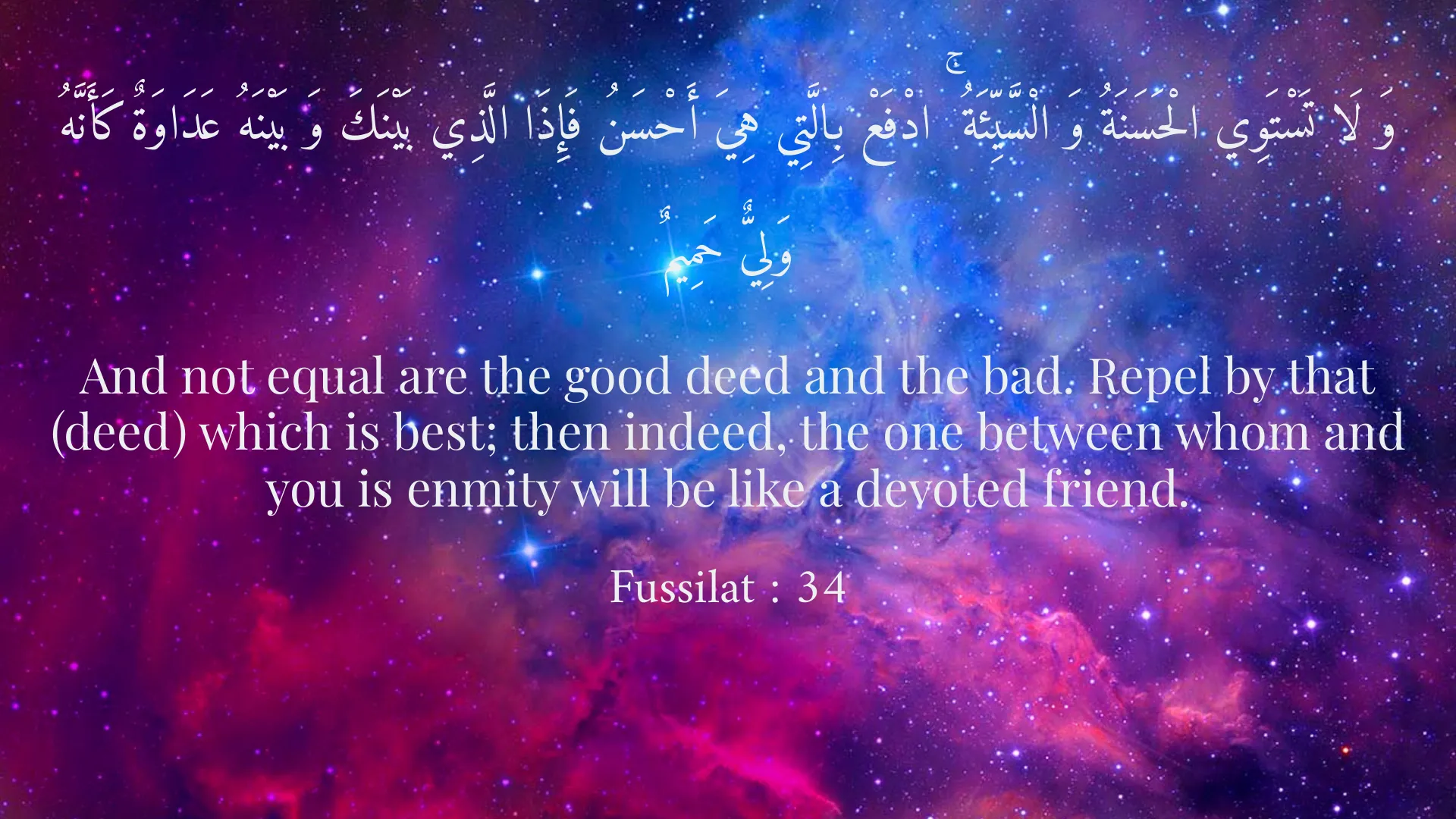
The Holy Quran, a revered text for the Muslim community, is not merely a book of religious commandments; it encapsulates a comprehensive ethical framework that governs interactions between individuals, communities, and even between adversaries. As societal beings, the way we treat one another—particularly during disagreements or conflicts—shapes the fabric of our communal life. One of the profound teachings within the Quran is the imperative of doing good to others, a principle articulated in Surah Fussilat, verse 34. Allah states: 'And not equal are the good deed and the bad. Repel by that (deed) which is best; then indeed, the one between whom and you is enmity will be like a devoted friend.' This verse serves as a foundational pillar for understanding the essence of kindness and compassion, even towards those considered enemies. At its core, the verse emphasizes the importance of responding to negativity with goodness. This teaching is radical in its approach; it urges believers to rise above their base instincts of retaliation and instead engage with an innate sense of virtue. In a world often marked by harshness and divisiveness, the directive to react with kindness has profound implications. Responding with goodness can soften the hearts of our adversaries and foster an atmosphere conducive to reconciliation. The concept of 'repelling by that which is best' signifies a proactive stance in dealing with conflict. When faced with hostility, it encourages individuals to transcend their immediate emotions and to seek higher ground through acts of kindness. Such behavior cannot only neutralize potential hostility but may even transform an enemy into a friend. The Quran here invites us to envision a world where relationships are mended and enmities dissolve through sincere acts of goodwill and a commitment to decency. The notion of resolving conflicts through kindness does not imply ignoring wrongdoings or tolerating injustice. Rather, it reflects a profound understanding of human nature and the transformational power of positive interaction. Often, those who confront hostility with grace and kindness can disarm aggressors and shift the narrative of enmity into one of compassion. This process is indicative of true greatness and selflessness—qualities that the Quran extols. Historically, many figures in Islamic tradition have exemplified this principle. The life of Prophet Muhammad (peace be upon him) serves as a significant testament to the effectiveness of acting with goodness, even amidst adversity. His interactions with adversaries, including those who actively sought to harm him, were characterized by mercy and persuasiveness. Such examples provide Muslims with a framework on how to navigate their own conflicts and relationships in contemporary contexts. Moreover, the practice of engaging with one's enemies through goodwill extends beyond personal realms and impacts society at large. When individuals embrace such an ethos, it inevitably promotes social cohesion. Acts of kindness can serve as social glue, knitting together various segments of society, irrespective of their differing views or backgrounds. Positive behaviors not only improve personal relationships but also establish a culture where empathy and understanding prevail over animosity and division. This principle holds relevance in diverse situations, from family disputes to political conflicts. For instance, in areas plagued by longstanding hostilities, outreach programs emphasizing forgiveness and constructive dialogue have proven effective in mending community relations and fostering lasting peace. From a psychological perspective, combating negativity with kindness can also yield personal benefits. The act of doing good encourages feelings of satisfaction and purpose, which can, in turn, promote mental well-being. This mirrors psychological research that consistently demonstrates how altruistic behaviors can enhance individuals' happiness and emotional resilience. Engaging with others positively—even with those we perceive as adversaries—can create a sense of community and belonging, thereby contributing to a healthier mental state. Furthermore, the Quran frequently reiterates that the reward of such virtuous actions comes from Allah. This spiritual perspective instills a sense of accountability and purpose, motivating individuals to aspire to higher ethical standards in their interactions. Acknowledging that every act of goodness is recognized and rewarded by God fuels a commitment to virtuous behavior. In a broader sense, acting kindly towards our enemies fosters a culture of forgiveness and redemption. When individuals choose to prioritize compassion over vengeance, they participate in a transformative process that can reshape societal attitudes toward conflict resolution and engagement. This is especially pertinent in today’s world, which is rife with tension and division along various lines—including political, social, and religious. As citizens of a global community, individuals are often confronted with conflicts that test their moral resolve. The Quran's exhortation to respond to enmity with benevolence calls for a deliberate and conscious effort to cultivate peaceful relations, even when provoked. This practice not only aligns with the Quranic principles but can also reflect wider human values that foster coexistence in an increasingly polarized world. In conclusion, the teachings of the Quran on doing good to others, particularly to those considered enemies, provides a rich and enduring ethical framework for personal conduct and social relations. Surah Fussilat’s reminder that goodness can transform enmity into friendship is both a challenge and an opportunity for individuals to elevate their character and contribute to a more harmonious society. By embodying the principles of kindness, forgiveness, and compassion, we take active steps not only toward personal growth but also toward creating a world where understanding and love triumph over conflict and discord. The profound message contained in the Quran transcends time and remains a lasting guidance on how to navigate the complexities of human relationships with grace and dignity.
Related Verses
وَ لَا تَسْتَوِي الْحَسَنَةُ وَ الْسَّيِّئَةُ ۚ ادْفَعْ بِالَّتِي هِيَ أَحْسَنُ فَإِذَا الَّذِي بَيْنَكَ وَ بَيْنَهُ عَدَاوَةٌ كَأَنَّهُ وَلِيٌّ حَمِيمٌ
And not equal are the good deed and the bad. Repel by that (deed) which is best; then indeed, the one between whom and you is enmity will be like a devoted friend.
Fussilat : 34
Short Story
One day, a man named Hossein did good to one of his enemies who always harmed him. Instead of seeking revenge, he decided to help him. After a while, that enemy realized that Hossein was a good person, and slowly, a friendly relationship formed between them. This story illustrates how doing good to enemies can lead relationships towards friendship.