Quranic Answer
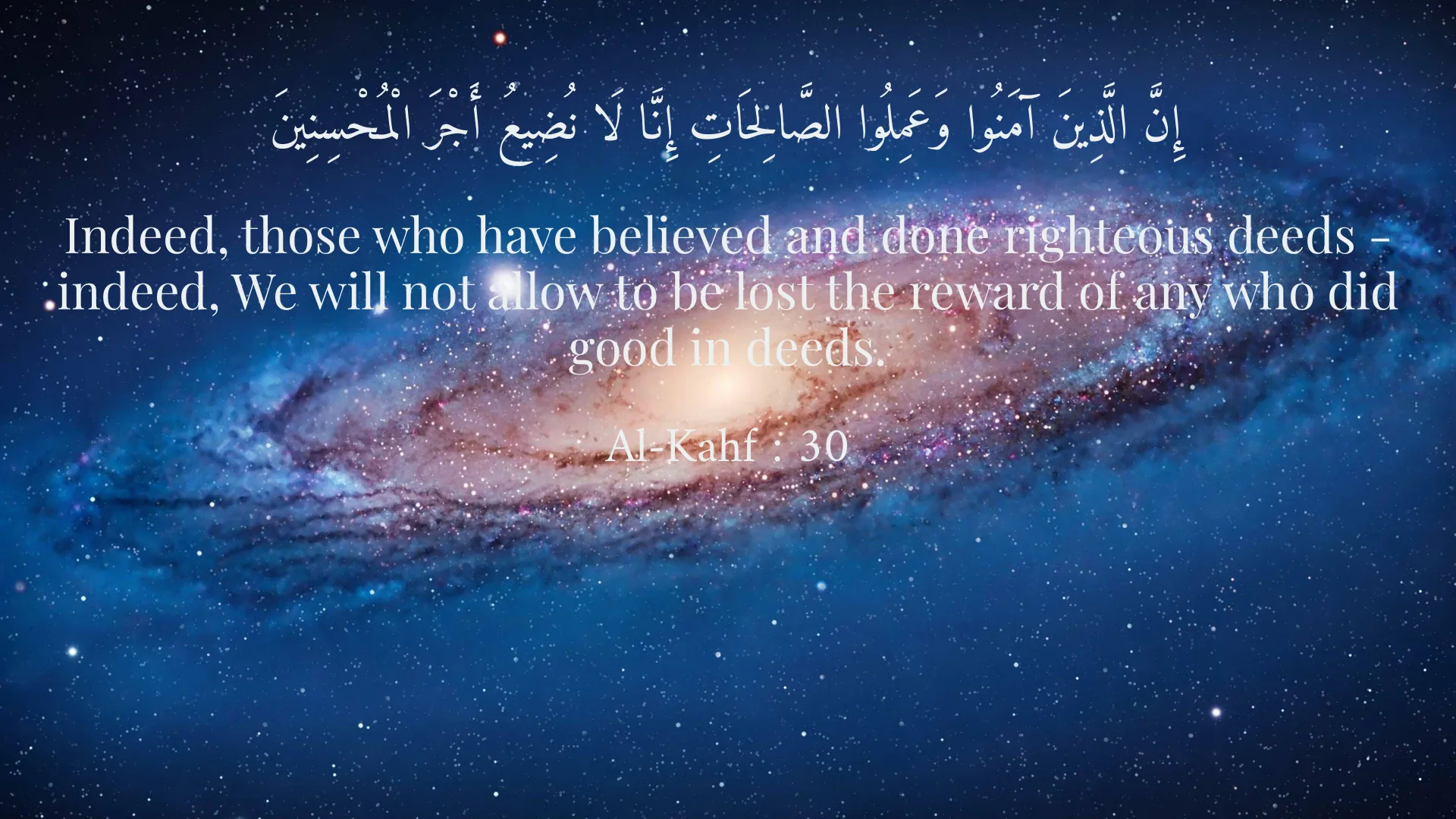
Understanding the concept of reward for good deeds in Islam, particularly within the framework of the Holy Quran, requires deep and comprehensive reflection. The notion that 'every good deed immediately yields a worldly reward' might seem appealing at first glance, but Quranic teachings offer a far broader and more encompassing perspective. The Quran emphasizes that no good deed is wasted by Allah, and its reward is preserved, but the nature and timing of this reward are not necessarily limited to this world; rather, they often have profound spiritual and eschatological dimensions. The basis of reward and retribution for actions in the Quran is built upon divine justice. Allah Almighty has repeatedly promised in the Quran that He does not let the deeds of the righteous perish. For instance, in Surah Al-Kahf, verse 30, He states: "Indeed, those who have believed and done righteous deeds - indeed, We will not allow to be lost the reward of any who did good in deeds." This verse and similar ones provide a divine guarantee that no good deed will go unrewarded. However, is this reward necessarily and solely in this world? The answer is that the reward for goodness has various dimensions, including worldly blessings, peace of mind, inner contentment, facilitation of affairs, and most importantly, immense recompense in the Hereafter. The Holy Quran explicitly states that the primary and complete abode of reward is the Hereafter. This world is a realm of action and testing, not a realm of complete retribution. Verse 97 of Surah An-Nahl beautifully illustrates this concept: "Whoever does righteousness, whether male or female, while a believer - We will surely cause him to live a good life, and We will surely give them their reward [in the Hereafter] for the best of what they used to do." The phrase "Hayatan Tayyibah" (a good and pleasant life) refers to the worldly rewards of good deeds, which can include spiritual tranquility, contentment, health, blessings in sustenance, and the affection of people. This 'Tayyibah' life does not necessarily mean limitless material wealth and prosperity; rather, it primarily pertains to the quality and inner peace of life, even if seemingly accompanied by challenges. Many righteous individuals may face poverty, illness, or hardships in this worldly life, yet Allah grants them a peace and contentment that surpasses any material wealth. Furthermore, it must be noted that this world is a realm of trials and tribulations. Sometimes, a person's good deeds are met with tests instead of immediate material rewards. These trials do not indicate that the good deed is wasted; instead, they are opportunities for spiritual growth, purification of the soul, and elevation in the ranks of faith. Allah is All-Wise, and He ordains everything in the best way and at its appointed time. In Surah Al-Ankabut, verses 2 and 3, He says: "Do people think that they will be left alone because they say, 'We believe,' and will not be tested? (2) But We have certainly tested those before them, and Allah will surely make evident those who are truthful, and He will surely make evident the liars (3)." These verses demonstrate that worldly life is full of trials, and believers are not exempt from them. The Quran also introduces the principle of "Is the reward for good anything but good?" (Hal Jazaa’u al-Ihsaan illa al-Ihsaan) in Surah Ar-Rahman, verse 60. This is a general principle indicating the divine law governing existence: every action has a reflection and a consequence. Goodness brings forth goodness, but this goodness can manifest in various forms: from tangible worldly rewards to spiritual blessings, peace of mind, popularity among people, preservation of offspring and progeny, and of course, countless rewards in the Hereafter. Therefore, every good deed ultimately has its reward, but not necessarily in the form we expect or at the time we desire. Sometimes, this reward appears as the warding off of calamity, prevention of harm, or guidance towards good, which we might be unaware of. The important thing is for a person to continue their righteous deeds with faith and reliance on Allah, trusting in His promise regarding the reward for the righteous, for Allah never breaks His promise and never leaves the righteous unrewarded. This inner conviction is, in itself, one of the greatest worldly rewards Allah bestows upon believers.
Related Verses
إِنَّ الَّذِينَ آمَنُوا وَعَمِلُوا الصَّالِحَاتِ إِنَّا لَا نُضِيعُ أَجْرَ الْمُحْسِنِينَ
Indeed, those who have believed and done righteous deeds - indeed, We will not allow to be lost the reward of any who did good in deeds.
Al-Kahf : 30
مَنْ عَمِلَ صَالِحًا مِّن ذَكَرٍ أَوْ أُنثَىٰ وَهُوَ مُؤْمِنٌ فَلَنُحْيِيَنَّهُ حَيَاةً طَيِّبَةً ۖ وَلَنَجْزِيَنَّهُمْ أَجْرَهُم بِأَحْسَنِ مَا كَانُوا يَعْمَلُونَ
Whoever does righteousness, whether male or female, while a believer - We will surely cause him to live a good life, and We will surely give them their reward [in the Hereafter] for the best of what they used to do.
An-Nahl : 97
هَلْ جَزَاءُ الْإِحْسَانِ إِلَّا الْإِحْسَانُ
Is the reward for good [anything] but good?
Ar-Rahman : 60
Short Story
In Saadi's Gulistan, it is narrated that there was a wise and spiritual man who was always engaged in goodness and benevolence, even if his means were scarce. He gave whatever he possessed in the way of God and to help those in need, without expecting any worldly reward. Sometimes, those around him wondered why this man, despite all his good deeds, had no share of worldly wealth and appeared poor. Yet, this wise man always had a joyful face and a tranquil heart. One day, a friend asked him, 'O man of God, you strive so much in good deeds, why does God not grant you a share of worldly riches?' The sage smiled and said, 'My dear friend, God's reward is not confined to worldly wealth and status. The peace of heart that has been bestowed upon me, the sweetness of prayer and remembrance of God that has settled in my heart, and the love that has been placed in people's hearts for me—these are all treasures that cannot be compared to any worldly wealth. God gives each person what is best for them, and sometimes the best reward is peace of soul, which is more precious than thousands of dinars.' This story teaches us that the rewards for good deeds sometimes manifest as inner peace and contentment, and the love that comes to us from God and from people, which are among the greatest worldly blessings.