Quranic Answer
Does every human being have a special mission? This is a profound and fundamental question that has occupied the minds of many throughout history. From the perspective of the Holy Quran, the answer to this question is a definitive 'yes,' but not in the sense of a unique, pre-determined mission for each individual that completely distinguishes them from others. Rather, it signifies a comprehensive and overarching mission for all humanity, which each person fulfills in their own distinct way, according to their talents and circumstances. The Quran clearly outlines the purpose of human creation, providing a general framework for this grand mission, within which every human being plays an essential and vital role. The first and most significant aspect of this mission is the 'worship' of Allah (SWT). In Surah Adh-Dhariyat, verse 56, Allah states: 'And I did not create the jinn and mankind except to worship Me.' This noble verse forms the core of the human mission. However, the concept of worship in Islam extends far beyond merely performing ritualistic acts like prayer and fasting. Worship, in its complete sense, encompasses every action performed with sincere intention for the pleasure of Allah. This means that all aspects of human life, from work and livelihood to family life, seeking knowledge, helping the needy, and even resting, can transform into acts of worship, provided they are driven by a divine intention and fall within the bounds of His pleasure. Thus, every human, regardless of their position or ability, can fulfill their worshipping mission by orienting their actions towards divine satisfaction. An engineer building a safe and useful structure, a doctor treating patients, a teacher educating students, and a laborer diligently performing their work are all engaged in worship, provided their intention is for God. This perspective on worship elevates human life beyond mere routine, imbuing it with sublime meaning and purpose. The second aspect of the human mission is 'vicegerency' (khilafah) and stewardship on Earth. In Surah Al-Baqarah, verse 30, Allah addresses the angels, saying: 'And [mention, O Muhammad], when your Lord said to the angels, 'Indeed, I will make upon the earth a successive authority.'' This vicegerency places an immense responsibility upon humanity. As Allah's vicegerents, humans are obligated to cultivate the Earth, establish justice, utilize its resources responsibly, and show compassion to other creatures. This implies managing and safeguarding divine blessings and establishing order and peace in the world. Each individual, within their sphere of influence, whether in the family, at work, or in the larger society, can fulfill this role of khilafah. A parent raising righteous children, an official upholding justice, and a citizen respecting the rights of others are all performing their divine duty of vicegerency. This individual mission ultimately leads to the improvement and rectification of the entire human society. Every positive action that benefits the community and fosters development aligns with this great mission. The third dimension of this mission is the divine 'test.' The Holy Quran describes worldly life as a grand arena for human trial. In Surah Al-Mulk, verse 2, we read: 'He who created death and life to test you [as to] which of you is best in deed.' This means every moment of our lives is an opportunity to perform good deeds and demonstrate our best actions. The mission of every human being is to emerge successful from this divine test. This trial is not limited to grand or extraordinary actions but encompasses all our choices and reactions to life's challenges and opportunities. How do we handle our wealth? How do we utilize our knowledge? How do we act with our power and abilities? How do we treat our parents? How do we interact with our neighbors? How do we react to injustice and corruption? All these are facets of this test, and each individual, to their extent and ability, is responsible for performing the best action. Success in this test paves our way for eternal bliss. Therefore, it can be concluded that the mission of every human being is a universal one, encompassing worship, vicegerency, and divine testing. However, the manifestation of this mission in each individual's life is unique. Allah has bestowed upon every human being different talents, abilities, and opportunities. The specific mission of each person is to employ these divine endowments to realize the general mission of humanity. For instance, the mission of a scientist might be to discover knowledge that serves humanity, the mission of an artist might be to create works that elevate the human spirit, and the mission of a baker might be to bake bread that nourishes people. All these, when done with sincere intention and in pursuit of Allah's pleasure, lead to worship and vicegerency. This difference in specific missions brings beauty and diversity to the world, enabling human society, like a single body with diverse yet harmonious organs, to move towards perfection. No role is small or insignificant, as every small part contributes to the realization of the larger goal. Thus, every human being has their special mission, but this special mission does not mean separation from the overall purpose of creation; rather, it signifies the unique manifestation of that general purpose within the being and actions of that individual. Discovering this special mission requires self-knowledge, recognition of one's abilities, and a deep connection with the Creator, so that we may present our best selves in the service of Allah and His creation. This mission not only gives meaning and direction to individual life but also guides the entire existence towards a sublime destination, granting humans a profound sense of purpose and tranquility. Every step taken on this path, whether small or large, holds a special esteemed value in the sight of Allah Almighty.
Related Verses
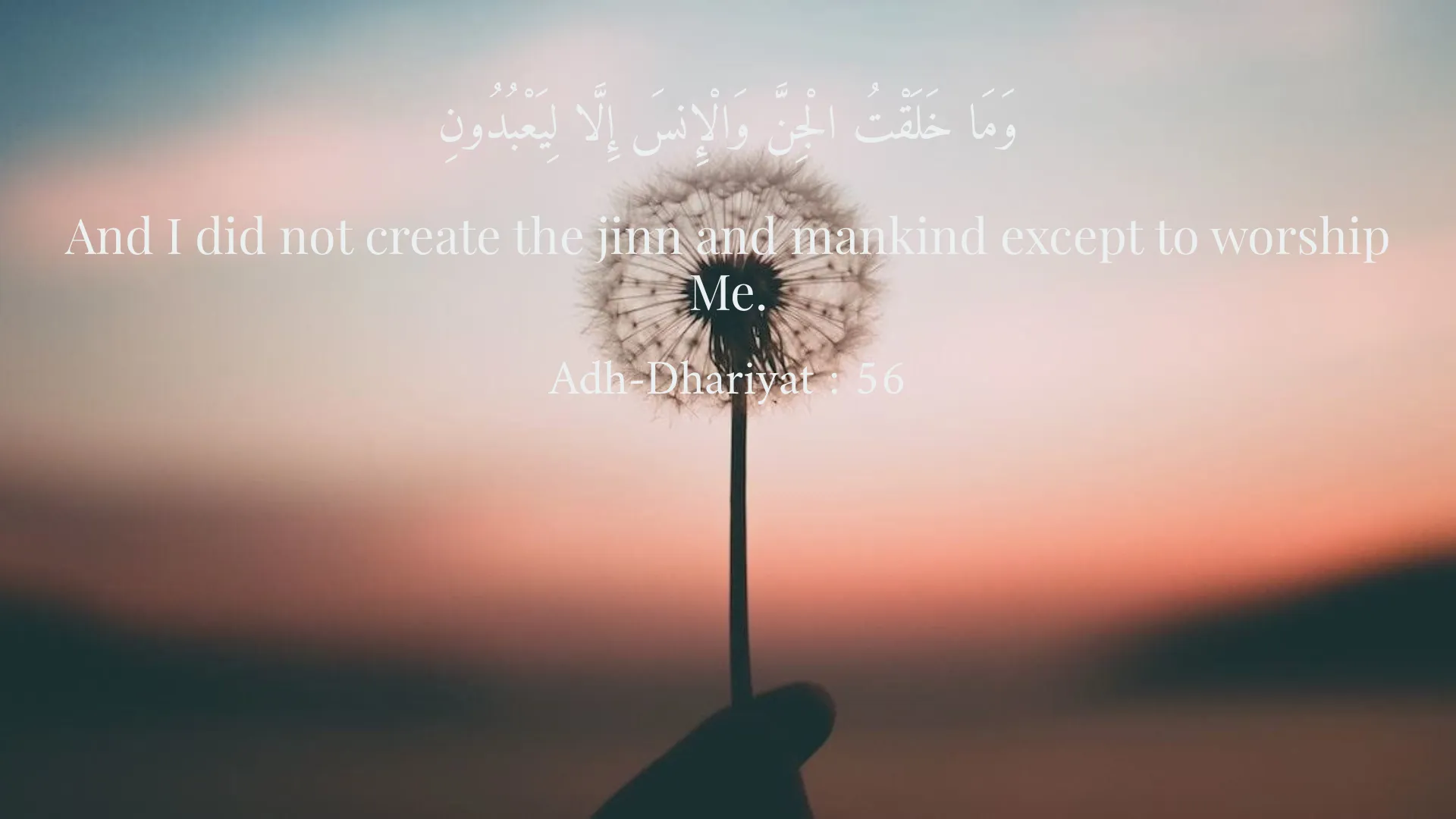
وَمَا خَلَقْتُ الْجِنَّ وَالْإِنسَ إِلَّا لِيَعْبُدُونِ
And I did not create the jinn and mankind except to worship Me.
Adh-Dhariyat : 56
وَإِذْ قَالَ رَبُّكَ لِلْمَلَائِكَةِ إِنِّي جَاعِلٌ فِي الْأَرْضِ خَلِيفَةً ۖ قَالُوا أَتَجْعَلُ فِيهَا مَن يُفْسِدُ فِيهَا وَيَسْفِكُ الدِّمَاءَ وَنَحْنُ نُسَبِّحُ بِحَمْدِكَ وَنُقَدِّسُ لَكَ ۖ قَالَ إِنِّي أَعْلَمُ مَا لَا تَعْلَمُونَ
And [mention, O Muhammad], when your Lord said to the angels, 'Indeed, I will make upon the earth a successive authority.' They said, 'Will You place upon it one who will cause corruption therein and shed blood, while we declare Your praise and sanctify You?' Allah said, 'Indeed, I know that which you do not know.'
Al-Baqarah : 30
الَّذِي خَلَقَ الْمَوْتَ وَالْحَيَاةَ لِيَبْلُوَكُمْ أَيُّكُمْ أَحْسَنُ عَمَلًا ۚ وَهُوَ الْعَزِيزُ الْغَفُورُ
He who created death and life to test you [as to] which of you is best in deed - and He is the Exalted in Might, the Forgiving.
Al-Mulk : 2
Short Story
It is narrated in Saadi's Bustan that a wise mystic passed by a farmer who was patiently sowing wheat seeds in the earth. The farmer toiled, bathed in sweat, and the mystic observed him. The mystic asked, "O man, what is your mission in this vast world?" The farmer humbly replied, "My mission is to cultivate the land entrusted to me so that others may benefit from the fruit of my labor. I sow the seed, and God grants the blessing, and thus life revolves." The mystic smiled and said, "You speak truly. Do not imagine that a mission is solely for kings and great ones. Every person in this world has a task, and every step taken with a pure intention is a part of the grand divine mission. He who sows a seed, he who bakes bread, he who imparts knowledge, and he who comforts a broken heart, all share one mission: the mission of servitude and cultivation." The farmer was gladdened by these words and continued his work with renewed determination, knowing that every small act performed for the sake of truth held immense value.