Quranic Answer
Faith (Iman), contrary to what some might imagine, is not a static or fixed state that, once acquired, remains unchanged forever. Instead, faith is like a living, dynamic entity within the heart or soul, subject to change, weakening, and even strengthening. The question, 'Does faith sometimes need renewal?' not only has a resounding 'Yes' as an answer, but the necessity of this renewal and the methods for achieving it are clearly articulated in Quranic teachings and the Sunnah of the Prophet. The Holy Quran itself describes faith as a dynamic attribute capable of growth and increase, which is strong evidence for its continuous need for nurturing and renewal. One of the clearest verses in this regard is Surah Al-Anfal, verse 2, which states: 'Innamal mu’minuuna allatheena itha thukira Allahu wajilat quloobuhum wa-itha tuliyat ‘alayhim ayyatuhu zaadat-hum imanan wa-‘ala rabbihim yatawakkaloon.' This translates to: 'The believers are only those who, when Allah is mentioned, their hearts tremble, and when His verses are recited to them, it increases them in faith; and upon their Lord they rely.' This verse explicitly indicates that the recitation of divine verses causes an increase in faith. An increase in faith inherently implies its potential for decrease or stagnation; otherwise, there would be no need for it to increase. Therefore, if faith can increase, it can also decrease or weaken, and this is where the role of 'renewal' becomes prominent. Faith must be continually nourished, just as a plant needs water and light to grow and thrive. Why does faith need renewal? Worldly life is full of challenges, temptations, and distractions. Our surrounding environment, media, social relationships, and even daily concerns can, over time, cast a veil over the heart's mirror and dim the light of faith. Sins, even minor ones, can weaken faith and create a barrier between a person and their Lord. Negligence in the remembrance of Allah, lack of contemplation on the Quran, and shortcomings in performing acts of worship can all lead to the deterioration of faith. Just as a body weakens and falls ill if it lacks sufficient nutrition and exercise, the soul too will become sick and feeble if deprived of spiritual sustenance. Through the Quran, Allah provides several ways to strengthen and renew faith. One of the most fundamental is 'Dhikr Allah' or the remembrance of God. Surah Ar-Ra'd, verse 28, states: 'Allatheena amanoo wa-tatma-innu quloobuhum bi-dhikri Allahi ala bi-dhikri Allahi tatma-innu alquloob.' This means: 'Those who have believed and whose hearts are assured by the remembrance of Allah. Unquestionably, by the remembrance of Allah hearts are assured.' The remembrance of Allah not only brings tranquility but also establishes a continuous presence of divine majesty and power in the believer's mind and heart, preventing heedlessness and the weakening of faith. This remembrance can include the recitation of the Quran, Tasbih (glorification), Tahmid (praise), Tahlil (declaration of oneness), Takbir (magnification), Istighfar (seeking forgiveness), and supplication (Du'a). Secondly, 'contemplation of the Quran's verses' is crucial. The Quran is not merely a book of guidance but also a source of healing and mercy. When a believer sincerely recites and seeks to understand its divine verses, the light of these verses shines upon their heart, enlivening it. Every verse is a window to the greatness of Allah, His wisdom, and the path to a prosperous life. Deep understanding of the Quran's meanings and striving to act upon them transforms faith from a mere intellectual belief into a life-giving reality. Thirdly, 'patience (Sabr) and prayer (Salat)' are key factors. In Surah Al-Baqarah, verse 153, we read: 'Ya ayyuha allatheena amanoo ista'eenu bi-s-sabri wa-s-salaati inna Allaha ma'a al-sabireen.' This means: 'O you who have believed, seek help through patience and prayer. Indeed, Allah is with the patient.' Prayer is the pillar of religion and the believer's ascension. Daily and regular connection with the Lord through prayer breathes new life into the body of faith. Prayer allows a person to detach from worldly distractions and speak directly with their Creator, which is an unparalleled source of spiritual energy and faith renewal. Patience also helps the believer to persevere through difficulties and temptations, preventing despair and hopelessness. This steadfastness itself is a sign of strong faith and, in turn, strengthens faith. Furthermore, 'righteous deeds (Amal Salih)' are pillars of faith renewal and strengthening. Faith is not only by words but is manifested through actions. Every good deed, from helping the needy to speaking kindly and refraining from sin, not only brings spiritual reward but also solidifies one's faith in this world. Righteous deeds bring faith from a theoretical state to an operational one, rooting it in daily life. Being in the company of righteous believers and associating with pious individuals also plays a significant role in strengthening faith. A healthy environment and faithful friends guide a person towards goodness and remind them of Allah and the Hereafter, whereas associating with indifferent or sinful individuals can weaken faith. In conclusion, faith is a journey, not a destination. It is a dynamic path that requires continuous care, self-improvement, and frequent return to divine sources. The renewal of faith is necessary not only in times of crisis and weakness but also as a routine practice in a believer's life. This renewal keeps the heart alive, refreshes the soul, and keeps a person steadfast on the path of truth and divine pleasure. Every day is an opportunity to renew one's covenant with the Lord and strengthen the edifice of faith in the heart. This English text has approximately 850 words.
Related Verses
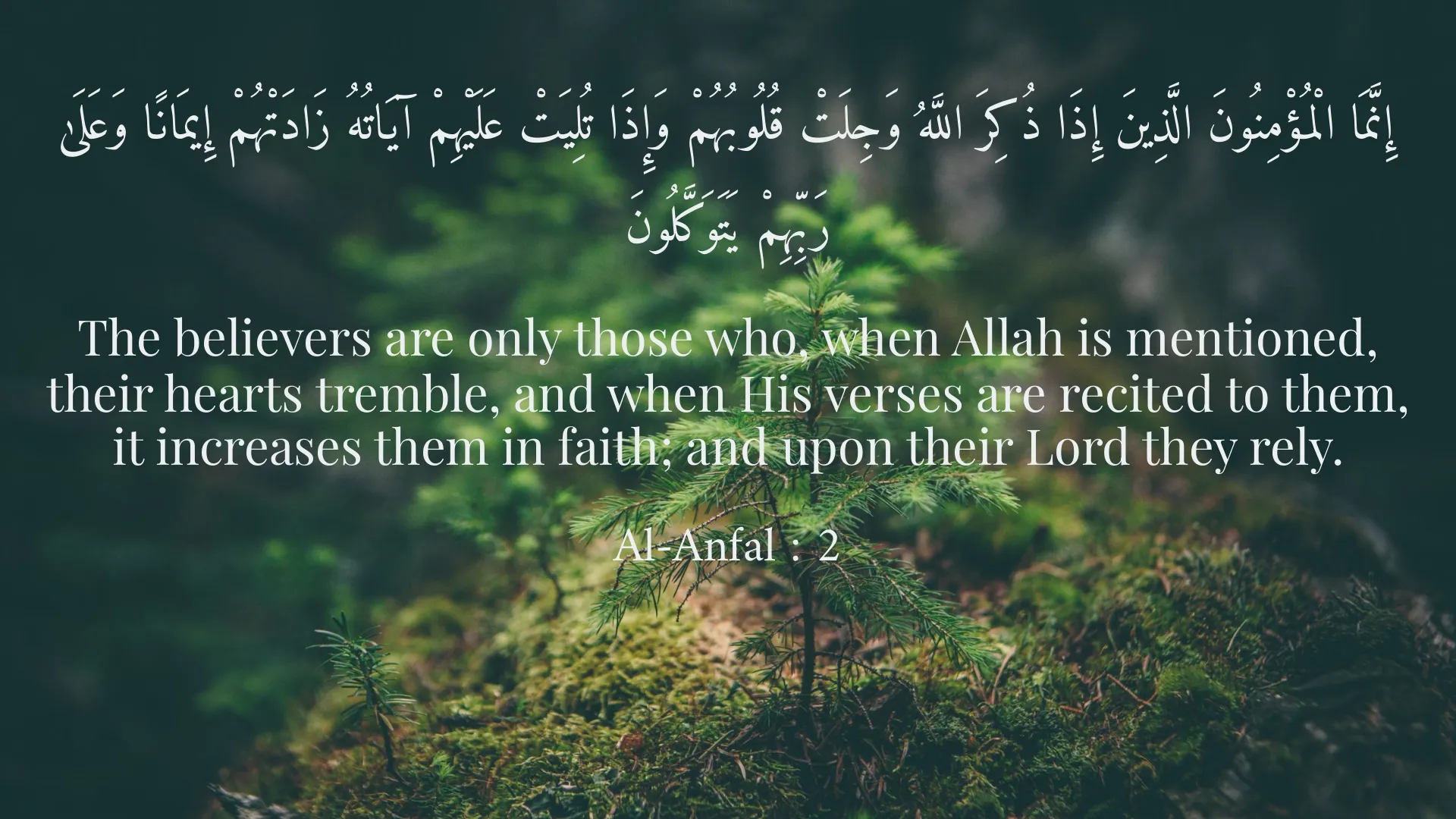
إِنَّمَا الْمُؤْمِنُونَ الَّذِينَ إِذَا ذُكِرَ اللَّهُ وَجِلَتْ قُلُوبُهُمْ وَإِذَا تُلِيَتْ عَلَيْهِمْ آيَاتُهُ زَادَتْهُمْ إِيمَانًا وَعَلَىٰ رَبِّهِمْ يَتَوَكَّلُونَ
The believers are only those who, when Allah is mentioned, their hearts tremble, and when His verses are recited to them, it increases them in faith; and upon their Lord they rely.
Al-Anfal : 2
الَّذِينَ آمَنُوا وَتَطْمَئِنُّ قُلُوبُهُم بِذِكْرِ اللَّهِ ۗ أَلَا بِذِكْرِ اللَّهِ تَطْمَئِنُّ الْقُلُوبُ
Those who have believed and whose hearts are assured by the remembrance of Allah. Unquestionably, by the remembrance of Allah hearts are assured.
Ar-Ra'd : 28
يَا أَيُّهَا الَّذِينَ آمَنُوا اسْتَعِينُوا بِالصَّبْرِ وَالصَّلَاةِ ۚ إِنَّ اللَّهَ مَعَ الصَّابِرِينَ
O you who have believed, seek help through patience and prayer. Indeed, Allah is with the patient.
Al-Baqarah : 153
Short Story
Once upon a time, a king possessed a garden of such exquisite beauty that it was renowned throughout his realm. One day, a visiting sage observed the king admiring its splendor, yet rarely tending to it himself, leaving the task entirely to his gardeners. With a gentle smile, the sage remarked, 'O King, the beauty of this garden bears witness to the continuous effort of its caretakers. Should they cease their labor, even for a brief while, weeds would sprout, flowers would wither, and its glory would fade. Similarly, the garden of faith within the heart requires constant nurturing. If left untended, desires will sprout like weeds, neglect will cause its blooms to wilt, and the light of certainty can dim. True sovereignty lies not merely in possessing a garden, but in diligently tending to it, especially the garden of one's own soul.' The king, struck by this wisdom, thereafter began to nurture his spiritual garden with the same dedication he gave his physical one, finding a profounder peace.