Quranic Answer
The Holy Quran and various religious texts emphasize the profound significance of one's sight and gaze in the formation of spirituality and moral integrity. The way individuals perceive the world through their eyes lays the foundation for their actions, behaviors, and overall spiritual existence. Allah has made numerous references to the eventual day when everyone will be held accountable for their actions, urging a deep mindfulness about what one allows oneself to engage with visually. This principle emphasizes the importance of guarding one’s eyes as a means of safeguarding the heart and soul. In Surah An-Nur, verse 30, Allah commands the believers to lower their gaze and guard their modesty: 'Tell the believing men to lower their gaze.' This verse serves as a critical instruction to protect not only the individuals' spiritual well-being but also the collective moral fabric of society. The call to lower one’s gaze can be understood both literally and metaphorically. Spiritually, it denotes the need to avoid lustful looks and desires that ultimately derail one from the righteous path prescribed by Allah. Physically, it advocates for self-regulation and the conscious decision to avoid visual stimuli that may incite sinful thoughts or actions. Imam Ali (peace be upon him) is renowned for his wise sayings, and he cautioned that desire and illicit gazes could darken and sadden the heart. When desire overtakes one’s ability to rationally discern right from wrong, it opens a channel for negativity and moral degradation to infiltrate one's spirit. An unchecked gaze can lead individuals away from the righteous path and further deepen their spiritual void. Imam Ali’s perspective serves to remind us of the implications that our external actions can have on our internal sanctity. The correlation between illicit glances and the state of one’s heart is profound. It is believed that forbidden glances can not only detract from one's spiritual clarity but also cause the heart to become diseased and polluted. When people engage with sights deemed haram (forbidden), they inadvertently associate themselves with behaviors that are counterproductive to their spiritual growth. Considering this belief system, we can arrive at a crucial understanding: gazing at prohibited things prevents the heart from being in a continual state of remembrance of Allah. This distance created from Allah can lead to spiritual demise, resulting in lost path and eroded sense of self. The Quran paints a vivid picture of the human soul in relation to divine laws, where disobeying these laws through visual engagement with the haram not only diminishes one’s spirituality but also disturbs inner peace and tranquility. It is imperative to recognize that theological teachings address the essence of controlling desires and maintaining a constant connection with Allah. This connection is irreplaceable in one’s pursuit of spiritual fulfillment. As believers, it is essential to remain vigilant, understanding that the eyes are a prominent tool through which temptations can seep into the heart. The ability to gaze upon that which provides value and lifts the spirit reflects one’s devotion to living a life imbued with faith. Therefore, we must strive to turn our eyes away from what is haram, focusing instead on aspects of life that enhance our spiritual existence, promote kindness, and keep our hearts alive and fervent. This engagement with the visible world must also reflect in the way we interact with the world that surrounds us. The teachings found in various religious texts resonate with an age-old concept of mindfulness. By embodying a mindful approach, individuals can curate an environment conducive to spiritual sustenance and growth. This mindfulness fosters an inner tranquility that is anchored in faith, enabling individuals to navigate life’s challenges with grace, empathy, and resilience. Furthermore, the consequences of ignoring this divine guidance are alarming. The ramifications extend beyond the individual and seep into the social fabric. In societies where individuals neglect the moral guidelines set forth by religious teachings, the community begins to experience moral decline, leading to increased negativity and discord. The collective vigilance in lowering one’s gaze and preserving modesty can pave the way for a supportive environment, fostering faith and tranquility within the society. Ultimately, the role of one’s sight extends beyond mere observation; it is intertwined with deeper religious and spiritual experiences. Through Allah’s wisdom as articulated in the Holy Quran and teachings of Islamic figures like Imam Ali, believers are encouraged to nurture their souls by directing their gaze wisely. This divine instruction to control one’s sight serves as a significant act of fidelity to faith, which in turn cultivates inner peace and collective spiritual prosperity in society. In conclusion, the act of lowering one’s gaze and guarding against undesirable sights is not just an admonition aimed at inhibiting desire; it is a holistic lifestyle choice that fosters well-being for both individuals and communities at large. Recognizing the intrinsic value of these teachings, believers must embrace a more mindful existence, using their sight as a means to strengthen their connection with Allah while nourishing their hearts with thoughts and visuals that inspire tranquility and kindness. As we journey through life, let us keep our eyes focused on the blessings that Allah has bestowed upon us, constantly striving to be conscious stewards of our soul’s well-being.
Related Verses
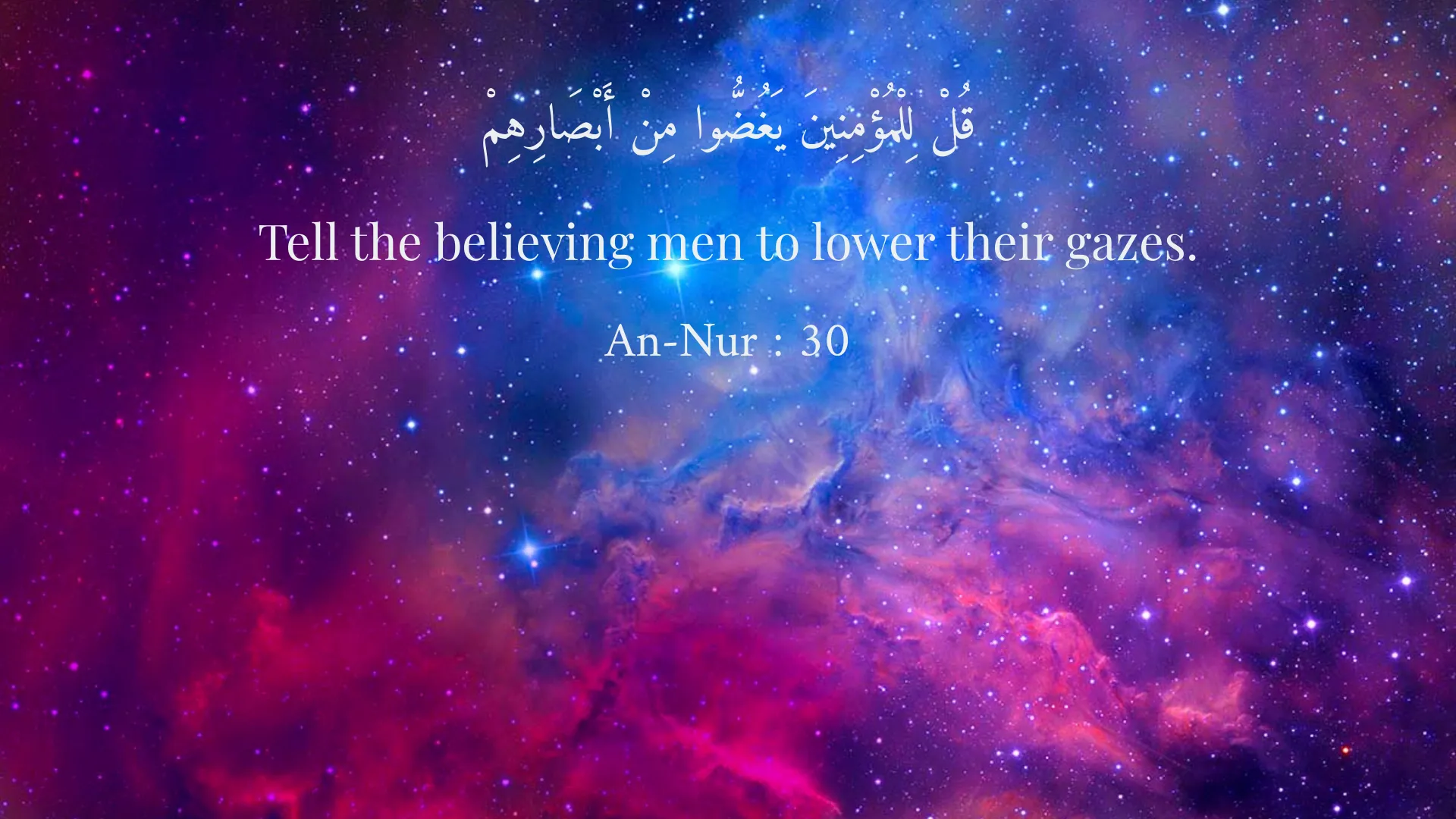
قُلْ لِلْمُؤْمِنِينَ يَغُضُّوا مِنْ أَبْصَارِهِمْ
Tell the believing men to lower their gazes.
An-Nur : 30
يَا أَيُّهَا النَّبِيُّ قُلْ لِأَزْوَاجِكَ وَبَنَاتِكَ وَنِسَاءِ الْمُؤْمِنِينَ يُدْنِينَ عَلَيْهِنَّ مِنْ جَلَابِيبِهِنَّ
O Prophet, tell your wives and your daughters and the women of the believers to bring down over themselves of their outer garments.
Al-Ahzab : 59
Short Story
One day, a man named Hasan was walking and suddenly caught sight of an inappropriate scene. He suddenly felt distress and unease within him. He remembered the Quranic verse that instructs lowering one's gaze. After that, Hasan decided to draw closer to Allah and actively work on strengthening his faith. He began to engage in the remembrance of Allah and prayer daily, feeling a great peace in his heart.