Quranic Answer
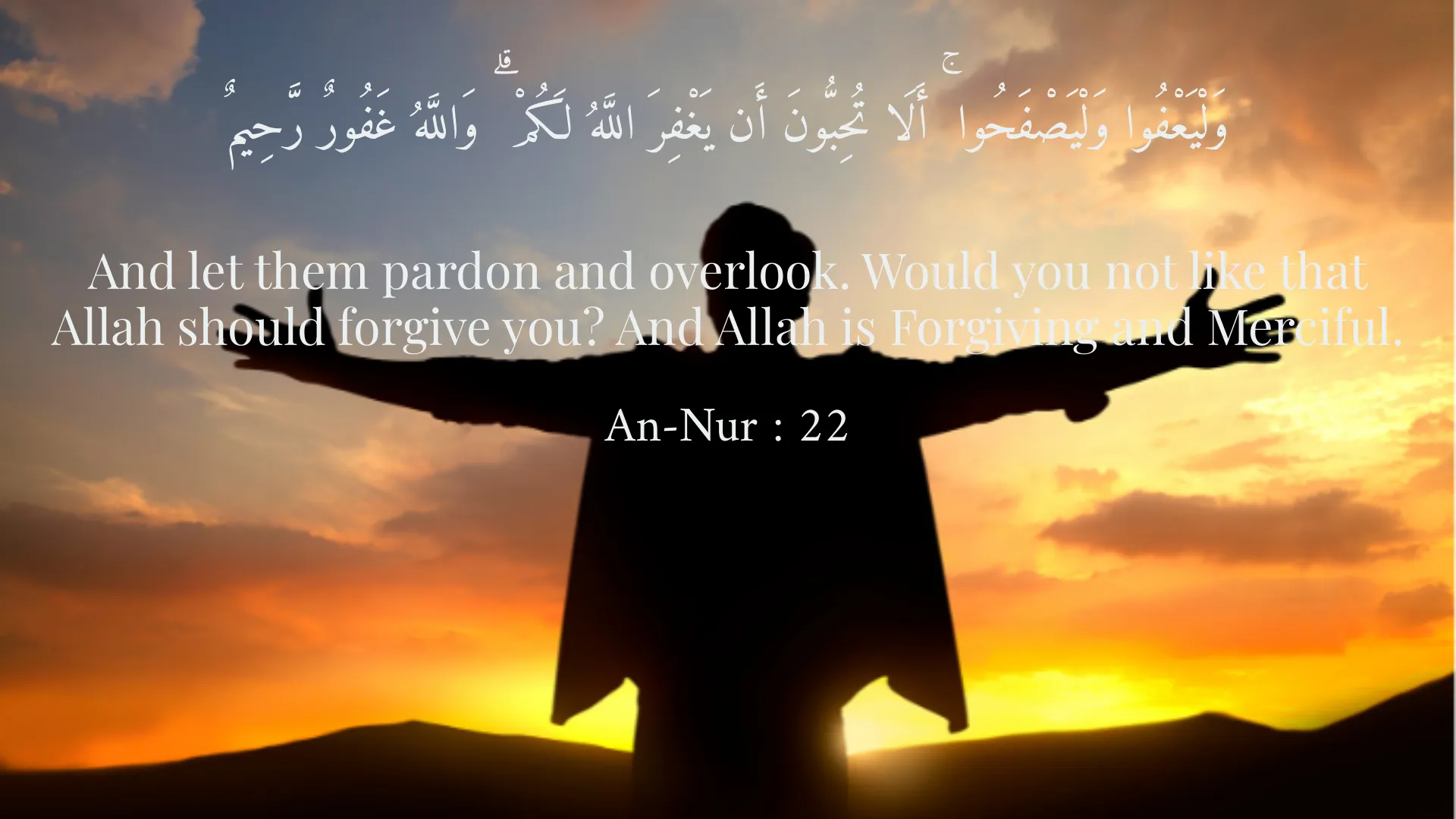
Forgiveness is a profound and transformative theme in Islam, intricately woven into the teachings of the Quran. It significantly impacts not only the emotional well-being but also the spiritual peace of individuals. At its core, forgiveness in Islam is viewed as a moral obligation and a pathway to maintaining social harmony. Through the act of forgiving others, individuals have the opportunity to cultivate inner peace, nurture positive relationships, and ultimately, foster a more harmonious society. The Quran extensively discusses the concept of forgiveness, emphasizing its importance for both personal development and community cohesion. In particular, Surah An-Nur, verse 22 presents an enlightening perspective on forgiveness and charitable behavior. The verse reads: "And let not those of you who possess virtue and wealth swear not to give [anything] to their relatives, the needy, and the migrants in the cause of Allah. And let them pardon and overlook. Would you not like that Allah should forgive you? And Allah is Forgiving and Merciful." This verse embodies a multi-layered message urging believers to exercise forgiveness while also encouraging charitable actions towards those in need. By inviting individuals to overlook grievances and extend generosity, this verse articulates a relationship between forgiveness and empathy. When we forgive others, we not only lift the burden of resentment from our shoulders, but we also position ourselves to receive Allah’s boundless forgiveness. This reciprocal nature of forgiveness reveals a fundamental truth in Islam: to be forgiven by Allah, one must also forgive others. This principle can significantly influence the emotional landscape of individuals, transforming feelings of bitterness and anger into compassion and understanding. Furthermore, in Surah Ash-Shu'ara, verse 40, the Quran elucidates the wisdom behind forgiveness when it states, "And we forgive the spirit of freedom and walk in our rights because we adhere to the promise of our Lord." This verse not only highlights the theme of forgiveness but also connects it to a broader understanding of personal rights and duties. The “spirit of freedom” mentioned here can be interpreted as the liberation from the shackles of grudges and negativity that often hold individuals captive. By choosing to forgive, one liberates themselves from the emotional burdens that can impede personal growth. Although forgiving can often be an arduous task, it is essential to acknowledge the profound consequences it holds for both the forgiver and the forgiven. For the individual who decides to embrace forgiveness, there is a release—a weight lifted from the heart, allowing space for positivity and tranquility. In the fast-paced and often conflict-ridden modern world, it is easy to harbor feelings of anger and resentment. However, by turning towards forgiveness, individuals can restore their inner peace and find solace. Additionally, the act of forgiving serves to strengthen relationships. When conflicts arise—be they between friends, family members, or colleagues—holding onto grudges only breeds division and enmity. In contrast, forgiveness paves the way for reconciliation, enabling people to nurture healthier and more supportive bonds. The act of forgiving can serve as a bridge that reconnects hearts, emphasizing the understanding that none of us are perfect and that everyone is worthy of compassion. From a psychological perspective, forgiveness has been shown to yield significant mental health benefits. Research indicates that individuals who practice forgiveness often experience lower levels of stress, anxiety, and depression, alongside increased emotional well-being. It fosters an environment where positive emotions can flourish, thus promoting overall mental health. Hence, forgiveness transcends its moral implications, becoming a therapeutic journey that nurtures one’s soul. Moreover, in line with the Islamic teachings, forgiving others is an act of mercy that aligns an individual closer to the divine attributes of Allah. Allah is often described in the Quran as “The Merciful” and “The Forgiving,” encouraging believers to emulate these qualities. By embodying forgiveness, individuals become conduits of grace and compassion in their communities. They inspire others to follow suit, creating a ripple effect of positive behavior that can transform societal norms. As a fundamental principle of Islam, forgiveness is not merely encouraged; it is the bedrock of a just and peaceful community. Islam recognizes that human beings, due to their imperfections, will inevitably wrong one another. Therefore, the call for forgiveness serves as an indispensable tool for reconciliation and harmony, urging individuals to rise above grievances and uphold the values of mercy and compassion. In conclusion, forgiveness in Islam is a vital element for achieving emotional and spiritual peace. It is more than mere tolerance; it is a powerful act capable of transforming hearts and lives. The teachings of the Quran emphasize the importance of pardoning others as a gateway to experiencing Allah’s forgiveness. By relinquishing feelings of anger and resentment, individuals open themselves to peace and tranquility, illuminating their lives with hope. As believers strive to enact forgiveness in their daily lives, they not only adhere to the principles of their faith but also contribute to the creation of a compassionate and understanding world. Thus, the journey of forgiveness becomes not only a personal pursuit but also a collective endeavor that binds humanity in empathy and love.
Related Verses
وَلْيَعْفُوا وَلْيَصْفَحُوا ۚ أَلَا تُحِبُّونَ أَن يَغْفِرَ اللَّهُ لَكُمْ ۗ وَاللَّهُ غَفُورٌ رَّحِيمٌ
And let them pardon and overlook. Would you not like that Allah should forgive you? And Allah is Forgiving and Merciful.
An-Nur : 22
إِذْ أُوْحِيَ إِلَيّ أَنَّهُ إِنِّي أُوْحِيَ إِلَيَّ أَنَّ الرَّبَّ أَجَلَّ فِي الشَّهَادَةِ.
Indeed, this is a marvelous promise from our Lord.
Ash-Shu'ara : 40
Short Story
One day, Adel went to the seaside and was lost in thoughts about his life. He recalled the verses of the Quran and realized that he needed to forgive himself and others. When he returned home, he decided to let go of resentment and show love to his friends and family. This decision brought him immense peace and transformed his life.