Quranic Answer
Forgiveness: The Pathway to Inner Peace Introduction Forgiveness is often viewed as one of the most profound and transformative behaviors that a person can exhibit. At its heart, it reflects a powerful inner strength and a willingness to release the burdens that grudges and past grievances impose on our lives. Within the religious context, forgiveness holds an even deeper significance, particularly in Islam where it is emphasized as a means to achieve inner peace and spiritual well-being. The Holy Quran serves as a guiding light for Muslims on the journey of forgiveness, shedding light on its essential role in human relationships and one’s connection with the divine. The Quranic Perspective on Forgiveness The Quran offers numerous verses that elaborate on the theme of forgiveness, showcasing it not only as a moral virtue but as a divine instruction. One notable verse is from Surah An-Nur (24:22), where Allah urges believers to embrace forgiveness and reconciliation: "And let them pardon and overlook; would you not like that Allah should forgive you? And Allah is Forgiving and Merciful." This verse is an eloquent reminder that the act of forgiving others can yield profound spiritual benefits. It establishes a reciprocal relationship between human forgiveness and divine mercy, emphasizing that by forgiving others, we open ourselves up to receiving Allah's forgiveness. Moreover, the Quran teaches that forgiveness is a means of overcoming one's shortcomings and realizing the importance of empathy in community life. The fundamental message of this verse is clear: to forgive is to embody the qualities of compassion that Allah Himself exemplifies. In essence, forgiveness is not merely an obligation or a ritualistic act but a pathway toward nurturing a harmonious society and cultivating one's inner peace. The Attraction of the Material World In another significant verse from Surah Al-Imran (3:14), Allah remarks: "Beautified for people is the love of that which they desire - of women and sons, heaped-up sums of gold and silver, fine branded horses, and tilled land. That is the enjoyment of worldly life, but Allah has with Him the best return." This verse beautifully encapsulates the temptations that life presents. While earthly pursuits and materials may offer fleeting satisfaction, they cannot compare to the rewards associated with forgiveness and the quality of spiritual life. In highlighting the contrast between worldly desires and spiritual fulfillment, the Quran underlines how forgiveness transcends material distractions, leading not just to peace but toward one's ultimate destiny. The Personal Benefits of Forgiveness Forgiveness serves as a double-edged sword that benefits both the forgiving and the forgiven. For the person carrying the weight of grudges, the act of forgiveness can facilitate a transformative release. It allows individuals to let go of resentment, anger, and pain, thus freeing themselves from the emotional and mental burdens of holding onto negativity. The psychological benefits of forgiveness are well-documented; studies indicate that individuals who forgive cultivate healthier relationships and experience improvements in their mental health, including reduced feelings of anxiety and depression. When burdens are lifted through forgiveness, a sense of lightness often prevails, ushering in a renewed capacity for joy and inner peace. This emotional liberation is an essential component in the pursuit of holistic well-being, as it allows individuals to engage more fully in life, fostering stronger connections with others. Such connections are inherently healing and supportive, further enhancing one's commitment to a life characterized by compassion and understanding. A Spiritual Journey towards Forgiveness Forgiving others is not always an easy task; it requires introspection, empathy, and a willingness to unearth one’s emotional wounds. The Quran acknowledges the complexity of human emotions, and thus encourages believers to view forgiveness as an ongoing journey rather than a singular event. This notion aligns with the idea of personal growth, suggesting that individuals can evolve through their capacity to forgive. Just as the Quran highlights the importance of divine forgiveness, it encourages humans to strive towards being more forgiving. This cyclical aspect of forgiveness promotes healing not just on a personal level, but also fosters reconciliation at the community level, diminishing discord and facilitating peace. As individuals learn to extend compassion to others, they embody the Quranic teachings that emphasize the mercy and forgiveness of Allah, creating a more serene environment for themselves and those around them. Forgiveness as a Tool for Conflict Resolution Furthermore, the act of forgiveness can be a powerful tool for conflict resolution within relationships, families, and communities. Conflict is an innate part of human interaction, whether in personal relationships, workplaces, or social groups. The Quran teaches that maintaining harmony is paramount, and forgiveness offers a practical means of resolving disputes. When parties involved in a conflict choose to forgive rather than retaliate, they open the door to understanding and reconciliation. This proactive approach fosters a culture of compassion and encourages the healing of relationships that might otherwise be destroyed by grudges and resentment. Forgiveness is therefore not a sign of weakness but a demonstration of strength and character. It requires courage to acknowledge pain, seek understanding, and choose to forgive. This courageous act can inspire others to engage in similar behavior, spawning a ripple effect of compassion and mercy that extends far beyond the initial acts of forgiveness. Conclusion In conclusion, forgiveness emerges as a central tenet of not only spiritual life as delineated by the Quran but also personal development and societal harmony. Through the practice of forgiveness, individuals can achieve a state of inner peace, enrich their relationships, and contribute to the greater good. The verses from the Quran illuminate the importance of forgiveness, articulating it as a divine command that brings forth mutual compassion and mercy among humanity. As we strive to forgive and forget the transgressions of others, we free ourselves from emotional shackles, fostering mental well-being and tranquility. Thus, forgiveness is not simply an act of kindness towards others— it is a profound gift we give to ourselves, fostering personal growth, inner peace, and ultimately, a thriving, compassionate community.
Related Verses
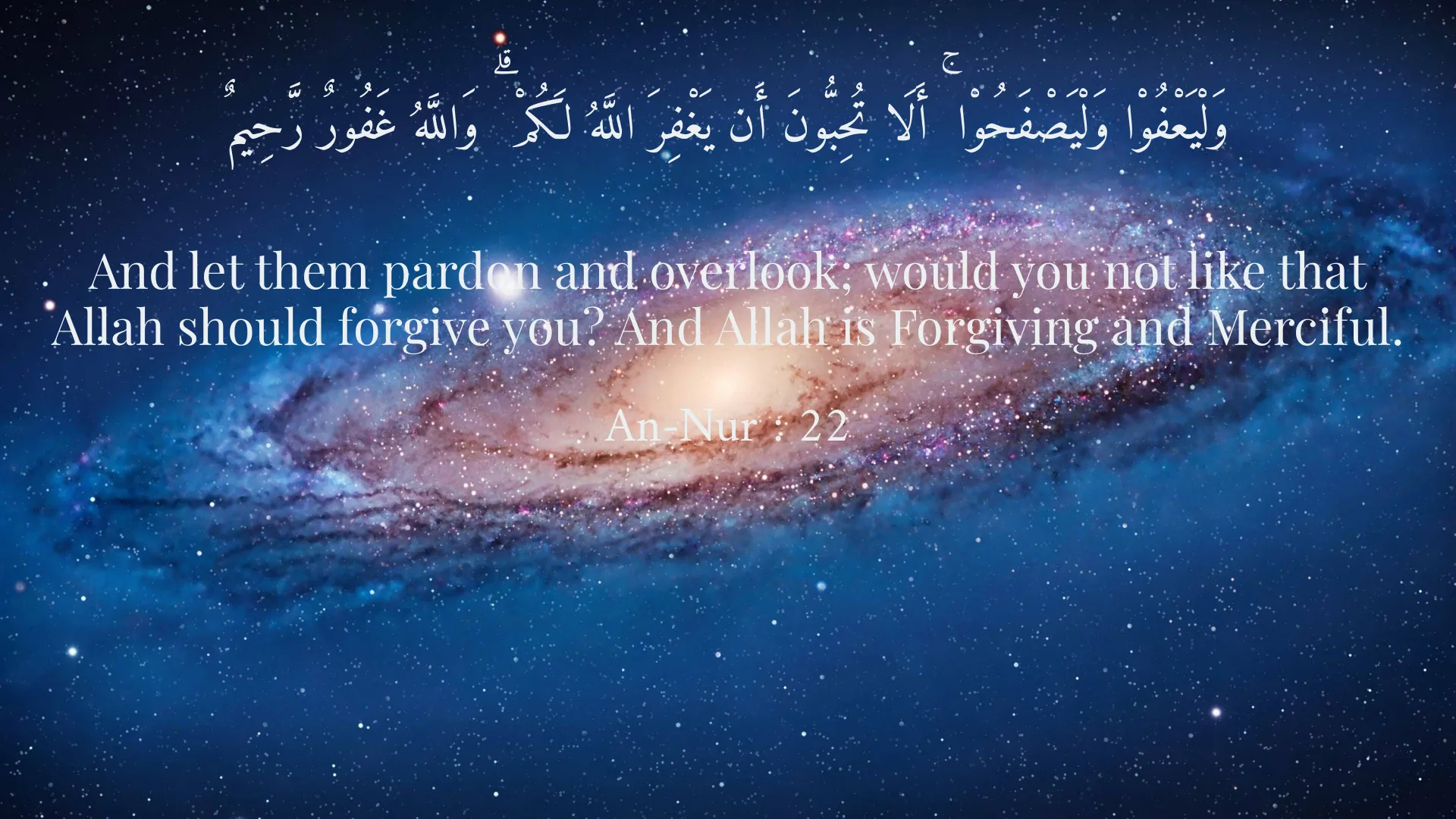
وَلْيَعْفُوْا وَلْيَصْفَحُوْا ۚ أَلَا تُحِبُّونَ أَن يَغْفِرَ اللَّهُ لَكُمْ ۗ وَاللَّهُ غَفُورٌ رَّحِيمٌ
And let them pardon and overlook; would you not like that Allah should forgive you? And Allah is Forgiving and Merciful.
An-Nur : 22
زُيِّنَ لِلنَّاسِ حُبُّ الشَّهَوَاتِ مِنَ النِّسَاءِ وَالْبَنِينَ وَالْقَنَاطِيرِ الْمُقَنَّطِرَةِ مِنَ الذَّهَبِ وَالْفِضَّةِ وَالْخَيْلِ الْمُسَوَّمَةِ وَالْأَنْعَامِ وَالزَّرْعِ ۚ ذَٰلِكَ مَتَاعُ الْحَيَاةِ الدُّنْيَا ۖ وَاللَّهُ عِندَهُ حُسْنُ الْمَئَابِ
Beautified for people is the love of that which they desire - of women and sons, heaped-up sums of gold and silver, fine branded horses, and tilled land. That is the enjoyment of worldly life, but Allah has with Him the best return.
Al-Imran : 14
Short Story
One day, a man named Hamid was discussing the importance of forgiveness with his friends. He told them about a time in his life when someone had hurt him, but he decided to forgive that person. By doing this, Hamid not only found inner peace but also began a new friendship with that individual. From that day on, he never forgot how forgiveness could bring him tranquility.