Quranic Answer
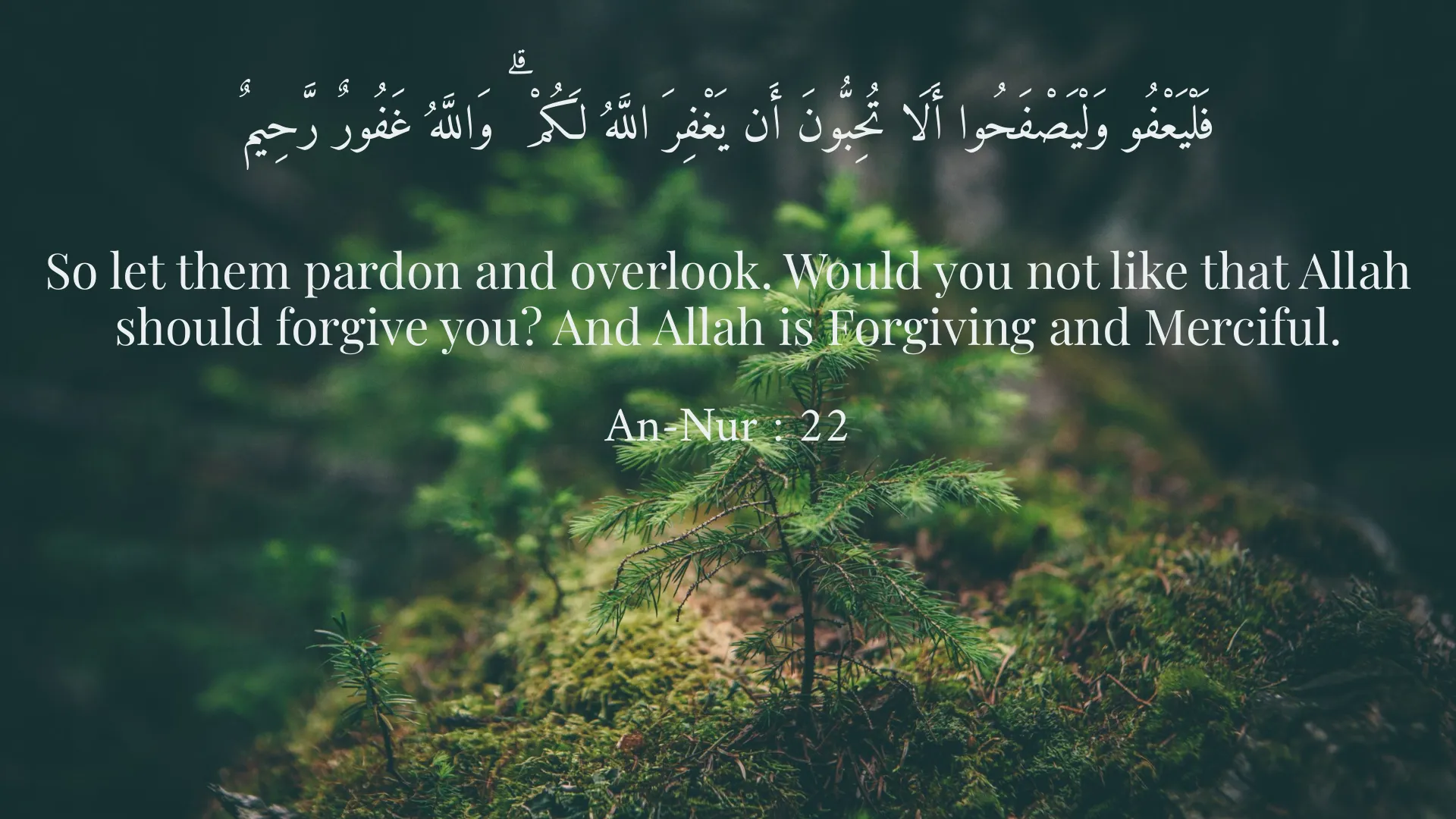
Forgiveness is often seen as an act of grace, a virtue that transcends cultural boundaries and religious beliefs. In Islamic teachings, forgiveness holds a significant place, serving as a vital principle for interpersonal relationships and community cohesion. The Holy Quran, the central religious text of Islam, places great emphasis on the need for believers to embody forgiveness in their lives. This idea is encapsulated in various verses, each providing insight into the broader implications of forgiveness for both the individual and society as a whole. One of the most poignant verses in this context is found in Surah An-Nur, verse 22, where Allah advises believers to embrace patience and generosity in the face of others' mistakes. The verse reads: "So let them pardon and overlook. Would you not like that Allah should forgive you? And Allah is Forgiving and Merciful." This verse serves as a reminder that forgiveness is not merely a personal choice but a divine directive that fosters mutual understanding and compassion. The act of forgiving others ultimately leads to a state of inner peace and tranquility within an individual. The equation presented by Allah in this verse suggests a deeper spiritual reciprocity: when one forgives others, they open themselves up to receive Allah's mercy and forgiveness in return. This profound connection between human actions and divine grace highlights the importance of forgiveness not just as a social act, but as a spiritual necessity that brings one closer to God. As individuals engage in acts of forgiveness, they cultivate their character, moving away from feelings of resentment and anger that can poison one's spirit. In further exploration of forgiveness in Islamic teachings, we turn to Surah Al-Imran, verse 134, where Allah specifies that among the highest virtues are forgiveness and forbearance. The verse states that those who forgive can attain God's pleasure, resulting in a life filled with inner peace and fulfillment. The emphasis here is on the proactive choice to forgive, thereby illustrating that forgiveness should not be seen as a weakness or an acceptance of wrongdoing, but rather as an expression of strength and moral integrity. Moreover, forgiveness contributes to the establishment of healthy and constructive relationships within society. By choosing to overlook the faults and mistakes of others, individuals foster an environment of support and mutual respect. This communal approach to forgiveness promotes harmony and alleviates conflicts, ultimately leading to a stronger, more united community. In a world where divisions and strife often prevail, the principles of forgiveness as outlined in the Quran provide a pathway to reconciliation and understanding. Additionally, in Surah Al-Mu'minun, verse 109, Allah emphasizes that true believers are those who respond to His reminders with humility, glorifying Him and adorning their lives with good morals, including forgiveness. The verse suggests that the act of submission to divine reminders is not merely about belief, but also about embodying values that reflect Allah's merciful nature. This understanding cultivates a character marked by humility and a commitment to fostering peace, making forgiveness an intrinsic aspect of a believer's moral framework. The psychological dimensions of forgiveness cannot be overlooked either. Numerous studies have highlighted the mental health benefits associated with the act of forgiving. Individuals who harbor grudges often experience heightened stress, anxiety, and even physical health issues. On the contrary, those who practice forgiveness report improved emotional well-being, lower levels of stress, and enhanced relationships. Thus, forgiveness becomes a therapeutic process that not only heals the wounds of the past but also fosters resilience for future interactions. In addition to personal healing, the act of forgiveness plays a critical role in social dynamics. In a society where grievances can quickly escalate into feuds or conflicts, the willingness to forgive allows for the resolution of issues before they grow unmanageable. It encourages dialogue, promotes empathy, and aids in the restoration of trust among individuals. For communities facing historical grievances or tensions, embracing forgiveness is essential in moving toward collective healing and building a brighter, more unified future. Ultimately, the teachings of the Quran convey that forgiveness is a powerful tool, not only for personal reconciliation but also for societal development. By cultivating an attitude of forgiveness, believers stand to benefit enormously, both spiritually and socially. The intertwining of forgiveness with faith signifies that it is not simply an action but a reflection of one’s inner moral compass, shaping how individuals interact with one another and contribute to the greater good. In conclusion, the principle of forgiveness in Islam is multifaceted, encompassing personal, social, and spiritual dimensions. The Quran urges believers to embody this virtue, ensuring not just their own peace and tranquility but also fostering stronger, more compassionate societies. As individuals practice forgiveness, they draw closer to Allah and promote a culture of understanding and kindness, paving the way for a harmonious coexistence in an often tumultuous world. Consequently, the significance of forgiveness transcends the boundaries of religion, advocating for a universal principle that resonates with the core values of humanity.
Related Verses
فَلْيَعْفُو وَلْيَصْفَحُوا أَلَا تُحِبُّونَ أَن يَغْفِرَ اللَّهُ لَكُمْ ۗ وَاللَّهُ غَفُورٌ رَّحِيمٌ
So let them pardon and overlook. Would you not like that Allah should forgive you? And Allah is Forgiving and Merciful.
An-Nur : 22
وَالَّذِينَ يُنفِقُونَ فِي السَّرَّاء وَالْضَّرَّاء وَالكَاظِمِينَ الْغَيْظَ وَالْعَافِينَ عَنِ النَّاسِ ۗ وَاللَّهُ يُحِبُّ الْمُحْسِنِينَ
And those who spend in ease and in hardship and who restrain anger and who pardon the people; and Allah loves the doers of good.
Al-Imran : 134
إِنَّمَا يُؤْمِنُ بِآيَاتِنَا الَّذِينَ إِذَا ذُكِّرُوا بِهَا خَرُّوا سُجَّدًا وَسَبَّحُوا بِحَمْدِ رَبِّهِمْ وَهُمْ لَا يَسْتَكْبِرُونَ
Only those believe in Our verses who, when they are reminded by them, fall down in prostration and glorify the praise of their Lord, and they are not arrogant.
Al-Mu'minun : 109
Short Story
One day, Maryam decided to call her sister, with whom she had been angry for a long time. She told herself that it was time to let go of resentment and create a chance for forgiveness. When she spoke with her sister and apologized, she felt a weight lifted off her shoulders. She realized that this forgiveness not only freed her from a feeling of grievance but also filled her heart with peace and joy.