Quranic Answer
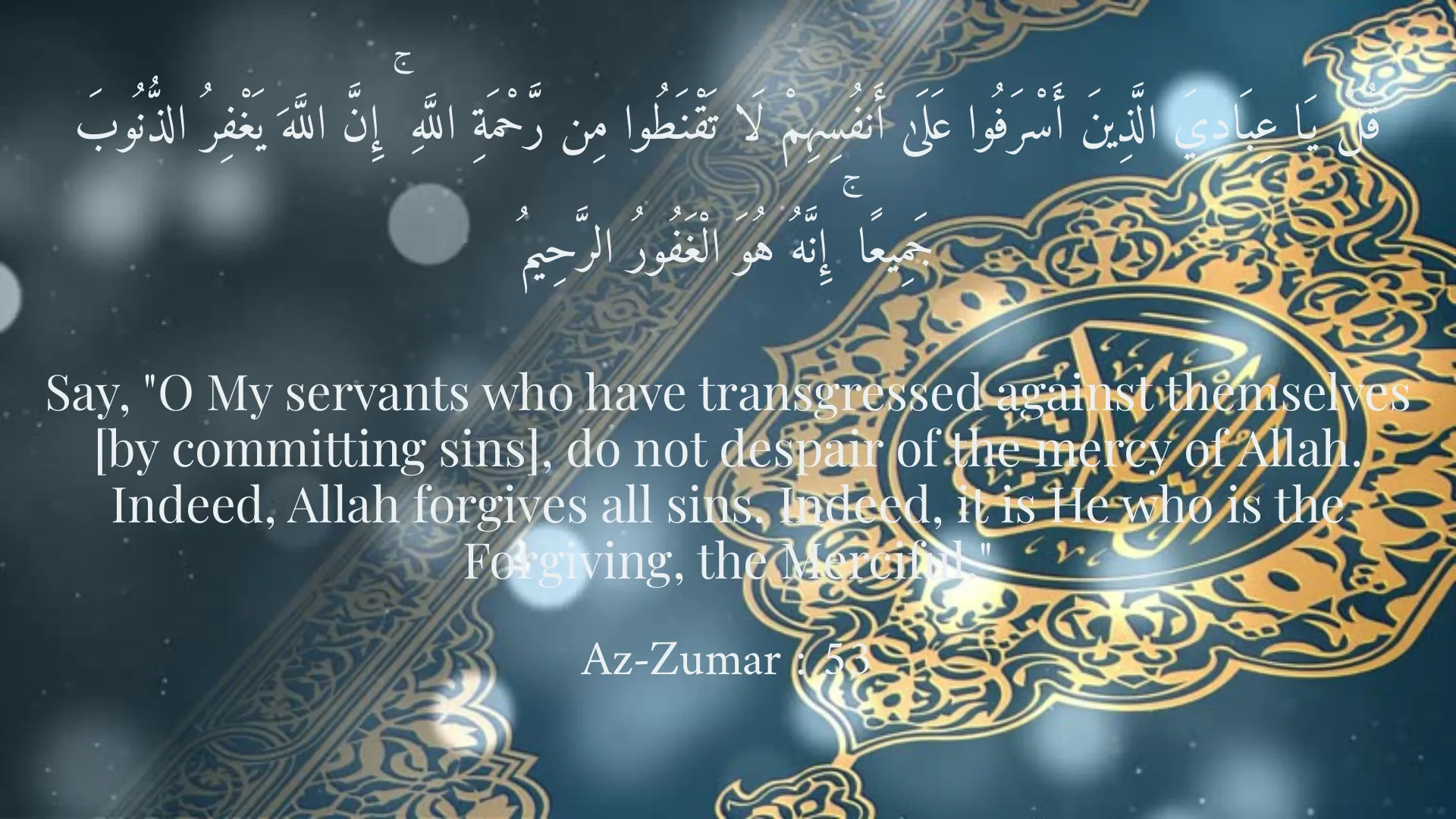
At the very core of Islamic teachings and throughout the luminous pages of the Holy Quran, a fundamental and comforting principle is enshrined: the boundless and immense mercy of Allah (God). This divine mercy is so expansive that no human being, even if they have committed major and intentional sins, should ever despair of Allah's forgiveness and pardon. The unequivocal answer to the question, "Does God forgive intentional sins?" based on numerous Quranic verses, is a resounding yes; provided there is sincere and genuine repentance and a complete return to Him. The Holy Quran, being the word of Allah for the guidance of humanity, repeatedly emphasizes the attributes of Allah as "Al-Ghaffar" (The Ever-Forgiving) and "Ar-Rahim" (The Most Merciful). These names and attributes are not merely ornamental; rather, they are revealed to assure humanity that a door for return and rectification is always open. It is a profound demonstration of Allah's compassion and His desire for His creation to succeed and attain salvation. The concept of divine forgiveness is integral to the Islamic worldview, offering hope and a pathway to spiritual cleansing for all who seek it. One of the most powerful and hopeful verses in this regard is Surah Az-Zumar (39), verse 53, which states: "Say, 'O My servants who have transgressed against themselves [by committing sins], do not despair of the mercy of Allah. Indeed, Allah forgives all sins. Indeed, it is He who is the Forgiving, the Merciful.'" This sacred verse unequivocally promises the forgiveness of "all sins," even for those who have "transgressed against themselves" – meaning they have committed many sins, including intentional ones. This verse acts as a shining beacon in the darkness of despair, reassuring sinners that the path to return is always open, and Allah's mercy is vaster than any sin. The word "all" (jami'an) in this verse denotes the universality of forgiveness, encompassing minor and major sins, accidental and intentional transgressions. This comprehensive promise is a cornerstone of hope for every believer who stumbles, encouraging them to never give up on the path of redemption. The essential condition for benefiting from this boundless forgiveness is "Tawbah" (repentance). In Islam, Tawbah is not merely uttering a few words; rather, it is a heartfelt, cognitive, and active process. Sincere repentance (Tawbah Nasuh) encompasses several pillars and conditions: 1. Heartfelt Remorse: One must genuinely regret the sin committed and feel remorse for their actions. This regret must emanate from the depths of one's being, not merely from the fear of punishment. This true remorse is the foundation upon which genuine change can be built. 2. Abandonment of the Sin: Immediately upon feeling remorse, one must cease committing the sin and desist from continuing it. This cessation must be immediate and resolute, reflecting a firm commitment to change. 3. Firm Resolve Not to Return: A strong, unwavering decision must be made never to return to that sin. This resolve should be firm and from one's free will, a clear sign of a profound internal transformation. 4. Making Amends (if necessary): If the sin committed involved the rights of other people (Huquq al-Ibad), such as theft, backbiting, slander, or oppression, one must rectify it. This involves returning rights to their owners, seeking their forgiveness, or making restitution in any possible way. Without rectifying the rights of others, repentance is incomplete and only considered repentance for the rights of Allah (Huquq Allah). This emphasizes the critical importance of justice and equity in human interactions. Another crucial set of verses that sheds light on this topic is found in Surah An-Nisa (4), verses 48 and 116. Allah says: "Indeed, Allah does not forgive association with Him, but He forgives what is less than that for whom He wills. And he who associates others with Allah has certainly fabricated a tremendous sin." This verse clearly states that the only sin that is not forgiven without repentance (and if a person dies upon it) is shirk (associating partners with Allah). This definitively implies that all other sins, even if intentional, are forgivable upon sincere repentance. Allah, in His infinite wisdom and justice, has kept the door open for His servants' salvation. The purpose of this distinction is not to foster despair, but to encourage repentance and return, as even shirk can be forgiven if a person repents and believes before death. This framework underscores the magnitude of shirk while simultaneously highlighting the vastness of divine mercy for all other transgressions, providing hope for redemption to all but those who willfully reject the oneness of God until their last breath. Furthermore, in Surah Al-Furqan (25), verses 70 and 71, Allah opens the door of repentance for those who have committed grave sins (such as shirk, murder, and fornication), stating: "Except for those who repent, believe and do righteous deeds. For them Allah will change their evil deeds into good ones. And Allah is Oft-Forgiving, Most Merciful. And whoever repents and does righteousness, he has truly turned to Allah with [acceptable] repentance." These verses paint a beautiful picture of divine mercy; not only does Allah forgive sins, but He transforms evil deeds into good ones for the truly penitent. This demonstrates that sincere repentance not only cleanses the past but also converts it into a source of goodness and virtue for the future. It is a divine transaction that offers the sinner a fresh start and a path towards a purer, better life, freeing them from the heavy burden of intentional transgression. This divine promise serves as a powerful incentive for genuine spiritual renewal and a return to the path of righteousness. Allah created humanity with a pure disposition (fitra) and understands that humans are prone to making mistakes. However, these mistakes should not lead to despair. Instead, they should prompt a return and rectification. The philosophy behind divine forgiveness is to ensure that humans always have a path to improvement and spiritual elevation. If intentional sins were absolutely unforgivable, many people would fall into the trap of hopelessness and might cease all efforts to reform themselves. But divine mercy allows humans to rise again whenever they stumble and to step forward on the path of guidance. This continuous opportunity for spiritual growth and progress is one of the greatest divine favors. Therefore, for anyone who has committed an intentional sin, the message of the Quran is clear: do not despair! The doors of repentance are open. Return, regret, abandon the sin, and firmly resolve not to return to it. Allah not only forgives but sometimes even transforms evil deeds into good ones. This is a universal and perpetual invitation to divine mercy and forgiveness, an opportunity for every human being who wishes to change their life and walk on the path of Allah's pleasure. This embodies the meaning of hope, elevation, and spiritual growth within the framework of Islam, counting among its most distinguishing characteristics. This assurance of divine mercy forms the backbone of a believer's spiritual life, empowering them to face their mistakes not with despair, but with hope for perfection.
Related Verses
قُلْ يَا عِبَادِيَ الَّذِينَ أَسْرَفُوا عَلَىٰ أَنفُسِهِمْ لَا تَقْنَطُوا مِن رَّحْمَةِ اللَّهِ ۚ إِنَّ اللَّهَ يَغْفِرُ الذُّنُوبَ جَمِيعًا ۚ إِنَّهُ هُوَ الْغَفُورُ الرَّحِيمُ
Say, "O My servants who have transgressed against themselves [by committing sins], do not despair of the mercy of Allah. Indeed, Allah forgives all sins. Indeed, it is He who is the Forgiving, the Merciful."
Az-Zumar : 53
إِنَّ اللَّهَ لَا يَغْفِرُ أَن يُشْرَكَ بِهِ وَيَغْفِرُ مَا دُونَ ذَٰلِكَ لِمَن يَشَاءُ ۚ وَمَن يُشْرِكْ بِاللَّهِ فَقَدِ افْتَرَىٰ إِثْمًا عَظِيمًا
Indeed, Allah does not forgive association with Him, but He forgives what is less than that for whom He wills. And he who associates others with Allah has certainly fabricated a tremendous sin.
An-Nisa : 48
إِلَّا مَن تَابَ وَآمَنَ وَعَمِلَ عَمَلًا صَالِحًا فَأُولَٰئِكَ يُبَدِّلُ اللَّهُ سَيِّئَاتِهِمْ حَسَنَاتٍ ۗ وَكَانَ اللَّهُ غَفُورًا رَّحِيمًا
Except for those who repent, believe and do righteous deeds. For them Allah will change their evil deeds into good ones. And Allah is Oft-Forgiving, Most Merciful.
Al-Furqan : 70
Short Story
In ancient times, there lived a wealthy and influential merchant named "Hatim." In his early life, he was an arrogant and haughty young man who sometimes misused his power and wealth, inadvertently or knowingly causing distress and harm to others. Once, in the height of his pride and recklessness, he transgressed against the rights of one of his subjects, committing an overt injustice. The oppressed man sighed, finding no refuge but in God. Years passed, and Hatim grew old and fell ill. His illness weakened him so much that no trace of his former power and arrogance remained. In those moments, memories of the past and the injustices he had committed weighed heavily on his heart. At night, in his solitude, he wept tears of regret, truly repentant for his actions. He wholeheartedly sought forgiveness from God and vowed that if he lived, he would rectify all his mistakes and seek forgiveness from those he had wronged. Although his sins were intentional, his remorse was from the bottom of his heart. He not only verbally repented but transformed completely, turning to good deeds. He distributed his wealth in the path of God, helped the needy, and tried to gain the satisfaction of those he had wronged. In this tumultuous journey of repentance and reform, Hatim found a peace that had eluded him for years. It was as if divine mercy had lifted the burden of his intentional sins and filled his heart with the light of hope and forgiveness. He realized that even the greatest sins could be atoned for with sincere repentance and good deeds, and that the door of God's mercy is always open to His servants, even those who intentionally erred and now regret it.