Quranic Answer
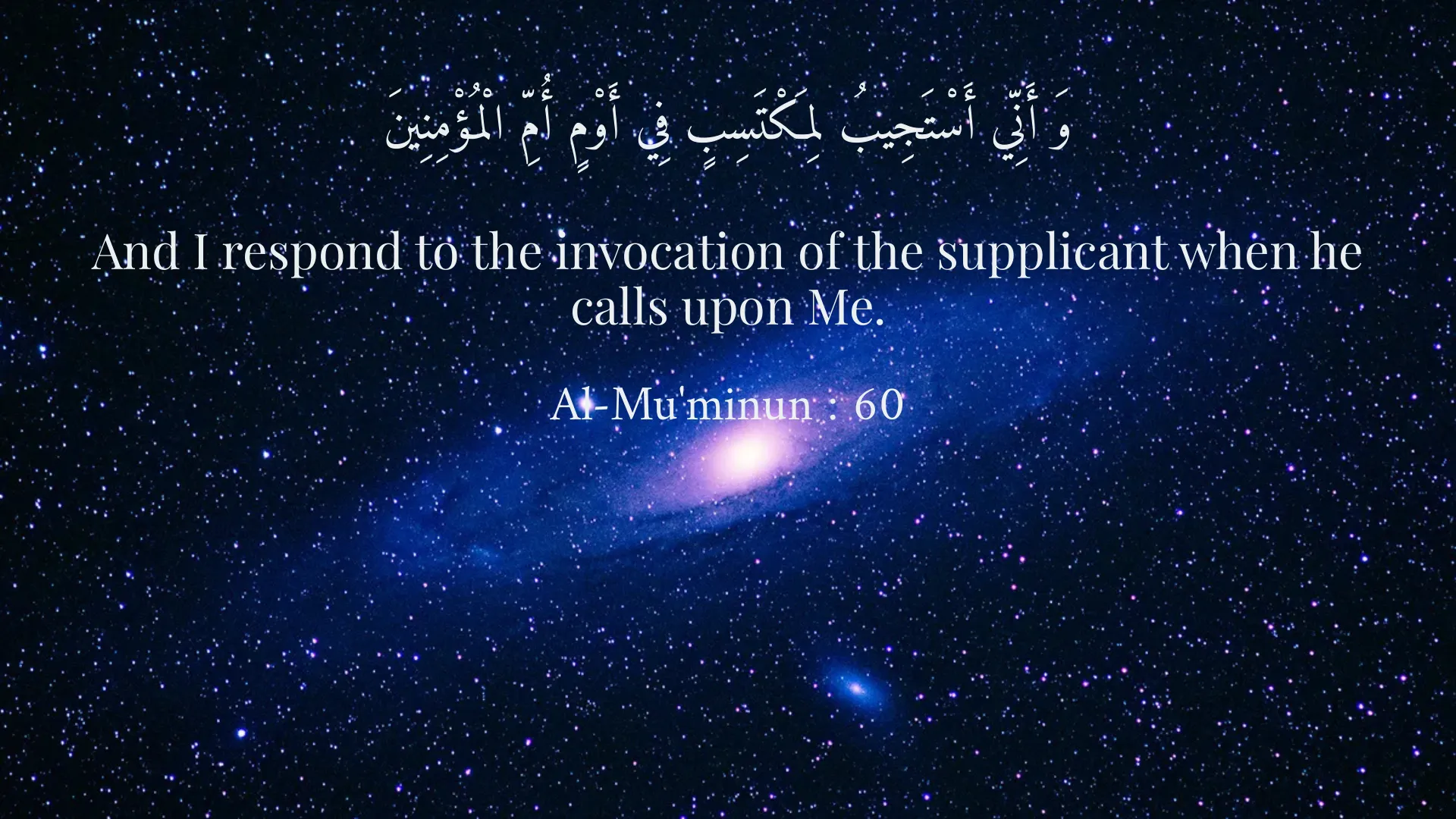
In the Quran, Allah is portrayed as the one who listens to the prayers of His servants. This fundamental concept of supplication, or dua, emphasizes the profound relationship between the Creator and His creation. The act of praying is not just a ritual; it is a manifestation of the human heart’s yearning for connection, support, and guidance. The Quran represents this relationship beautifully through various verses that illustrate the nature of Allah’s responsiveness to the prayers of His believers. One of the most significant verses regarding prayer is found in Surah Al-Mu'minun, verse 60, which states: "And I respond to the invocation of the supplicant when he calls upon Me." This powerful declaration signifies that Allah is not a distant deity but a benevolent and attentive listener who acknowledges the deep, heartfelt cries of His servants. The verbiage within this verse suggests a promise of affirmation and gratitude to those who reach out to Him, indicating that the act of prayer itself is honored. Moreover, this verse underscores the essence of sincerity in prayer. It prompts believers to understand that the quality of supplication is not solely contingent upon the eloquence of the words spoken but, more critically, the earnestness behind those words. Unspoken prayers that are felt within the folds of the heart hold immense value in the sight of Allah. Even in silence, when the heart calls out in need and desperation, God is aware of those unarticulated sentiments. This understanding fosters a sense of comfort among believers, reminding them that their struggles and desires are perceived by the all-knowing and compassionate Allah. Additionally, in Surah Al-Baqarah, verse 186, we find another essential affirmation regarding Allah’s closeness to His worshipers: "And when My servants ask you concerning Me, indeed, I am near. I respond to the invocations of the supplicant when he calls upon Me." In this verse, two critical aspects are highlighted: the proximity of Allah and His readiness to answer prayers. The phrase "I am near" reassures believers of a God who is accessible; there is no barrier that separates us from His divine presence. The proximity of Allah is vital, particularly for those experiencing trials, tribulations, or loneliness. It reminds them they are never alone and that there is a compassionate force within reach, ready to listen to their cries and fulfill their needs. This closeness encapsulates the Islamic worldview, where believers are encouraged to reach out to Allah in times of need, knowing their pleas are heard. It nurtures a sense of belonging and acceptance, rooting believers deeper into their faith. Further, the conditional promise found within these verses—"when he calls upon Me"—implies the necessity of active engagement in the prayer process. Allah's assistance is contingent upon the initiative of His servants. This invitation to reach out underscores the empowerment inherent in prayer; each individual is encouraged to develop their spiritual voice and cultivate a personal relationship with Allah. Importantly, the Quran also elaborates on the various ways prayers can manifest. Prayers do not solely have to be articulated verbally; they can also be experienced through actions, intentions, and awareness. The emphasis is placed on the individual's inner disposition and the sincerity of the heart. It is essential for the believer to approach prayer with a spirit of humility and sincerity, recognizing the greatness of Allah and their need for divine support. The act of praying is multifaceted; it serves not only as a means of seeking help, guidance, or mercy but also as a tool for fostering spiritual awareness and self-reflection. When individuals engage in prayer, they often reflect on their lives, values, and relationships with others. It provides a moment to pause and consider one's intentions, align oneself with moral values, and express gratitude for the blessings received. This approach ensures that prayer becomes a holistic experience, encouraging a deeper connection with Allah and promoting personal growth. Furthermore, the Islamic tradition encourages believers to express gratitude within their supplications. Gratitude is an integral component of prayer, reinforcing the acknowledgment of Allah’s countless blessings. This expression fosters a positive outlook on life, even amidst adversity. The power of gratitude in prayer illustrates the importance of recognizing the goodness present in one's life, despite challenges, hence fostering a sense of peace and contentment. In today's world, where individuals often feel isolated and overwhelmed, the messages of the Quran regarding prayer resonate profoundly. The idea that Allah is always listening provides solace to those struggling with life's demands. Thus, the practice of prayer becomes an essential tool for resilience, a method to cultivate mental and emotional well-being. It is a reminder of the strength found in vulnerability and honesty before Allah, fostering a community where believers can support one another in their spiritual journeys. Moreover, it is crucial to nurture a culture among Muslims that emphasizes the importance of prayer in daily life. Active engagement in prayer should not only be a personal or private undertaking but also a communal one. Shared prayer brings about a sense of unity and strength within the community, creating a support system that reinforces faith and commitment. It fosters relationships grounded in shared values and spirituality, allowing individuals to grow together in their understanding of Allah's mercy and love. In conclusion, the Quran eloquently presents Allah as a compassionate listener, eager to respond to the heartfelt prayers of His servants. Whether they are vocalized or unspoken, prayers hold immeasurable significance in the eyes of the Creator. As believers navigate their lives, they must carry the understanding that their sincere prayers are always heard, and their intentions are known. Thus, every individual should embrace the transformative power of prayer, recognizing it as a vital aspect of their faith and personal journey towards closeness with Allah. With the understanding that Allah is constantly aware of where we are and what we need, believers can face life's challenges with confidence and solace, knowing that in every moment of need, they have the capacity to connect deeply with their Creator.
Related Verses
وَ أَنِّي أَسْتَجِيبُ لِمَكْتَسِبٍ فِي أَوْمٍ أُمِّ الْمُؤْمِنِينَ
And I respond to the invocation of the supplicant when he calls upon Me.
Al-Mu'minun : 60
وَ إِذَا سَأَلَكَ عِبَادِي عَنِّي فَإِنِّي قَرِيبٌ أُجِيبُ دَعْوَةَ الدَّاعِ إِذَا دَعَانِ
And when My servants ask you concerning Me, indeed, I am near. I respond to the invocations of the supplicant when he calls upon Me.
Al-Baqarah : 186
Short Story
Once upon a time, a man found himself reflecting on prayer. Even if his prayers were never verbalized, he would speak to God each night from his heart, sharing his feelings. After a while, he experienced an unusual sense of peace and closeness to God, realizing that God had always been there beside him.