Quranic Answer
In the Holy Quran, the foundational text of Islam, Allah extends a clear and powerful directive to all believers regarding their relationships with one another. The essence of these teachings is rooted in love, compassion, and mutual support, especially in times of hardship. Believers are urged to treat one another with kindness and empathy, fostering an environment of unity and cooperation. This principle is epitomized in Surah Al-Imran, verse 103, where Allah commands the believers to unite and cooperate: "And hold firmly to the rope of Allah all together and do not become divided." This call for unity is not just a suggestion; it is a divine command that encourages believers to come together, reinforcing the important fabric of community and collective responsibility. The significance of love and support among believers cannot be overstated. Love is one of the most cherished attributes of Allah, and it is through love that believers can truly connect with each other and with Allah Himself. In Surah Al-Baqarah, verse 177, Allah illustrates the characteristics of those who are truly devoted to Him, stating: "Righteousness is not that you turn your faces toward the east or the west, but [true] righteousness is in one who believes in Allah, the Last Day, the Angels, the Book, and the Prophets and gives his wealth, in spite of his love for it, to relatives, orphans, the needy, the traveler, those who ask [for help], and for freeing slaves..." This verse underscores the importance of not only believing in Allah but also acting upon that belief through charitable actions. The act of giving and supporting oneself to those in need illustrates a profound understanding of love—not merely as an emotion but as an active force that compels individuals to assist and uplift others. Charity, or 'Sadaqah,' is a recurring theme throughout the Quran, and Allah emphasizes its importance on multiple occasions. Beyond the notion of mere transaction, charity embodies the spirit of giving selflessly, demonstrating that love for others transcends personal wealth or comfort. When one gives to relatives, orphans, or the less fortunate, it reflects a deep-seated conviction that the bonds of love and support strengthen the community and promote the values of compassion and empathy. This belief in shared responsibility fosters a sense of belonging and is essential, especially in contemporary times when isolation and despair can plague many. In reminding believers to care for each other, Surah An-Nisa, verse 36 reveals another layer of this divine directive: "And worship Allah and associate nothing with Him, and to parents, do good..." This verse serves as a broader reminder of the importance of social relationships. Worship is not confined solely to rituals but extends into how one interacts with others. Treating family members with kindness and respect, and extending care to all human beings, reflects the core tenets of faith. It demonstrates that spirituality is inherently intertwined with ethics, and the way one engages with others indicates their commitment to Allah. These Quranic verses paint a profound picture of love and community, illustrating that caring for others is not simply an ethical consideration, but a divine command. The Quran frames this care as an essential element of faith, emphasizing that those who assist others are likely to find favor in the eyes of Allah. The reciprocal nature of this relationship reinforces the importance of maintaining strong communal ties, as believers uplift one another through acts of kindness. Furthermore, fostering love and support among individuals paves the way for both personal and collective growth. When individuals serve others, they tend to experience an inner transformation, gaining a sense of purpose and fulfillment. This altruistic behavior also promotes a culture of gratitude and mindfulness, where individuals actively seek to discern the needs of others around them. As communities practice these virtues, they cultivate an atmosphere that embodies the characteristics that Allah cherishes. To exemplify these teachings, one can look to the concept of 'Ummah,' which signifies the global community of Muslims, interconnected through shared beliefs and values. Strengthening the bonds of this Ummah extends beyond religious practices; it includes social responsibilities, advocacy for justice, and initiatives aimed at supporting one another during trials. By fostering a culture of love and support, believers create a strong foundation that can weather the storms of life, thereby reinforcing the teachings found within the Quran. In conclusion, the guidance offered in the Quran is clear: to love and support one another is not simply an ethical directive; it is a divine command that enhances individual spirituality and nurtures community strength. Engaging in altruistic acts not only brings individuals closer to Allah but also fulfills the purpose of existence—creating a world rooted in compassion, understanding, and mutual respect. Ultimately, the Quran teaches us that the bonds of love foster divine grace and elevate our humanity, making kindness and support towards others an essential practice in the life of every believer. Thus, as individuals strive to embody these qualities in their daily lives, they walk the path of righteousness, guided by the principles laid down in the Holy Quran.
Related Verses
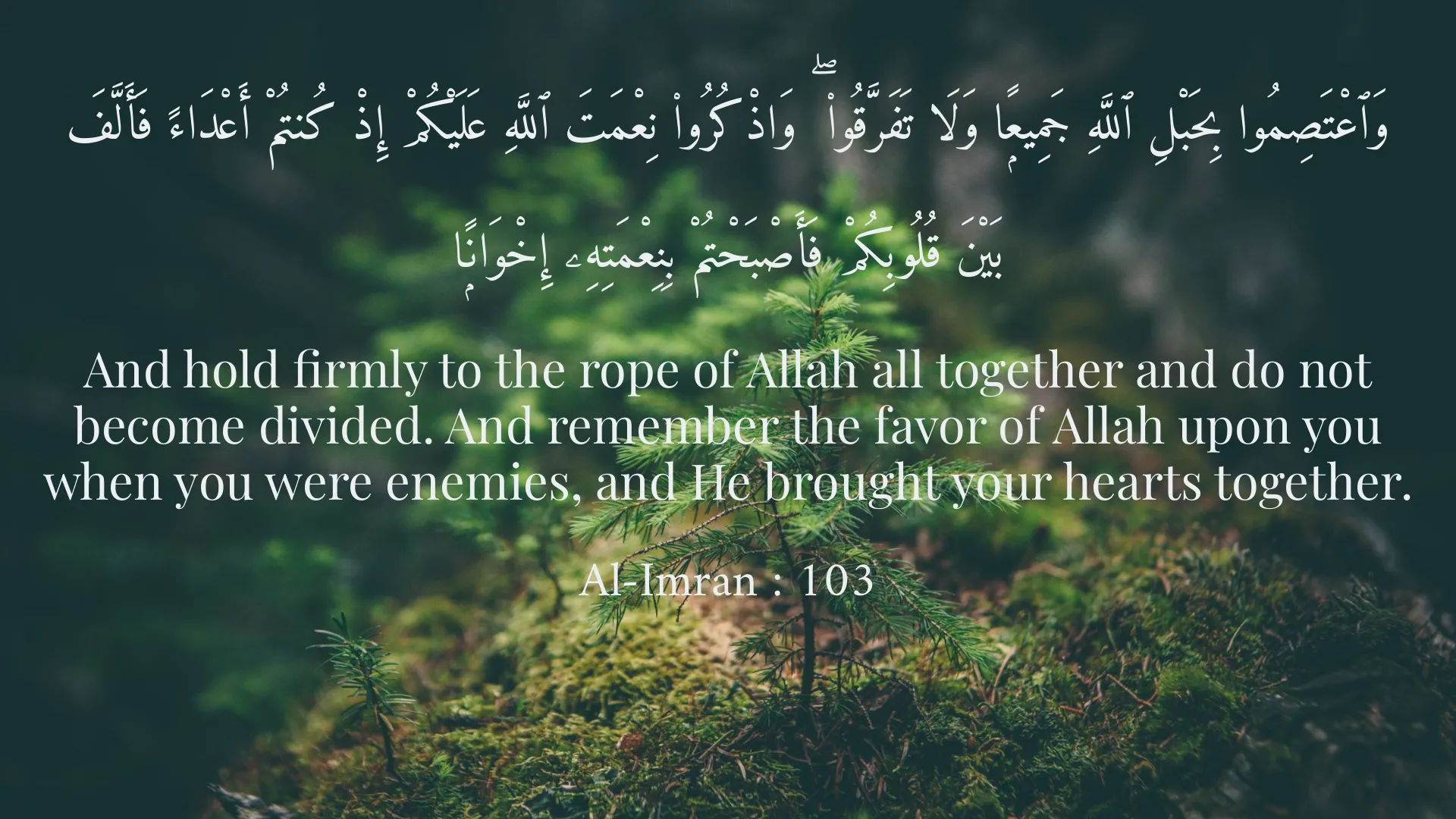
وَٱعْتَصِمُوا بِحَبْلِ ٱللَّهِ جَمِيعًۭا وَلَا تَفَرَّقُوا۟ ۖ وَاذْكُرُوا۟ نِعْمَتَ ٱللَّهِ عَلَيْكُمْ إِذْ كُنتُمْ أَعْدَاءً فَأَلَّفَ بَيْنَ قُلُوبِكُمْ فَأَصْبَحْتُمْ بِنِعْمَتِهِۦ إِخْوَانًۭا
And hold firmly to the rope of Allah all together and do not become divided. And remember the favor of Allah upon you when you were enemies, and He brought your hearts together.
Al-Imran : 103
لَيْسَ الْبِرَّ أَن تُوَلُّوا وُجُوهَكُمْ قِبَلَ الْمَشْرِقِ وَالْمَغْرِبِ وَلكِنَّ الْبِرَّ مَنْ آمَنَ بِاللَّهِ وَالْيَوْمِ الْآخِرِ وَالْمَلَائِكَةِ وَالْكِتَابِ وَالنَّبِيِّينَ وَآتَى الْمَالَ عَلَى حُبِّهِۦ ذَوِي الْقُرْبَىٰ وَالْيَتَامَىٰ وَالْمَسَاكِينِ وَالْسَّائِلِينَ وَفِي الرِّقَابِ
Righteousness is not that you turn your faces toward the east or the west, but [true] righteousness is in one who believes in Allah and the Last Day and the Angels and the Book and the Prophets and gives his wealth, in spite of his love for it, to relatives, orphans, the needy, the traveler, those who ask [for help], and for freeing slaves.
Al-Baqarah : 177
وَاعْبُدُوا۟ ٱللَّهَ وَلَا تُشْرِكُوا۟ بِهِۦ شَئًا وَبِٱلْوَالِدَيْنِ إِحْسَانًۭا ۚ وَذِي ٱلْقُرْبَىٰ وَٱلْيَتَامَىٰ وَٱلْمَسَاكِينِ وَٱلْجَارِ ذِي ٱلْقُرْبَىٰ وَٱلْجَارِ ٱلْجَنبِ وَٱلصَّاحِبِ بِالْجَنبِ وَٱلْمُسَافِرِ وَٱلْمُعَاقَبَةِ ۚ إِنَّ ٱللَّهَ لَا يُحِبُّ مَن كَانَ مُخَتَالًۭا فَخُورًۭا
And worship Allah and associate nothing with Him, and to parents, do good, and to relatives, orphans, the needy, the neighbor, the neighbor and companions, and the traveler, and those whom your right hand possesses. Indeed, Allah does not like those who are self-deluded and boastful.
An-Nisa : 36
Short Story
Once upon a time, there was a man named Hasan who always thought of others. He would help orphans and stand by his friends in difficult times. One day, Hasan spent all his possessions to aid a needy family. After this act, he felt a deep sense of peace and recalled the verses of the Quran that say 'supporting one another is a sign of faith.' Hasan told himself that if he continued to help others, Allah would open the doors of His mercy upon him.