Quranic Answer
“Does God pay attention to my tears?” This is a profound question many individuals ask themselves in moments of vulnerability, sorrow, repentance, or even deep gratitude. The unequivocal answer, drawn from the teachings of the Holy Quran and the Sunnah of Prophet Muhammad (peace be upon him), is a resounding yes. Allah, the Exalted, not only pays attention to our tears but is intimately aware of every internal state, every silent whisper of the soul, and every profound emotion residing within our hearts. The Divine Presence is so pervasive and close that nothing remains hidden from His sight, not even a single tear that rolls down a cheek. This belief forms the fundamental pillar of a human's relationship with their Lord – a relationship built on ultimate awareness, boundless compassion, and absolute responsiveness. This Divine attention is a testament to His perfect knowledge and boundless compassion, which transcends all human comprehension. When a person, in their utmost need and weakness, openly and wholly expresses themselves before the Creator of the universe, this sincere manifestation of being undoubtedly holds a special esteem and receives infinite grace and favor in the Divine presence. Tears, whether they stem from grief and sorrow, from remorse and repentance, or even from joy and love for the Divine Essence, all open a gateway for a deeper connection with the Lord, and Allah warmly accepts this connection. He not only sees the tears but also knows the hearts behind those tears and responds to the unspoken needs and hidden pains within them. This belief is the most comforting truth for every human being who faces challenges and tribulations in life and sometimes feels alone and abandoned. Allah is always closer than one can imagine. The Holy Quran, in numerous verses, emphasizes Allah's infinite knowledge and awareness. Allah states: "And We have already created man and know what his soul whispers to him, and We are closer to him than [his] jugular vein." (Quran 50:16). This verse paints an incredibly close picture of the Divine Presence. If Allah is this close to us, how could He be unaware of what transpires within our hearts, of the soul's whispers, and of silent tears? He not only sees and hears but is also cognizant of hidden intentions and unspoken pains. Tears, in essence, are an honest and unadulterated expression of a person's inner state; sometimes, they signify the peak of sorrow, at other times, the depth of repentance, and occasionally, the ultimate gratitude and humility. Allah, who is aware of the heart's secret murmurs, undoubtedly pays full attention to both the visible and hidden tears of His servant. This attention is a testament to the perfection of divine knowledge and compassion. There is no veil or barrier between the Creator and the created that could prevent Him from hearing silent cries and seeing unspoken tears. Even if someone cannot articulate their pain and merely sheds tears, Allah understands the language of tears and responds to it. This profound and comprehensive understanding is the foundation of the relationship a person can establish with their Creator, assuring them that even their smallest feelings and states are under His consideration and care. God's attention to tears is rooted in His attributes of "Ar-Rahman" (The Most Merciful) and "Ar-Rahim" (The Especially Merciful). Allah is the Giver of immense bounty and the Source of all mercy, and His mercy encompasses everything. When a human, in a state of utter weakness and need, turns with their whole being towards their Lord and sheds tears, this state represents the utmost humility and trust in Allah's eternal power. In such a state, how could Allah, who is the source of all mercies, turn away from His servant? Tears are, in essence, a silent language that expresses the servant's helplessness and need before the grandeur and self-sufficiency of Allah. These moments are peaks of divine proximity because the human surrenders completely in their vulnerability and seeks refuge only in His presence. Allah not only sees tears but honors them and responds. This response may come in the form of immediate peace in the heart, alleviation of difficulties, or even rewards in the hereafter. What is crucial is that Allah never rejects a prayer accompanied by tears and sincere intention, and this itself is a strong proof of His attention and care. Divine mercy is so vast that the smallest expression of need from a servant is met with a great response and immense favor. This mercy is a solace for broken hearts and a refuge for weary souls. One of the most prominent instances of Allah's attention to tears is during supplication (Du'a). In the Quran, we read: "And when My servants ask you, [O Muhammad], concerning Me - indeed I am near. I respond to the invocation of the supplicant when he calls upon Me." (Quran 2:186). Tears often accompany Du'a; prayers that emanate from the depths of the soul and speak of hidden pains. When an individual, during a prolonged prostration or in the solitude of night, seeks help from Allah with tearful eyes or repents, these are all examples of a sincere connection to which Allah responds. The response to Du'a can manifest in various forms: sometimes as the direct fulfillment of a need, sometimes as the averting of harm, sometimes as a replacement with a greater good in this world or the hereafter, and sometimes as inner peace and comfort. What is crucial is that such a prayer, such a cry, such a tear, is never without effect and is preserved with Allah. This divine promise is a guarantee for anyone who turns to Him with a broken heart and tearful eyes. Knowing that prayers accompanied by tears have greater power to attract divine mercy encourages servants to utilize this powerful spiritual tool in moments of need. Tears of repentance also hold a special place. When a person genuinely repents for their sins and turns to Allah with tears and sighs, Allah, who is At-Tawwab (The Accepter of Repentance) and Ar-Rahim (The Especially Merciful), undoubtedly accepts their repentance. "And whoever does evil or wrongs himself but then seeks forgiveness of Allah will find Allah Forgiving and Merciful." (Quran 4:110). Tears in this context symbolize the sincerity of repentance and purity of intention. Allah not only sees these tears but considers them as evidence of the servant's faith and return, responding with His forgiveness and mercy. These tears wash away sins and purify the soul, cleansing impurities from one's being. The virtue of tears of repentance is so high that in Islamic narrations, they are referred to as drops that extinguish the fire of Hell. This indicates how much these tears are valued in the sight of Allah and how they can change a person's destiny and guide them back to the path of salvation. Furthermore, tears are not solely born of sorrow or regret. Sometimes, tears are tears of joy and love for Allah, tears of awe and reverence for His majesty, or tears of gratitude for His countless blessings. These tears are equally subject to divine attention and care. When a believer fully grasps the grandeur of their Lord and tears stream from their eyes, this moment is the pinnacle of spiritual insight and humility. Allah values these manifestations of love and servitude as well. This type of tear is among the purest and most beautiful, indicating a heart full of faith and gratitude. They are a sign of the highest level of servitude and intimate connection with the Creator and are certainly met with divine grace and reward. These tears polish the soul and illuminate the heart, guiding a person to high levels of spiritual perfection. Ultimately, human life in this world is accompanied by challenges and tribulations. Tears are an inseparable part of this journey. However, Allah the Exalted has assured us in the Quran: "For indeed, with hardship [will come] ease. Indeed, with hardship [will come] ease." (Quran 94:5-6). These comforting verses instill hope in despairing hearts. The tears shed during hardships are seeds of ease and relief that Allah sees, and in due time, He reveals their sweet fruits. Belief in the truth that no pain, no tear, and no lament is hidden from Allah brings profound peace to the soul and strengthens one against difficulties. So, with a confident heart, whenever you need to express your emotions, know that Allah is aware of your tears and pays attention to them. This attention will manifest not only as inner solace and peace but also as relief in your affairs and overt and hidden divine mercies. Therefore, not only does God pay attention to your tears, but He has made them a gateway for a deeper connection and the reception of His boundless mercies. He is always by your side, even in moments when you feel alone and that no one understands your pain; Allah sees and hears.
Related Verses
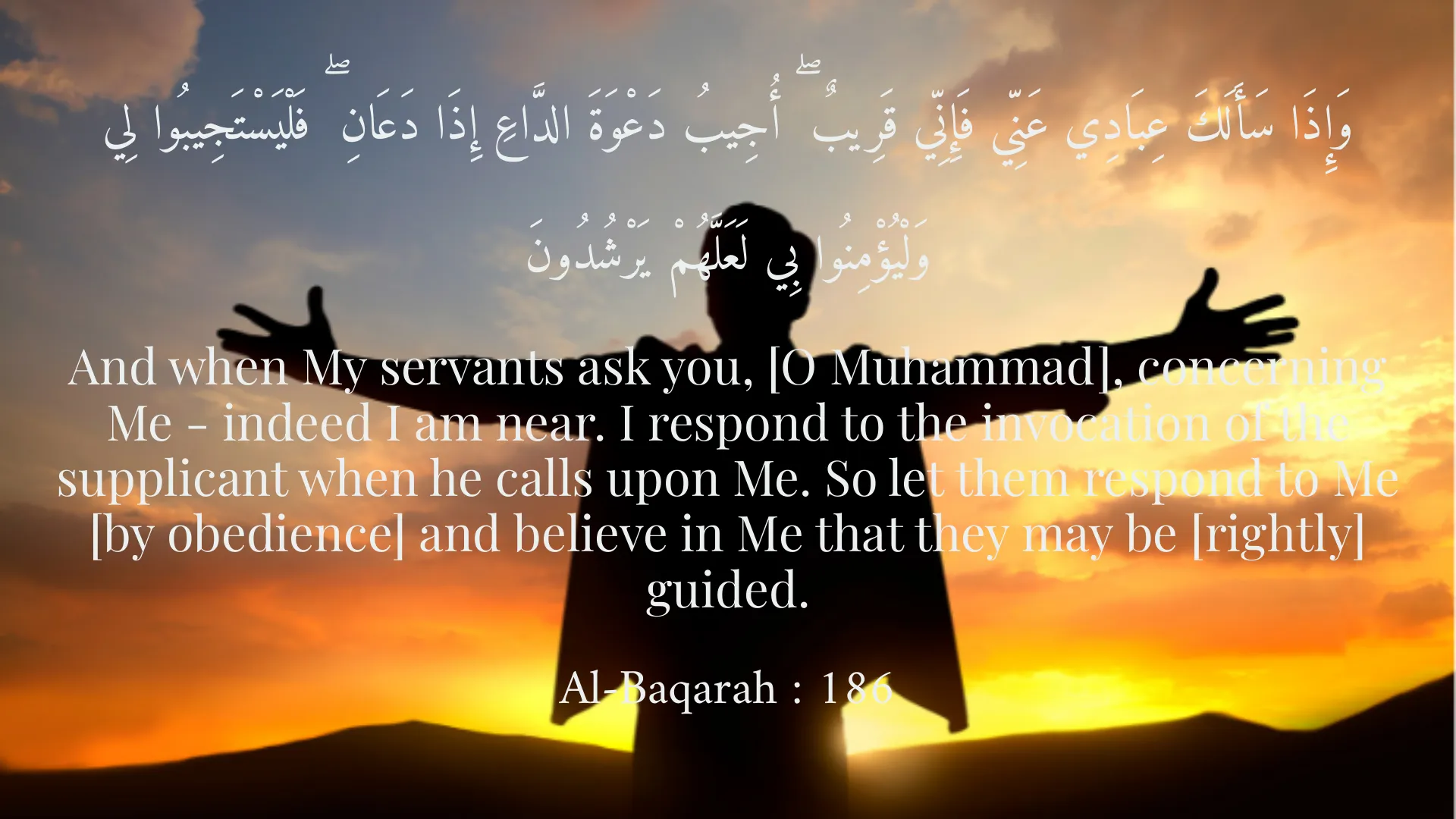
وَإِذَا سَأَلَكَ عِبَادِي عَنِّي فَإِنِّي قَرِيبٌ ۖ أُجِيبُ دَعْوَةَ الدَّاعِ إِذَا دَعَانِ ۖ فَلْيَسْتَجِيبُوا لِي وَلْيُؤْمِنُوا بِي لَعَلَّهُمْ يَرْشُدُونَ
And when My servants ask you, [O Muhammad], concerning Me - indeed I am near. I respond to the invocation of the supplicant when he calls upon Me. So let them respond to Me [by obedience] and believe in Me that they may be [rightly] guided.
Al-Baqarah : 186
وَلَقَدْ خَلَقْنَا الْإِنسَانَ وَنَعْلَمُ مَا تُوَسْوِسُ بِهِ نَفْسُهُ ۖ وَنَحْنُ أَقْرَبُ إِلَيْهِ مِنْ حَبْلِ الْوَرِيدِ
And We have already created man and know what his soul whispers to him, and We are closer to him than [his] jugular vein.
Qaf : 16
وَمَن يَعْمَلْ سُوءًا أَوْ يَظْلِمْ نَفْسَهُ ثُمَّ يَسْتَغْفِرِ اللَّهَ يَجِدِ اللَّهَ غَفُورًا رَّحِيمًا
And whoever does evil or wrongs himself but then seeks forgiveness of Allah will find Allah Forgiving and Merciful.
An-Nisa : 110
Short Story
It is narrated in the Garden of Saadi that one day, a poor dervish, in a secluded corner, heartbroken and with tearful eyes, was earnestly supplicating to his Lord. From the depths of his soul, he sighed and wept, but his voice reached no one. At that very moment, a proud merchant, intoxicated by his wealth, passed by with grandeur and pomp. He thought to himself, 'Look at this wretched fellow, how he weeps in poverty and loneliness.' Yet, in that state of tears and supplication, the dervish found a tranquility that no wealth could buy. He knew that every tear shed out of awe or need is accounted for by the Merciful Lord, and no lament goes unanswered. For God looks at hearts, not at appearances. He values the sincerity of a tear more than the splendor of gold. So, the dervish wept with a tranquil heart, knowing that these tears were a bridge between him and the Eternal Beloved, a bridge that would never break, and that True Friend would always listen to His servant's whispers.