Quranic Answer
Absolutely, without a shadow of a doubt, Allah (God) not only responds to your longing for repentance, but this very longing and inner desire to return to Him is a profound sign of His mercy and love, deeply embedded within the human heart. The Holy Quran is replete with verses that demonstrate the boundless generosity, profound kindness, and infinite forgiveness of Allah. The very essence of the Almighty is founded upon mercy, and He has introduced Himself as "Arham-ur-Rahimin" (The Most Merciful of those who show mercy) and "Ghafurun Rahim" (Oft-Forgiving, Most Merciful). This heartfelt longing you feel for repentance and for returning to the right path is, in itself, a divine gift that gently paves the way for you to tread the illuminated path of guidance. This inner calling is the voice of the pure human nature, calling out to its Creator, and the Almighty Allah, with His perfect knowledge of His servants' intentions and heartfelt desires, never leaves such a call unanswered. Rather, He responds to it with His vast and encompassing mercy. This zeal and thirst for return is the first, and most crucial, step and sign of sincerity in the intention for repentance. Allah, in the Quran, repeatedly and lovingly calls His servants to repentance (Tawbah) and sincere turning back to Him. This divine invitation is not extended out of any need on His part, for He is Self-Sufficient and independent of all creation, but rather out of His profound compassion, infinite mercy, and deep concern for His servants. He desires that human beings be saved from drowning in the quagmire of sin and the darkness of spiritual heedlessness, and that they return to the pure source of divine light and tranquility. Every speck of genuine regret and every sincere tear shed in remorse is not worthless in the sight of Allah; indeed, they are highly valued. In Surah Az-Zumar, verse 53, Allah addresses His servants with a tone overflowing with hope, reassurance, and profound mercy: "Say, 'O My servants who have transgressed against themselves [by sinning], do not despair of the mercy of Allah. Indeed, Allah forgives all sins. Indeed, it is He who is the Forgiving, the Merciful.'" This powerful verse clearly demonstrates that even for those who have committed many sins and feel overwhelmed by their transgressions, the door of divine mercy remains wide open. The only prerequisite is not to succumb to despair or lose hope in this boundless mercy. The longing for repentance is precisely the essence of this unwavering hope and serves as a bridge connecting the servant to the boundless ocean of divine forgiveness. The deeper and more sincere the longing and heartfelt remorse, the more comprehensive and perfect will be Allah's acceptance and mercy. The concept of repentance (Tawbah) in Islam transcends mere verbal utterances or superficial acts; it signifies a profound internal transformation, a heartfelt and practical return to the Lord. Tawbah Nasuha, which is explicitly mentioned in Surah At-Tahrim, verse 8: "O you who have believed, repent to Allah with sincere repentance," denotes a repentance that is characterized by utmost sincerity, rooted in genuine regret for past misdeeds, and accompanied by a firm, unwavering resolve not to relapse into those sins in the future. Your inner longing is precisely that vital first step towards achieving Tawbah Nasuha. When a heart wholeheartedly desires purity and a return to its Creator, Allah, in His immense grace, opens the doors of acceptance to it and actively assists the individual on this sacred journey. Allah is fully aware of the intentions, zeal, and profound longing with which His servant turns to Him, and He assuredly does not leave such a pure intention unrewarded. He is closer to us than our jugular vein, and He is cognizant of the depth of our longing for return and change even before we articulate a word of seeking forgiveness. This intimate awareness sets the stage for the acceptance of the prayer of repentance. Allah's response to His servants' longing for repentance manifests in various beautiful and comforting ways, each more profound than the last. The first and most tangible response is the infusion of unparalleled peace and tranquility into the heart of the repentant. The feeling of guilt is a heavy burden that weighs down a person, entrapping them in anxiety and despair. However, as soon as one sincerely turns to Allah and expresses genuine remorse, this heavy burden is immediately lightened, giving way to profound divine serenity and heartfelt assurance. The second response is the opening of countless paths of guidance and success for avoiding sin and diligently performing good deeds. One who repents with a sincere longing will be actively helped by Allah on the right path; He facilitates the means for them to avoid pitfalls and gently steers them towards righteous actions. The third and most significant response is the complete forgiveness of sins. In Surah Ash-Shura, verse 25, we read: "And it is He who accepts repentance from His servants and pardons sins, and He knows what you do." This verse provides a strong and unequivocal affirmation of Allah's acceptance of repentance, assuring us that He not only accepts our turning back to Him but also overlooks and forgives our past transgressions. From the perspective of the Quran, Allah is not merely accepting of repentance; He profoundly loves those who turn to Him in repentance. In Surah Al-Baqarah, verse 222, He states: "Indeed, Allah loves those who turn to Him in repentance and loves those who purify themselves." This divine love is, in itself, the greatest reward for the longing for repentance. When Allah loves someone, what greater blessing could there be? This divine affection allows a person to feel a deeper sense of closeness to the Almighty and empowers them with greater spiritual energy and motivation on the path of servitude. This love is a reward that transcends mere forgiveness of sins; it signifies the servant's embrace by Allah's infinite grace and benevolence. This friendship smoothes the path of life for the servant and aids them in all stages of their existence. It is profoundly important to understand that one should never, ever despair of repentance and divine mercy. Sometimes Satan and the evil inclinations (nafs al-ammarah) tirelessly attempt to distance a person from divine mercy with insidious whispers like, "You are too sinful, and Allah will never forgive you" or "Repentance is futile, you will just sin again." However, Allah, in the Quran, has explicitly and clearly promised forgiveness, provided that the repentance stems from genuine sincerity and true longing. Even if you have committed a particular sin repeatedly, each time you rise with a true, heartfelt longing to abandon it and return to Allah, He will accept you and make the path easy for you. Your longing for repentance is, in itself, a clear sign of the awakening of your conscience and the pure, unadulterated nature (fitra) that Allah has embedded within your being. This inner call is a direct invitation from Allah, beckoning you back to Him, and this divine call should never be ignored or underestimated. In conclusion, the answer to your longing for repentance is not just positive; it is accompanied by open arms and unparalleled kindness. Allah longs for His servant's return to Him even more intensely than the servant longs to return to Him. This is a loving and reciprocal relationship in which Allah constantly extends His hand of help and mercy to His servants, awaiting their return. Therefore, with complete confidence, and with this very heartfelt longing you possess, turn to Allah, and know with certainty that He will not only respond to you but will bestow upon you the best of responses and forgiveness. This sacred path of repentance is a journey towards light, profound tranquility, and divine satisfaction, fundamentally transforming an individual's life and setting them on the path of perfection and eternal felicity. This longing is a testament to your sincere faith, and the doors of divine mercy are always open to those who return to Him with pure intention and a yearning heart; His mercy will surely encompass them.
Related Verses
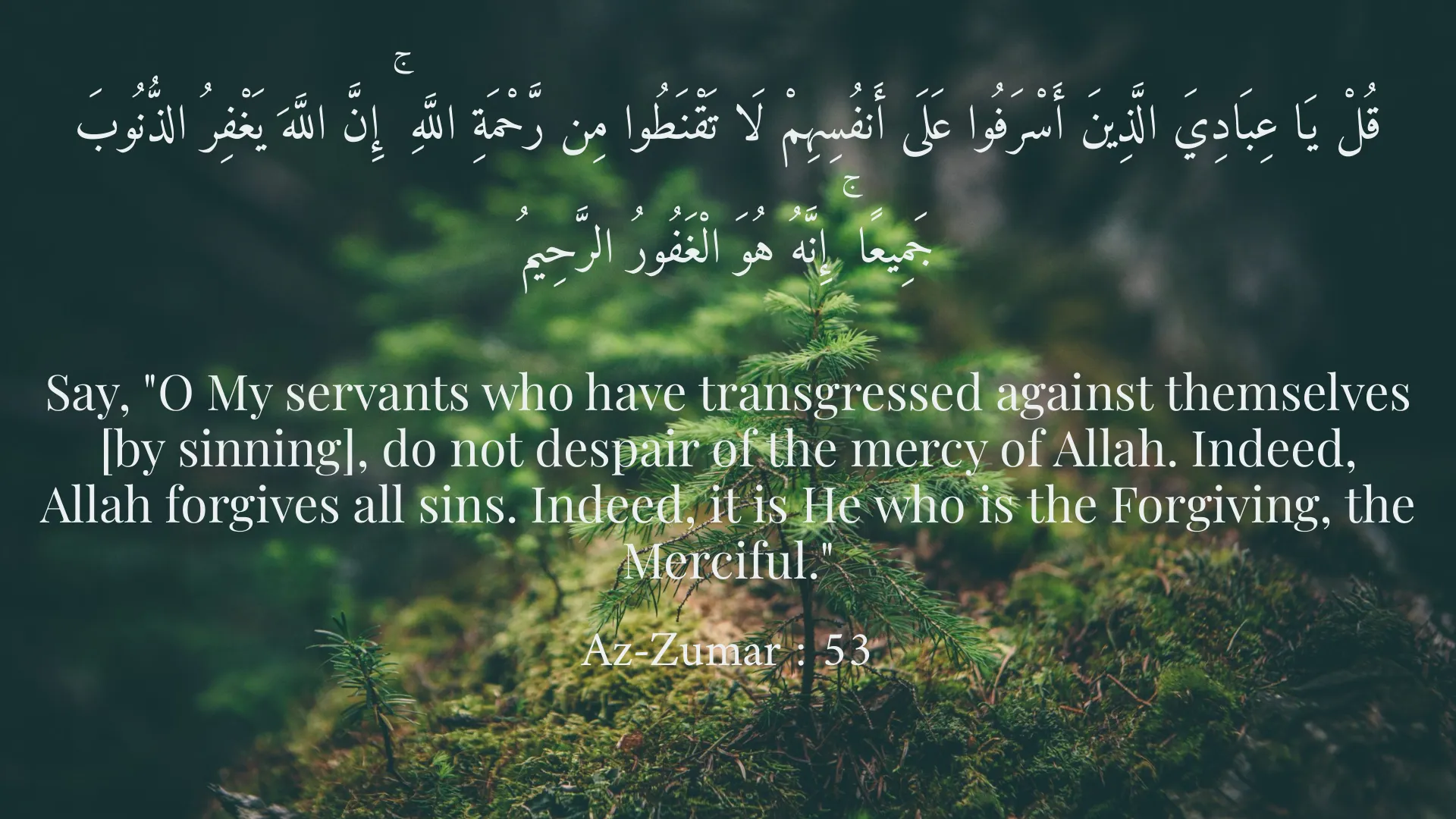
قُلْ يَا عِبَادِيَ الَّذِينَ أَسْرَفُوا عَلَى أَنفُسِهِمْ لَا تَقْنَطُوا مِن رَّحْمَةِ اللَّهِ ۚ إِنَّ اللَّهَ يَغْفِرُ الذُّنُوبَ جَمِيعًا ۚ إِنَّهُ هُوَ الْغَفُورُ الرَّحِيمُ
Say, "O My servants who have transgressed against themselves [by sinning], do not despair of the mercy of Allah. Indeed, Allah forgives all sins. Indeed, it is He who is the Forgiving, the Merciful."
Az-Zumar : 53
يَا أَيُّهَا الَّذِينَ آمَنُوا تُوبُوا إِلَى اللَّهِ تَوْبَةً نَّصُوحًا عَسَى رَبُّكُمْ أَن يُكَفِّرَ عَنكُمْ سَيِّئَاتِكُمْ وَيُدْخِلَكُمْ جَنَّاتٍ تَجْرِي مِن تَحْتِهَا الْأَنْهَارُ يَوْمَ لَا يُخْزِي اللَّهُ النَّبِيَّ وَالَّذِينَ آمَنُوا مَعَهُ ۖ نُورُهُمْ يَسْعَى بَيْنَ أَيْدِيهِمْ وَبِأَيْمَانِهِمْ يَقُولُونَ رَبَّنَا أَتْمِمْ لَنَا نُورَنَا وَاغْفِرْ لَنَا ۖ إِنَّكَ عَلَى كُلِّ شَيْءٍ قَدِيرٌ
O you who have believed, repent to Allah with sincere repentance. Perhaps your Lord will remove from you your misdeeds and admit you into gardens beneath which rivers flow [on] the Day when Allah will not disgrace the Prophet and those who believed with him. Their light will proceed before them and on their right; they will say, "Our Lord, perfect for us our light and forgive us. Indeed, You are over all things competent."
At-Tahrim : 8
وَهُوَ الَّذِي يَقْبَلُ التَّوْبَةَ عَنْ عِبَادِهِ وَيَعْفُو عَنِ السَّيِّئَاتِ وَيَعْلَمُ مَا تَفْعَلُونَ
And it is He who accepts repentance from His servants and pardons sins, and He knows what you do.
Ash-Shura : 25
Short Story
It is narrated that in ancient times, there was a young man named Bahram, who was deeply immersed in sin and heedlessness, his heart distant from the remembrance of God. Although he spent his days and nights in frivolity and amusement, a hidden voice deep within him always called him towards purity and return. This inner voice grew stronger day by day, drawing Bahram towards repentance. One night, as Bahram lay in bed, he had a strange dream. He saw himself in a dark, endless desert, leading nowhere. Suddenly, a light appeared from afar, and he heard a comforting voice saying, "O Bahram, the path to salvation lies in returning to the light. Even if your steps are heavy and your path full of thorns, God yearns for your return." Bahram awoke, trembling. That dream and the inner voice ignited such a longing in him that he instinctively prostrated himself, repenting with all his heart for his past sins. With tearful eyes, he supplicated to God, "My Lord! I am Your sinful servant, but my heart is filled with longing to return to You. Will You accept me?" From then on, Bahram transformed his life. He severed ties with unworthy companions, abandoned unseemly deeds, and turned to worship and piety. People, witnessing this immense change in him, were astonished. In every gathering, Bahram spoke of the power of divine mercy and God's response to His servants' longing for repentance. He would say, "Indeed, God not only responded to my longing for repentance but also granted me a peace I had never experienced in all my years of heedlessness. He embraced me with His mercy and opened the path of light before me." And thus, Bahram was transformed from one of the most sinful individuals into one of the righteous of his time, demonstrating how a sincere longing for repentance can erase great sins and illuminate the heart.