Quranic Answer
Gratitude in the Teaching of the Holy Quran: An Exploration of Faith and Blessings Gratitude is a central theme in the Holy Quran, where it is described as one of the most significant characteristics of the faithful. Throughout its verses, the Quran emphasizes the importance of thankfulness toward Allah, which, in turn, is seen as not only a moral duty but also a source of countless blessings and provisions in the lives of believers. In particular, expressions of gratitude are associated with spiritual growth and a deeper connection to the divine. This article delves into the various manifestations of gratitude as described in the Quran, the consequences of being thankful, and the profound impact it has on the mental and spiritual well-being of individuals. The relationship between gratitude and blessings is eloquently articulated in Surah Ibrahim, verse 7, which states: ‘And [mention] when your Lord proclaimed, 'If you are grateful, I will surely increase your favor upon you.' This verse reflects a fundamental principle in Islamic belief: the connection between gratitude and the increase of divine favors. It implies that the more one cultivates a mindset of thankfulness, the more one attracts blessings into their life. This principle is not just limited to material provisions; it extends to life experiences, emotional stability, and spiritual contentment. The Quran repeatedly emphasizes that gratitude opens the doors to more of Allah’s gifts, thereby promoting a cycle of positivity and abundance. Another significant example of gratitude in the Quran can be found in Surah Al-Ma'idah, verse 12, where Allah highlights His covenant with the Children of Israel: 'If I give you a blessing, you must surely be grateful to Me.' This statement serves as a reminder that the act of receiving blessings comes with the responsibility of gratitude. Being thankful is not merely a passive act; it involves an active acknowledgment of Allah’s generosity and grace. The Quran frames gratitude as a requirement for gaining divine favor, reinforcing the idea that neglecting to express thankfulness can lead to a loss of blessings. In essence, the Quran positions gratitude as a spiritual duty that enhances the overall quality of life. The teachings of the Quran suggest that gratitude extends beyond mere words of thanks. It encompasses an attitude and a way of life. True gratitude involves recognizing the myriad of blessings in our daily existence, from the serenity of nature to the love of family and friends, and the gift of health. This recognition can nurture spiritual awareness and a deeper understanding of one’s place within the universe. The practice of gratitude, therefore, serves as a bridge between the individual and the divine, fostering a more profound relationship with God. Psychological studies have increasingly shown that gratitude contributes to mental health and overall well-being. Individuals who regularly practice gratitude report higher levels of happiness, reduced depression, and increased resilience. This aligns with the Quranic perspective that gratitude leads to mental and spiritual peace. When individuals focus on what they are grateful for, they shift their perspective from scarcity to abundance. This shift not only enhances their mood but also cultivates a mindset of positivity that influences their interactions with others. Furthermore, the Quran encourages believers to express gratitude not only in times of prosperity but also during adversity. Trials and difficulties are often viewed through the lens of gratitude by Muslims, with the understanding that these experiences can serve as opportunities for growth and reflection. Surah Al-Baqarah, verse 286 stresses: ‘Allah does not burden a soul beyond that it can bear.’ This verse can be interpreted as a reminder that even in hardship, there is room for thankfulness, prompting believers to seek meaning and lessons in their struggles. This perspective allows individuals to maintain hope and faith even in challenging circumstances. In community and social contexts, expressions of gratitude can strengthen relationships and foster social bonds. By thanking Allah and each other for kindnesses and favors, the community becomes knit together with threads of appreciation and respect. This collective spirit of thankfulness can lead to greater acts of charity and goodwill, promoting a more harmonious and compassionate society. The Islamic practice of Zakat, or charitable giving, is often linked to gratitude, as it is a way to express thankfulness for one’s own blessings by sharing them with those in need. Finally, gratitude can serve as a pathway to personal transformation. When individuals consciously cultivate a mindset of thankfulness, they often become more empathetic, compassionate, and generous. This transformation can manifest in various aspects of life, including improved relationships, enhanced self-esteem, and a more appreciative attitude toward both extraordinary and mundane experiences. In conclusion, gratitude, as elaborated upon in the Holy Quran, is both an economic and spiritual endeavor that offers profound benefits to individuals and communities. The Quran teaches that by recognizing and expressing gratitude for divine blessings, believers can experience an increase in favor from Allah, leading to enhanced well-being, deeper connections with the divine, and a more harmonious existence within their communities. Embracing gratitude not only unlocks the doors to abundance and blessings but also fosters a spirit of joy and tranquility within oneself. Ultimately, by integrating gratitude into their daily lives, individuals can embark on a path of personal growth that enriches their spiritual journey and enhances their overall quality of life.
Related Verses
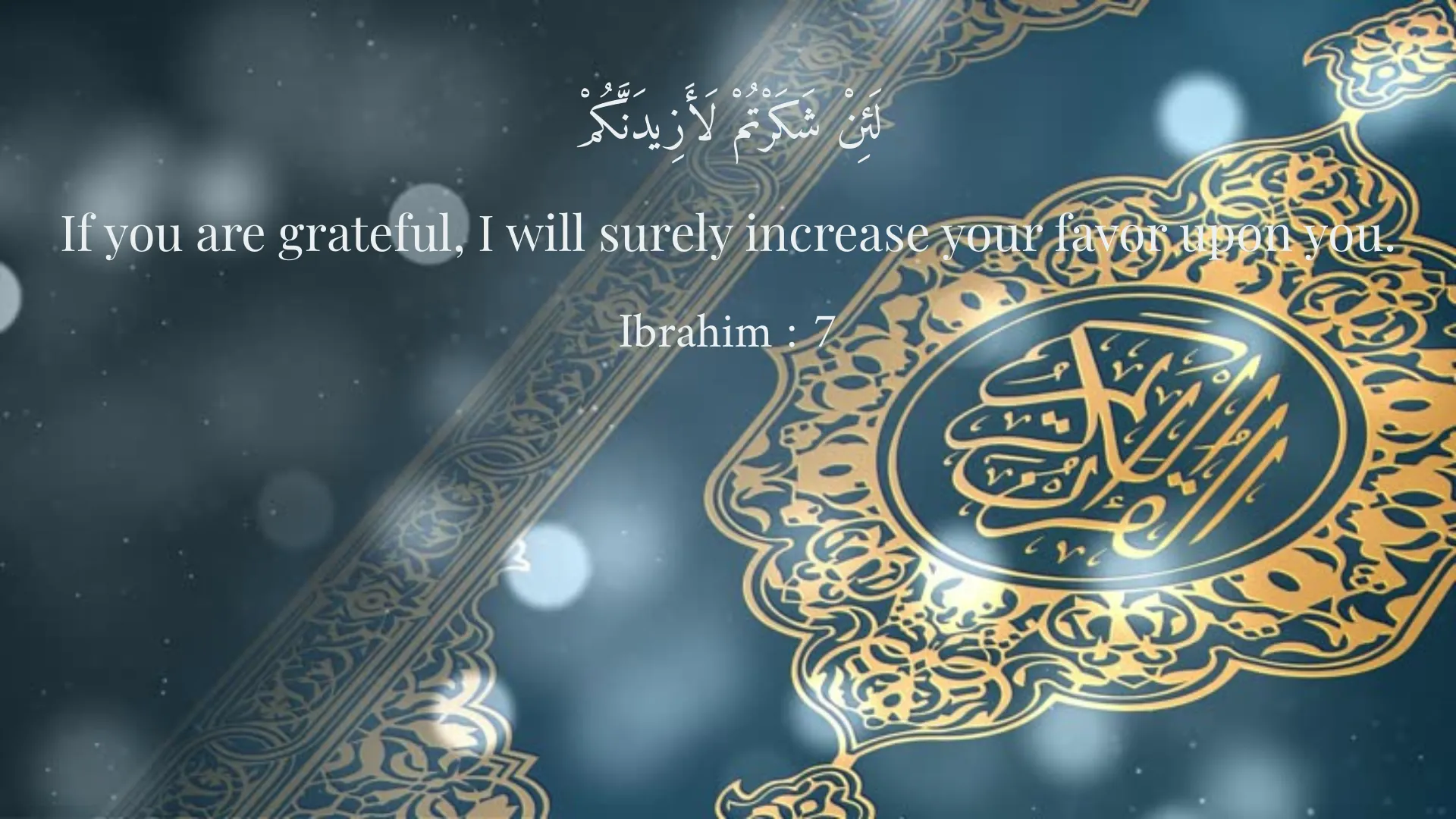
لَئِنْ شَكَرْتُمْ لَأَزِيدَنَّكُمْ
If you are grateful, I will surely increase your favor upon you.
Ibrahim : 7
وَإِذْ أَخَذَ اللَّهُ مِيثَاقَ بَنِي إِسْرَائِيلَ لَئِنْ أَتَيْتُكُمْ نِعْمَةً فَلَتَشْكُرُونَنِي
And when Allah took the covenant from the Children of Israel: 'If I give you a blessing, you must surely be grateful to Me.'
Al-Ma'idah : 12
Short Story
One day, a man was sitting by the sea, contemplating the blessings in his life. He decided to express gratitude to God daily for all his blessings, which led him to experience more joy and peace. Over time, his sense of gratitude spread to others, creating a vibrant life for himself and those around him.