Quranic Answer
In the Holy Quran, there is a profound and unwavering call to assist others and partake in righteous acts. This divine mandate is not merely a suggestion but a fundamental component of faith, woven intricately throughout its verses. The Quran emphasizes that righteousness transcends mere outward appearances, pointing to a deeper spiritual understanding and action rooted in compassion and support for the less fortunate. In Surah Al-Baqarah, verse 177, Allah states: 'Righteousness is not that you turn your faces toward the east or the west, but [true] righteousness is in one who believes in Allah, the Last Day, the Angels, the Book, and the Prophets, and gives his wealth, in spite of love for it, to relatives, orphans, the needy, the traveler, those who ask [for help], and for freeing slaves...' This verse encapsulates the essence of what it means to be righteous and points directly to the significance of charity and helping those in need as foundational aspects of a devout life. At its core, this Quranic verse illustrates that true righteousness is characterized by a sincere belief in Allah and an unwavering commitment to support others, particularly those who find themselves vulnerable and in need. The act of giving wealth—despite one's attachment to it—serves as a profound demonstration of selflessness and illustrates the prioritization of community and humanitarianism over individual gain. Furthermore, by listing various categories of beneficiaries—relatives, orphans, the needy, and travelers—this verse implores believers to recognize that their financial contributions can make a significant difference in the lives of those who struggle. In addition to the emphasis on charitable giving, the Quran teaches us about the virtues of maintaining good relationships with one’s family and community. In Surah An-Nisa, verse 36, Allah clearly stresses the importance of being good to parents, relatives, orphans, the needy, and neighbors. This reiteration of kindness toward all levels of society reflects the comprehensive nature of Islamic teachings on morality and ethics. Such behavior not only pleases Allah but also cultivates a harmonious society where compassion and support are the norm rather than the exception. Moreover, the Quran articulates an important relationship between sacrifice and spiritual growth. In Surah Al-Imran, verse 92, it states: 'Never will you attain the good reward until you spend from that which you love...' This enhances the message of the preceding verses, illustrating that acts of kindness, especially when they involve giving from what we cherish, are regarded as high acts of virtue. The Quran encourages believers to part with what they love, transforming material attachment into acts of altruism that resonate deeply within the community. This kind of giving not only benefits the recipients but also enriches the giver spiritually, as it reinforces a sense of humility and a connection to the broader human experience. The significance of helping others becomes even more pronounced in the context of the Day of Judgment. The Quran frequently reminds believers that their deeds in this world will be weighed and assessed in the hereafter. Acts of kindness and charity serve as a testament to one’s faith and piety, providing graces in this life and securing rewards in the next. By assisting others, believers are not only fulfilling a divine command but also positioning themselves favorably on the Day of Accountability, where every act is observed and rewarded accordingly. The acts of charity and kindness outlined in these Quranic verses extend beyond mere financial assistance. They encompass the ethos of compassion, understanding, and unconditional support for others. This could manifest in various forms, including emotional support, providing resources, or simply lending a listening ear to those in distress. The Quran encourages believers to embody these qualities, reinforcing the idea that every interaction matters and can contribute to the wellbeing of society. Furthermore, it is valuable to acknowledge the social dimension of helping others, as emphasized in the Islamic tradition. The Quran guides Muslims not just to be selfishly withdrawn but to be an active part of their communities. Building relationships and uplifting those around us fundamentally aligns with the teachings of the Quran. The act of reaching out to orphans, the needy, and even strangers strengthens communal ties and nurtures bonds of unity and solidarity. In societies often fragmented by individualism and materialism, the Quranic call to help others serves as a crucial antidote. It highlights the interconnectedness of humanity and champions collective responsibility. The verses encourage individuals not only to take care of their immediate family but also to consider the broader community, fostering empathy and a sense of belonging that transcends personal interests. In summary, the Holy Quran places an unequivocal emphasis on the importance of helping others and performing good deeds. Through verses like those from Surah Al-Baqarah, An-Nisa, and Al-Imran, Allah conveys that true righteousness is intricately linked to acts of kindness, charity, and maintaining harmonious relationships with family, neighbors, and those in need. The Quran underscores that giving from one’s heart and supporting others is not merely encouraged; it is an essential aspect of faith that prepares believers for both worldly and eternal rewards. In a world that can often seem overwhelming and isolating, these teachings remind us of the profound impact we can have on one another’s lives and the enduring legacy of kindness we can all create.
Related Verses
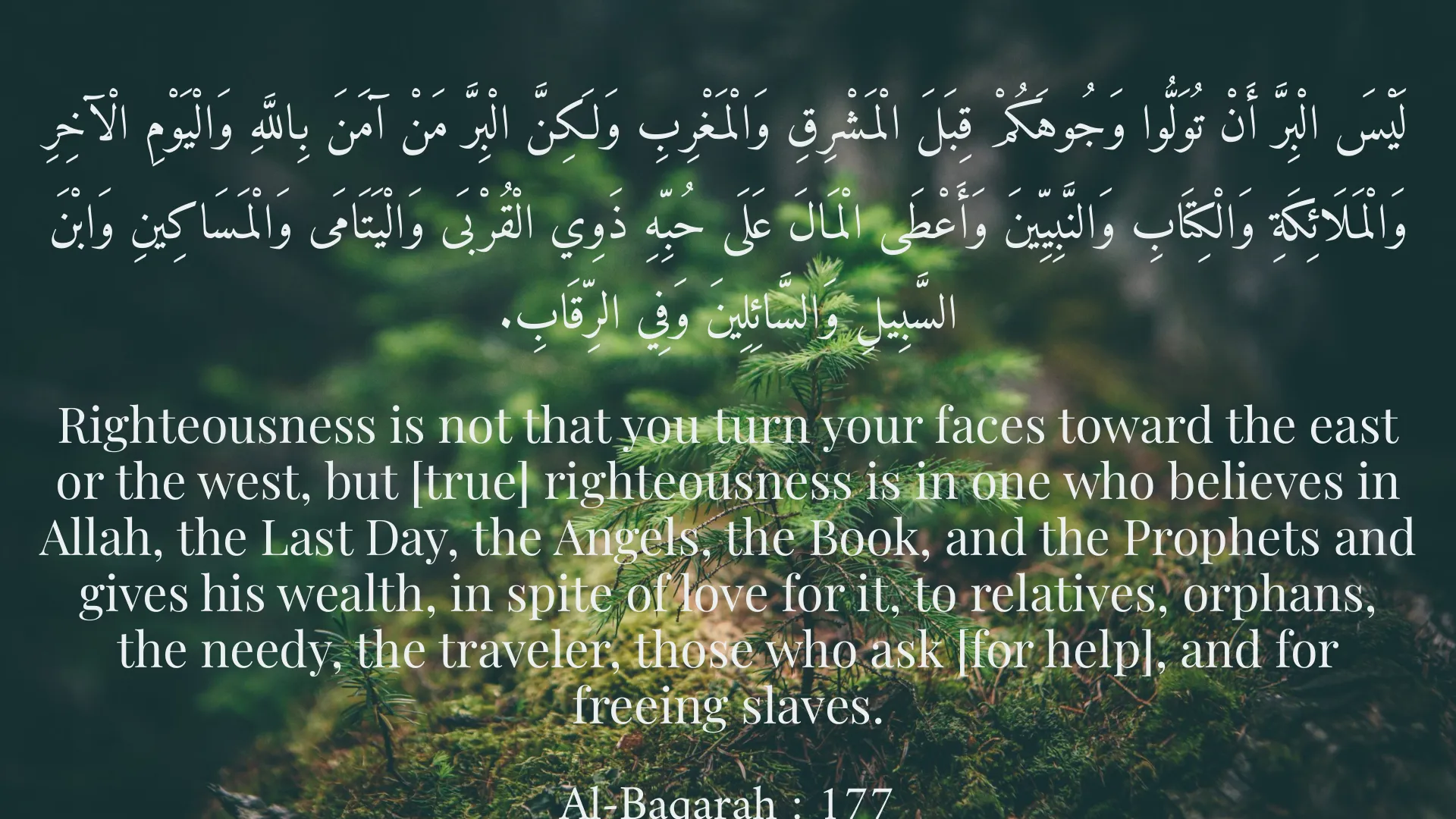
لَيْسَ الْبِرَّ أَنْ تُوَلُّوا وَجُوهَكُمْ قِبَلَ الْمَشْرِقِ وَالْمَغْرِبِ وَلَكِنَّ الْبِرَّ مَنْ آمَنَ بِاللَّهِ وَالْيَوْمِ الْآخِرِ وَالْمَلَائِكَةِ وَالْكِتَابِ وَالنَّبِيِّينَ وَأَعْطَى الْمَالَ عَلَى حُبِّهِ ذَوِي الْقُرْبَى وَالْيَتَامَى وَالْمَسَاكِينِ وَابْنَ السَّبِيلِ وَالسَّائِلِينَ وَفِي الرِّقَابِ.
Righteousness is not that you turn your faces toward the east or the west, but [true] righteousness is in one who believes in Allah, the Last Day, the Angels, the Book, and the Prophets and gives his wealth, in spite of love for it, to relatives, orphans, the needy, the traveler, those who ask [for help], and for freeing slaves.
Al-Baqarah : 177
أَعْبُدُوا اللَّهَ وَلَا تُشْرِكُوا بِهِ شَيْئًا وَبِالْوَالِدَيْنِ إِحْسَانًا وَبِذِي الْقُرْبى وَالْيَتَامَى وَالْمَسَاكِينَ وَالْجَارِ ذِي الْقُرْبَى وَالْجَارِ الْجُنُبِ وَالصَّاحِبِ بِالْجَنْبِ وَابْنِ السَّبِيلِ وَالْمَمَالِكَتِ الزَّكَاةَ.
Worship Allah and do not associate anything with Him, and to parents, good treatment. And to relatives, orphans, the needy, the neighbor, the neighbor, the companion at your side, and the traveler, and those whom your right hands possess.
An-Nisa : 36
لَنْ تَنَالُوا الْبِرَّ حَتَّى تُنفِقُوا مِمَّا تُحِبُّونَ.
Never will you attain the good reward until you spend from that which you love.
Al-Imran : 92
Short Story
One day, Adel decided to dedicate some time to help his neighbor. He approached the neighbor, who was unable to buy daily necessities due to illness, and engaged in conversation with him. He then offered to cover part of the expenses. The next day, that neighbor came back with a smile and said that Adel's assistance had changed his life. Adel was thrilled by this and realized that helping others not only solves a problem but also brings him peace and happiness.