Quranic Answer
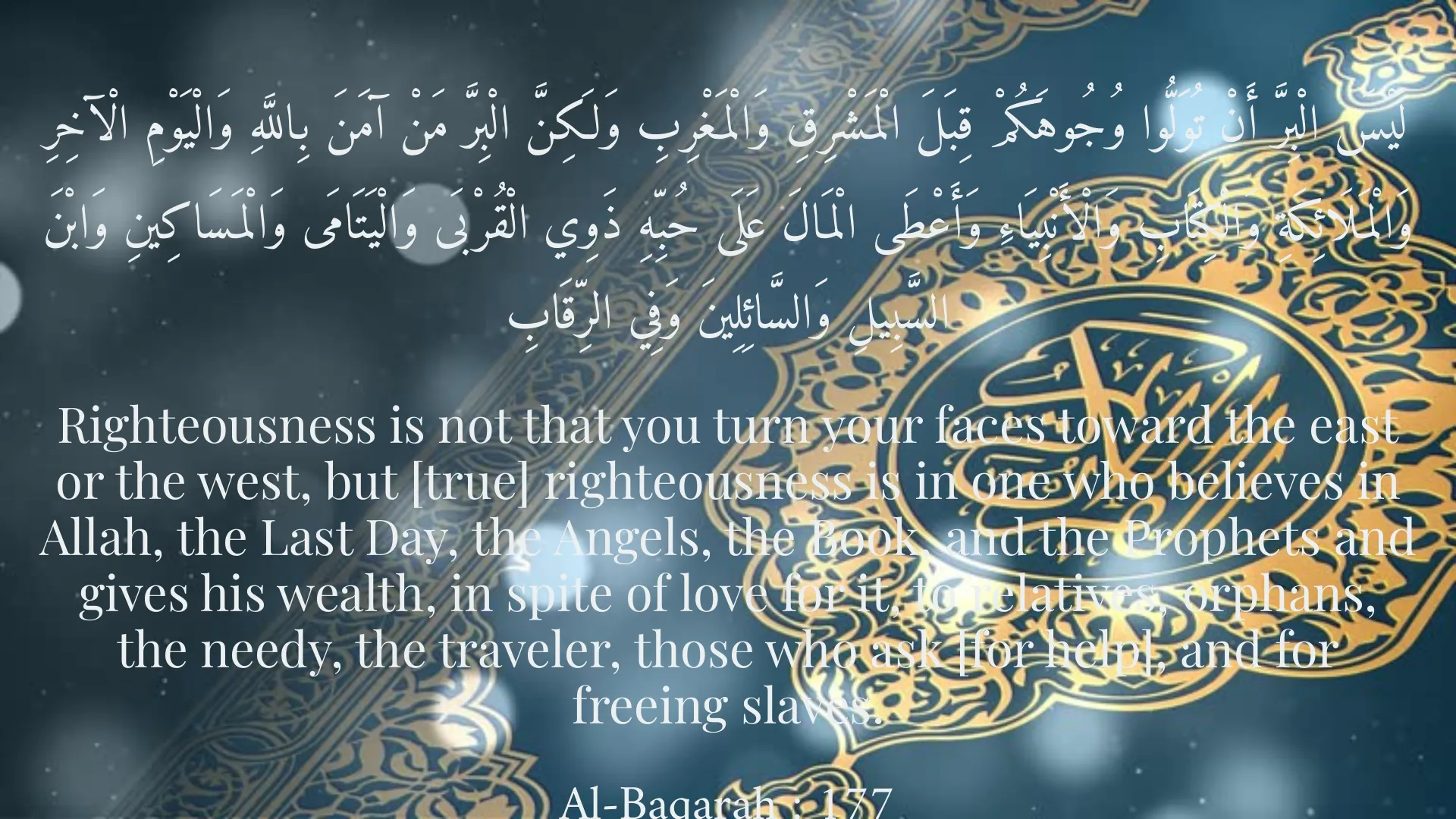
The act of helping others stands at the pinnacle of moral and ethical conduct, especially within the framework of the Islamic faith, as articulated in the Holy Quran. This sacred text not only outlines the beliefs and the principles that guide a Muslim's life but also emphasizes the value of community, compassion, and altruism. Helping others is not just an act of kindness, but a moral obligation ingrained in the very fabric of Islamic teachings. As we delve deeper into the verses of the Holy Quran, we uncover profound insights into the significance of aiding those in need, illustrating how these acts enhance spiritual fulfillment and foster community unity. In the Quran, Surah Al-Baqarah, verse 177, categorically identifies the dimensions of righteousness. Allah communicates to believers that true righteousness extends beyond mere physical expressions of faith or worship; it encompasses a comprehensive belief in Allah, the Last Day, the Angels, the Book, and the Prophets. However, alongside this belief, the verse emphasizes an essential duty—giving one’s wealth to those in need, including relatives, orphans, the needy, travelers, and those who request assistance. This verse highlights that the essence of righteousness involves a balance between faith and charitable actions. The emphasis on charity and helping others is a recurring theme throughout the Quran. For instance, in Surah Al-Mu'minun, verse 52, Allah states: 'And they give preference to others over themselves, even though they are in privation.' This verse underscores the ideal of selflessness, encouraging believers to prioritize the needs of others, demonstrating that even in times of personal hardship, one should strive to lend a helping hand to those who are less fortunate. Here, the Quran beautifully encapsulates a key tenet of Islamic ethics—that the measure of one's faith can often be found in their willingness to assist others, thereby fostering a sense of community and interconnectedness among believers. Furthermore, in Surah At-Tawbah, verse 60, Allah clarifies the categorization of charitable acts by stating: 'The alms are only for the poor and for the needy...' This particular verse serves to delineate the rightful recipients of charity, specifically emphasizing the critical roles of the poor and distressed in society. The specificity of this verse reinforces the moral duty of the wealthy to support the less fortunate, thereby not only enhancing their social standing but also fulfilling a divine obligation. The Quran's persistent emphasis on charity illustrates that such acts not only alleviate material suffering but also elevate the spiritual standing of the giver in the eyes of Allah. Moreover, the social implications of helping others extend far beyond personal enrichment. Acts of charity serve as a vital mechanism for fostering community bonds and eradicating social disparities. When individuals contribute to the welfare of others, they strengthen the social fabric, create networks of mutual support, and cultivate a culture of empathy and understanding. Supporting orphans, aiding the needy, and assisting travelers are vital aspects of Islamic community life, as they not only fulfill spiritual obligations but also combat isolation and offer companionship to the vulnerable. The importance of charity in Islam is further reinforced by the teachings of the Prophet Muhammad (peace be upon him), who is often cited as the greatest embodiment of altruism and compassion. His life exemplifies the virtues of selflessness and service, as he dedicated his life to helping those in need, regardless of their background or circumstances. The Prophet acknowledged the intrinsic value of helping others, asserting that the most beloved people to Allah are those who are most beneficial to humanity. This understanding cultivates an environment in which helping others becomes a shared goal, significantly enriching the spiritual and social fabric of the community. In conclusion, the teachings of the Quran unequivocally reinforce the intrinsic value of helping others as a virtuous deed that resonates deeply within the Islamic faith. By intertwining righteousness with acts of charity, the Quran encourages believers to engage actively in supporting those in need. The divine assurance of spiritual reward and closeness to Allah for such acts solidifies the belief that helping others is not merely an option but a crucial aspect of a faithful life. Ultimately, the virtuous act of aiding others nurtures a culture of compassion and community, embodying the essence of what it means to be a true believer. By embracing this principle, Muslims can effectively contribute to creating a more just and caring world, reflecting the mercy and compassion of Allah in their everyday lives.
Related Verses
لَيْسَ الْبِرَّ أَنْ تُوَلُّوا وُجُوهَكُمْ قِبَلَ الْمَشْرِقِ وَالْمَغْرِبِ وَلَكِنَّ الْبِرَّ مَنْ آمَنَ بِاللَّهِ وَالْيَوْمِ الْآخِرِ وَالْمَلَائِكَةِ وَالْكِتَابِ وَالْأَنْبِيَاءِ وَأَعْطَى الْمَالَ عَلَى حُبِّهِ ذَوِي الْقُرْبَى وَالْيَتَامَى وَالْمَسَاكِينِ وَابْنَ السَّبِيلِ وَالسَّائِلِينَ وَفِي الرِّقَابِ
Righteousness is not that you turn your faces toward the east or the west, but [true] righteousness is in one who believes in Allah, the Last Day, the Angels, the Book, and the Prophets and gives his wealth, in spite of love for it, to relatives, orphans, the needy, the traveler, those who ask [for help], and for freeing slaves.
Al-Baqarah : 177
وَ يُؤْثِرُونَ عَلَى أَنفُسِهِمْ وَلَوْ كَانَ بِهِمْ خَصَاصَةٌ
And they give preference to others over themselves, even though they are in privation.
Al-Mu'minun : 52
إنما الصدقات للفقراء والمساكين والعاملين عليها والمولفين قلوبهم وحرّها وذوي الحاجة
The alms are only for the poor and for the needy and those who collect them and for reconciling hearts and for freeing slaves.
At-Tawbah : 60
Short Story
One day, the companions of the Prophet Muhammad mentioned to him that poverty and helplessness were increasing in Medina. The Prophet gently replied that they could alleviate this issue by giving from their wealth and helping those in need. The companions realized that even a small portion of their wealth could hold significant value before God and help uplift the community.