Quranic Answer
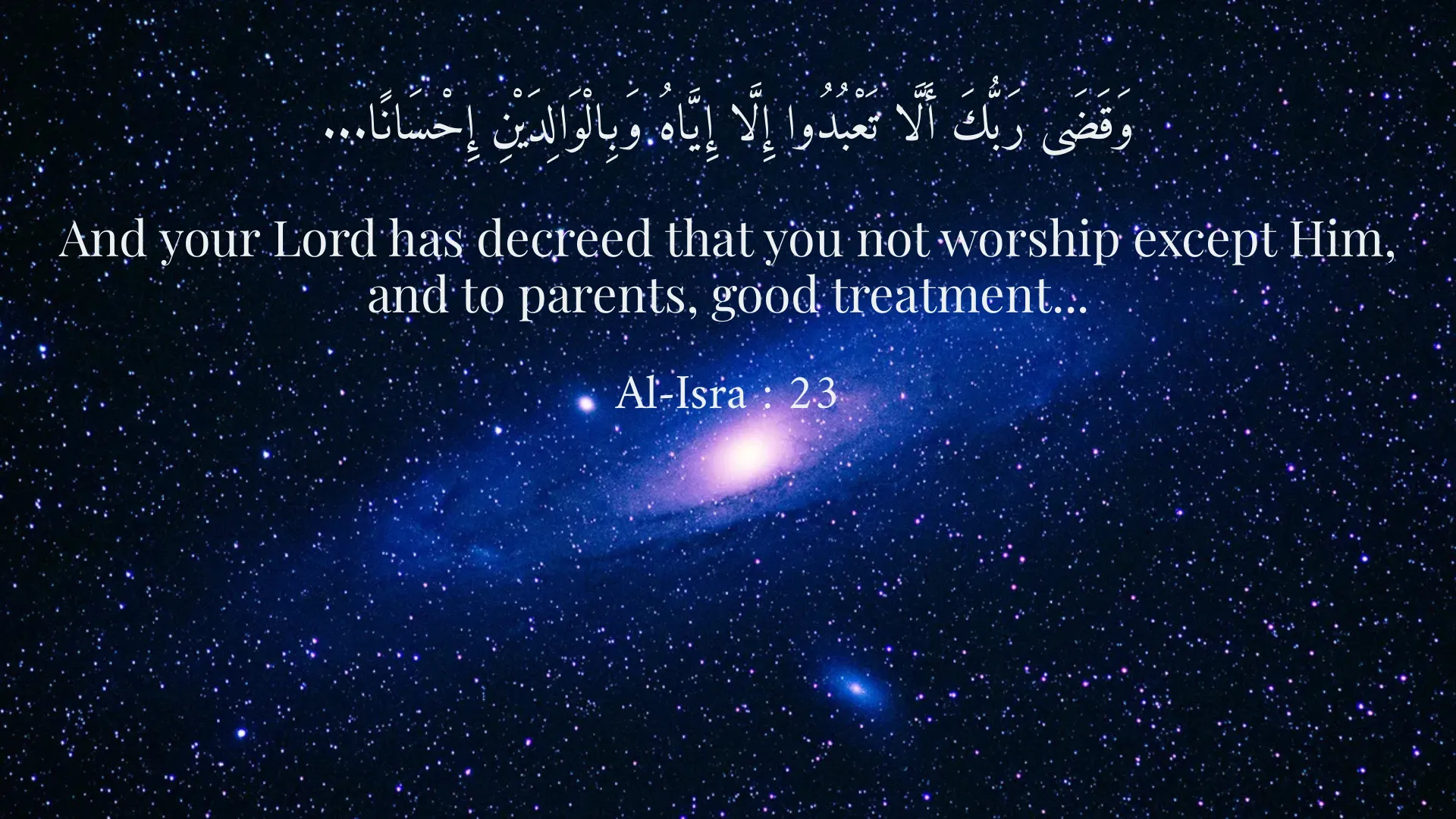
In the Holy Quran, the significance of kindness towards family and relatives is emphasized multiple times. Allah commands us to treat our parents and relatives with goodness, promising them great rewards for such actions. This command is not merely a suggestion but is presented as a fundamental tenet of Islamic faith, marking kindness towards family as an essential practice that holds great weight in the eyes of God. The Quran distinctly illustrates the importance of these relationships, asserting that they are integral to our moral and spiritual well-being. One of the most poignant illustrations of this principle can be found in Surah Al-Isra, verse 23, which states, 'And your Lord has decreed that you not worship except Him, and to parents, good treatment…'. This verse lays down a divine decree that elevates the status of parents to a remarkable level, positioning good behavior towards them right after the worship of Allah. Such a declaration signifies that kindness and respect for one’s parents are not just cultural norms but are indeed acts of worship themselves that can earn a believer immense merits in the world and in the life after. Furthermore, the Quran extends this theme beyond just familial boundaries. In Surah Al-Baqarah, verse 177, we find that doing good for others is introduced as one of the indicators of faith. The verse articulates, 'Righteousness is in one's faith includes kindness to orphans, the needy, and relatives.' This leads us to understand that kindness is not isolated but rather a spectrum of obligations that extends to those within our immediate circles, including family and friends, illustrating the interconnectedness of human relationships. The emphasis on family care in these verses is particularly noteworthy. In many cultures, family is regarded as the cornerstone of society, and Islam reinforces this idea by deeming it a righteous act to care for one’s family. Acts of kindness such as supporting them financially, providing emotional support, and simply being present during important times are integral not only to the cohesion of family structures but also to the moral fabric of society at large. By enforcing kindness and good treatment as fundamental principles, the Quran aims to nurture a sense of belonging and collective responsibility within family units. In a world where relationships can often become strained, especially as individuals navigate the complexities of modern living, the Quran’s continuous reminder to treat family and relatives with goodness serves as a beacon of hope. It gives believers an avenue to cultivate peace and affection in their lives, emphasizing the role of love and compassion that binds families together. Generosity towards relatives and nurturing familial ties can manifest in varying forms, be it through acts of charity, simple gestures of kindness, or unwavering support during times of hardship. Beyond earthly rewards, Allah promises ample divine rewards for those who demonstrate kindness and goodness towards their families. This promise is an essential element of the Quranic narrative, reinforcing that every good deed carried out for the family and relatives does not go unnoticed. The association of kindness with divine reward is a testament to the significance placed on these relationships and emphasizes that moral actions, especially towards close kin, resonate strongly with the divine decree. This divine acknowledgment adds to the moral imperative to behave kindly, creating a cycle of goodness that benefits both the giver and the receiver. Additionally, kindness to family is not limited to physical or financial support; emotional and spiritual support is equally crucial. In these modern times, many individuals find themselves engulfed in personal struggles, be they financial, emotional, or mental. It is during these times that family acts as a crucial support system, often shielding individuals from external adversity and providing a sense of solace. By being a source of comfort, encouragement, and understanding, individuals who prioritize kindness to their families contribute to lifting those around them, fostering resilience and fortitude within the entire familial structure. Moreover, kindness towards relatives cultivates an environment where healing, forgiveness, and reconciliation can take place. Disagreements and conflicts are part and parcel of any human relationship, including those among family members. However, by grounding interactions in kindness, individuals can navigate the rough waters of familial altercations with much more grace, allowing space for forgiveness and understanding to flourish. Such instances of reconciliation herald the importance of patience and love in mending broken ties, thereby leading to stable familial relationships that serve as a foundation for broader societal harmony. In today’s fast-paced society marked by individualism, the ancient wisdom embedded in the Quran underscores the need to rekindle our commitment to these principles. Despite geographical separations or varying lifestyles, investing time and effort into nurturing familial relationships remains invaluable. With modern technology allowing for easier communication, families can connect in ways that were previously unimaginable, fostering stronger bonds regardless of distance. In conclusion, the Quran’s teachings on kindness towards family and relatives reflect a deeper philosophical understanding of humanity’s interconnectedness. Acts of kindness and good treatment are not only encouraged but are integral to the spiritual and moral development of individuals. These actions create ripples of positivity that can contribute to a more compassionate and loving society. By embracing the Quranic directives that emphasize familial kindness, individuals can cultivate a life filled with purpose, fulfillment, and reward, both in this world and the next. Therefore, let us strive to uphold these teachings, cherishing our familial ties and fostering kindness as a vital part of our daily lives.
Related Verses
وَقَضَى رَبُّكَ أَلَّا تَعْبُدُوا إِلَّا إِيَّاهُ وَبِالْوَالِدَيْنِ إِحْسَانًا...
And your Lord has decreed that you not worship except Him, and to parents, good treatment...
Al-Isra : 23
لَيْسَ الْبِرَّ أَن تُوَلُّوا وُجُوهَكُمْ قِبَلَ الْمَشْرِقِ وَالْمَغْرِبِ...
Righteousness is not that you turn your faces toward the east or the west,...
Al-Baqarah : 177
Short Story
Once upon a time in a village, there was a young man named Ali who was always in pursuit of earning lawful income and helping his family. Ali dedicated himself wholeheartedly to assist his parents and lighten their burdens. He continued his hard work with gratitude, knowing deep in his heart that Allah would reward these acts of kindness. After a while, Ali's life transformed positively, allowing him to not only help his family but also succeed in other endeavors.