Quranic Answer
In the Holy Quran, the significance of kindness and charity in human relationships is deeply emphasized, underpinning the moral and ethical fabric that Islam seeks to cultivate within society. Charity, or 'Zakat,' is not merely an act of giving; it is a profound commitment to the welfare of others, signifying a relationship between the giver and the receiver that transcends the mere transaction of wealth. The Quran encourages believers to engage in acts of charity with a heart full of compassion, where the act itself is imbued with love, respect, and an earnest desire to help those in need. One of the clearest manifestations of this principle is evident in Surah Al-Baqarah, verse 273, where Allah articulates that almsgiving should predominantly benefit those who are facing dire situations. Yet, this verse goes beyond merely instructing believers to give; it emphasizes that such acts of kindness must be executed in a manner that upholds the dignity of the individuals receiving assistance. It is crucial that assistance be provided in a form that respects the humanity of the recipients, promoting their self-worth rather than diminishing it. This notion highlights the ethical responsibility that one must bear when engaging in charity: it cannot be performed at the expense of another's dignity. In addition to promoting dignity, the Quran advocates for acts of charity to be rendered in a subtle manner, away from the glare of public recognition. Surah Al-Baqarah suggests that delivering assistance in a discreet way enriches the act, allowing it to manifest as a pure expression of kindness, devoid of selfish motives. The significance of this approach is further bolstered by the argument that hidden charitable acts hold greater value in the divine realm, as they embody sincerity and genuine altruism, rather than a pursuit for reputation or acknowledgment. Supporting this concept, Surah Al-An'am, verse 160, reassures believers with the promise of divine reward for their good deeds, asserting that all acts of kindness and charity are preserved and appreciated by Allah. This verse provides reassurance that even when due recognition is not bestowed upon them in this world, the essence of such actions is eternal and recognized in the hereafter. This divine perspective fosters a profound sense of motivation among individuals to engage in charitable acts selflessly and without any expectation of return or recognition, reinforcing the spiritual dimension of charity in Islam. Another illustrative verse comes from Surah Al-Imran, verse 92, which states, 'You will never attain righteousness until you spend from that which you love.' This verse emphasizes that true righteousness is rooted in the willingness to sacrifice what one holds dear for the sake of others. Such a profound commitment extends the concept of charity beyond mere monetary aid; it encompasses time, efforts, compassion, and emotional support, making it an all-encompassing duty for all believers. By giving from their most cherished resources, individuals are invited to cultivate a deeper connection to their communities and foster collective welfare. From these teachings, it can be concluded that hidden good deeds are not only more beloved to Allah but also serve as a means of building stronger social relationships. Within the fabric of any community, nurturing relationships through acts of kindness fosters an environment of trust and unity. When individuals witness genuine acts of support, they feel respected and understood in their particular needs and struggles, which creates a reciprocal environment where kindness becomes the norm, rather than the exception. Moreover, the impact of such concealed acts of charity is immense. It engenders a culture of empathy and compassion, leading to community welfare as a whole. Community members begin to feel a sense of responsibility towards one another, culminating in an investment in collective progress. For instance, when individuals anonymously support their neighbors or engage in community development projects without seeking personal glory, they establish a powerful cycle of positivity and goodwill. Acts of hidden support not only make individuals feel respected but also instill in them a sense of belonging. When charity is dispensed with discretion, it emphasizes personal dignity while still fulfilling the communal obligation of supporting one another. This behavior nurtures a social environment where all members feel valued, respected, and understood, hence boosting morale and cooperation within the community. By focusing on hidden acts of kindness, this kindness often becomes a communal behavior, continuously encouraging others to do the same, fostering a spirit of collective responsibility. Additionally, the Quranic perspective on kindness and charity reflects the broader Islamic ethos that operates on the tenets of mercy, compassion, and humanity. Acts of charity, especially those rendered in anonymity, breed a sense of altruism that can ultimately transform societies. When individuals prioritize the well-being of others over self-serving interests, they become catalysts for positive change – a ripple effect that can inspire an entire community. In conclusion, the Quran's teachings on kindness and charity speak volumes about the manner in which individuals should engage with one another. It calls for a compassionate approach, urging believers to contribute positively to society while ensuring the dignity of every individual is preserved. Through the pursuit of hidden good deeds and acts of kindness, believers are reminded of their responsibilities not just as individuals, but as part of a larger community. In a world where humanity often becomes sidelined, these principles serve as a guide for fostering stronger, more respectful, and harmonious relationships among individuals, making the world a better place for all.
Related Verses
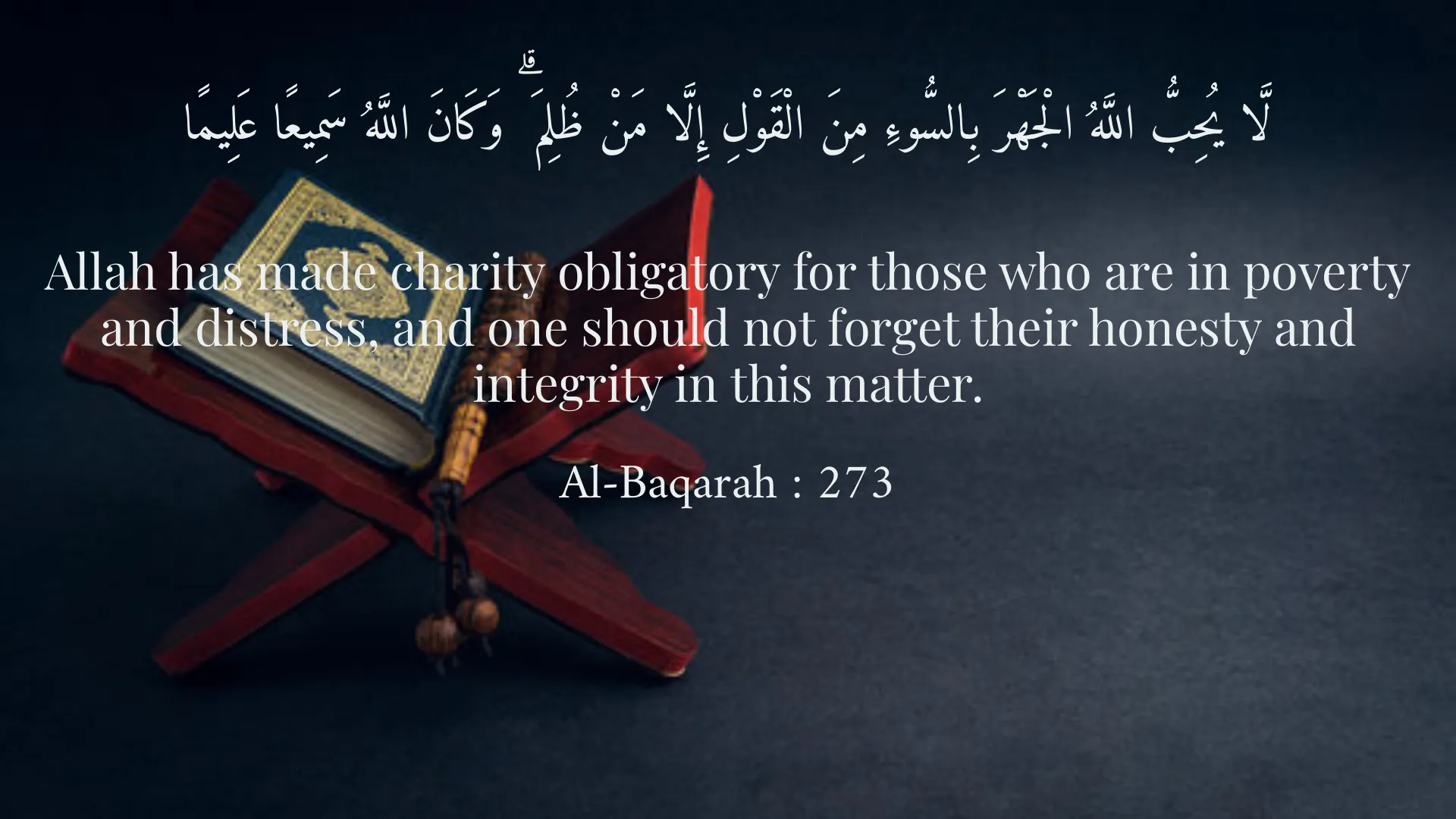
لَّا يُحِبُّ اللَّهُ الْجَهْرَ بِالسُّوءِ مِنَ الْقَوْلِ إِلَّا مَنْ ظُلِمَ ۗ وَكَانَ اللَّهُ سَمِيعًا عَلِيمًا
Allah has made charity obligatory for those who are in poverty and distress, and one should not forget their honesty and integrity in this matter.
Al-Baqarah : 273
لَن تَنَالُوا الْبِرَّ حَتَّى تُنفِقُوا مِمَّا تُحِبُّونَ ۗ وَمَا تُنفِقُوا مِن شَيْءٍ فَإِنَّ اللَّهَ بِهِۦ عَلِيمٌ
You will never achieve goodness until you spend from that which you love.
Al-Imran : 92
مَن جَاءَ بِالْحَسَنَةِ فَلَهُ عَشْرُ أَمْثَالِهَا ۖ وَمَن جَاءَ بِالسَّيِّئَةِ فَلَا يُجْزَى إِلَّا مِثْلَهَا وَهُمْ لَا يُظْلَمُونَ
Whoever comes with a good deed will have tenfold reward, and whoever comes with a wrongdoing will see only its equivalent.
Al-An'am : 160
Short Story
One day, a man came across a hungry child on his path. While others walked past the child, he decided to secretly provide some food to him. Without anyone noticing, he handed the food to the child and left with a smile. Later, he learned that the child used to search for food in that very spot every day. The man felt an immense joy and realized that doing good from the heart brings the greatest pleasure.