Quranic Answer
Title: The Importance of Hidden Charity in Islam: An Insight from the Holy Quran Introduction The emphasis on charity and benevolence is a recurring theme throughout the Holy Quran. The scriptures not only inspire individuals to engage in charitable acts but also illuminate the profound spiritual significance behind such actions. Among various forms of charity, the Quran places special emphasis on hidden charity, known as صدقه سرّی (sadaqah sirri), which refers to acts of generosity performed discreetly. This article delves into the concept of hidden charity as portrayed in the Holy Quran, particularly in Surah Al-Baqarah and Surah An-Nur, exploring its implications on individual spirituality, societal harmony, and the cultivation of genuine human connections. The Nature of Hidden Charity Hidden charity, as defined by Islamic teachings, is any act of giving that is performed anonymously or without the intent of seeking recognition or praise from others. This form of charity is deemed especially virtuous and is encouraged in various verses of the Quran. In Surah Al-Baqarah, verse 273, Allah emphasizes the sanctity of such acts: "The one who spends is known only to Allah, and he will not be informed about it unless he repents." This verse suggests that the true value of charitable acts lies not in the visibility of the deed but in the sincerity underlying the intention. By focusing on the deed itself rather than the recognition or admiration that may accompany it, individuals can foster a more profound connection with their creator. Intentions Matter In Islam, the significance of intention (niyyah) is paramount. A charitable act performed with a pure heart and sincere intention carries greater weight in the eyes of Allah than a public display of generosity. The Quran reminds believers that God is fully aware of one’s motivations and will reward them for their hidden acts of benevolence. The notion is beautifully encapsulated in the hadith, where the Prophet Muhammad (peace be upon him) stated, "Actions are judged by intentions, and every person will have what they intended." This principle reinforces the idea that genuine acts of kindness should stem from a desire to help others rather than for personal gain or societal recognition. The Benefits of Hidden Charity Engaging in hidden charity offers numerous spiritual and psychological benefits. Firstly, it cultivates a sense of inner peace and satisfaction among those who give. When individuals help others without seeking acknowledgment or reward, they experience a profound sense of fulfillment, knowing that they have positively impacted someone’s life. This act of selflessness nurtures a strong bond between the giver and God, reinforcing their faith and drawing them closer to the divine. Furthermore, hidden charity contributes to the establishment of a supportive and harmonious community. When acts of kindness are performed discreetly, they inspire others to do the same, creating a ripple effect of goodwill. In a world often plagued by discontent, animosity, and suffering, such collective acts of hidden charity can foster a more compassionate society, where individuals support one another in times of need. As highlighted in Surah An-Nur, verse 32, when good is done in secret, it is likely to yield greater blessings. This communal shift towards benevolence enriches the social fabric and nurtures relationships among individuals. Comparative Importance Islam does not disregard public acts of charity; they are certainly valuable and commendable. However, the balance between visible and hidden acts of kindness must be maintained. Public charity can serve to encourage others to contribute and give, but it can also lead to the temptation of vanity or showing off (riya). Hidden charity, in contrast, allows individuals to bypass this temptation and focus solely on the act of giving itself. The Spiritual Journey Engaging in hidden acts of kindness is also part of the broader spiritual journey of a believer. The Quran teaches that the essence of a meaningful life lies in selflessness and the pursuit of goodness in a world filled with pain and suffering. In this context, hidden charity serves as an avenue to attain spiritual enlightenment and fulfillment. It nurtures qualities such as humility, compassion, and empathy—traits that are vital for personal growth as well as establishing a supportive community. Conclusion In conclusion, hidden charity is a profound concept deeply embedded in Islamic teachings. The verses from the Holy Quran, particularly those from Surah Al-Baqarah and Surah An-Nur, compellingly advocate for the practice of secretive benevolence. Engaging in acts of hidden charity not only deepens one’s spirituality but also fosters a culture of compassion and kindness within society. The rewards of such actions are not merely worldly but are divine in nature, promised to those with sincere intentions. As the world grapples with challenges and adversities, the teachings in the Quran serve as a reminder of the transformative power of good deeds. Encouraging individuals to engage in hidden charity ultimately leads to both personal peace and collective harmony, making it an essential aspect of a faith-driven life.
Related Verses
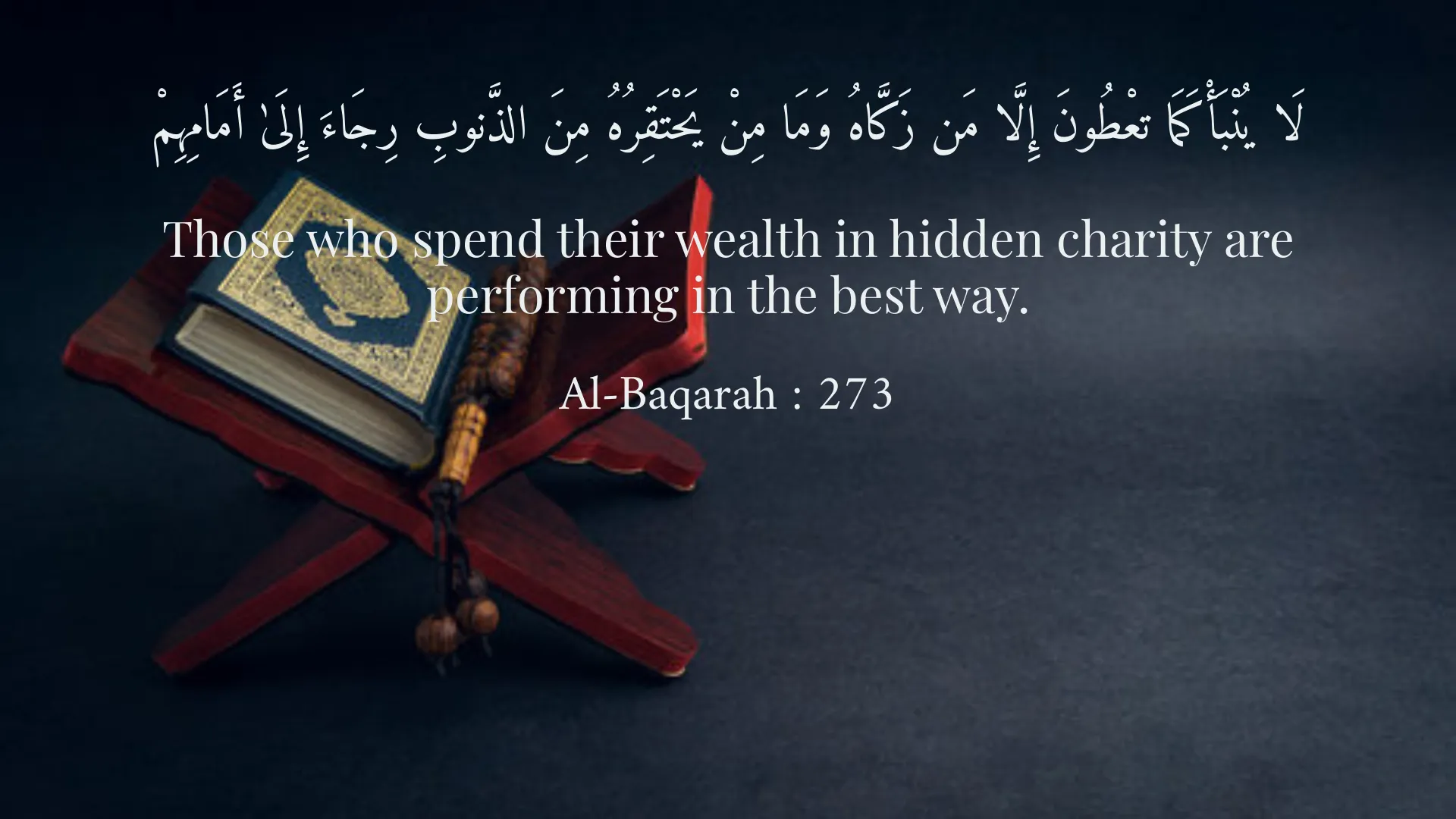
لَا يُنْبَأْكَمَا تعْطُونَ إِلَّا مَن زَكَّاهُ وَمَا مِنْ يَحْتَقِرُهُ مِنَ الذَّنوبِ رِجَاءَ إِلَىٰ أَمَامِهِمْ
Those who spend their wealth in hidden charity are performing in the best way.
Al-Baqarah : 273
وَأَنْفِقُوا فِي سَبِيلِ اللَّـهِ مِنْ أَمْوَالِكُمْ وَلاَ تُلْقُوا بِأَيْدِيكُمْ إِلَى التَّهْلُكَةِ وَأَحْسِنُوا إِنَّ اللَّـهَ يُحِبُّ الْمُحْسِنِينَ
And spend in the way of Allah from your wealth, and do not throw [yourselves] with your [own] hands into destruction; and do good; indeed, Allah loves the doers of good.
An-Nur : 32
Short Story
One day, a woman walking through the market encountered a needy person. She decided to help him without anyone noticing. She bought plenty of fresh food, placed it in a basket, and wrote a loving note. Then she left the basket at his doorstep and walked away. The next day, she prayed to God, grateful for her ability to help another. She understood well that this hidden support had also brought her peace and happiness.