Quranic Answer
The Importance of Kindness and Compassion Towards Animals in Islam In the Holy Quran, the importance of kindness and compassion towards all living beings, including animals, is a theme that resonates throughout various verses. This compassionate outlook is not only a reflection of one’s character but also an essential aspect of one's faith. Allah, in His infinite wisdom, has created a diverse array of creatures, each serving a unique purpose in the tapestry of life. As believers, it is our duty to acknowledge this divine creation and treat all living beings with respect and kindness. One of the most poignant reminders of this obligation can be found in Surah Al-An'am, verse 38, which states, 'And there is no creature on earth nor a bird that flies with its wings, but they are communities like you.' This verse illustrates a profound truth: that all creatures—human and animal alike—are interconnected and share in the experience of life. Allah is mindful of these creatures and provides for their sustenance, indicating His care and compassion for all of His creations. It serves as a reminder that we, too, must be benevolent and empathetic towards animals, recognizing them as fellow inhabitants of this earth. Moreover, the emphasis on kindness towards animals is reinforced by numerous teachings from the Prophet Muhammad (peace be upon him). One notable Hadith states, 'Whoever gives water to a dog will be rewarded by Allah, and He will forgive them.' This highlights that even the simplest acts of kindness, such as providing water to a thirsty animal, are significant in the eyes of Allah. The rewards associated with such acts illustrate the value placed on compassion, and they encourage individuals to engage in benevolent behavior towards all forms of life. In Islam, doing good deeds, which includes caring for animals, is highly regarded. The nurturing of animals can be seen as an extension of one's worship and service to Allah. Engaging in acts of kindness towards animals is not only beneficial to the animals themselves but also enriches the spirit of the individual performing these deeds. Caring for animals fosters a sense of responsibility and enhances one's emotional intelligence, as it demands understanding and sensitivity to the needs and emotions of sentient beings. The Quran and Hadith provide several instances where kindness to animals is set as a standard for moral behavior. For instance, there is a historical account in which the Prophet Muhammad (peace be upon him) spoke about a woman who was punished for mistreating a cat. She had imprisoned the cat, providing it neither food nor water until it died. This story serves as a powerful reminder that cruelty towards animals is a serious offense, one that reflects a person's moral and spiritual state. Hence, Islam encourages individuals to engage with animals in a manner that fulfills their needs and promotes their wellbeing. Furthermore, the teachings of Islam remind us that all living creatures possess emotions, instincts, and the necessity for care and love. Animals have their unique experiences and vulnerabilities, and as custodians of this earth, humans bear the duty to protect and nurture these lives. The correlation between kindness towards animals and spirituality is deeply ingrained in Islamic teachings – when we exhibit compassion towards animals, we embody the values of mercy and kindness that Allah embodies. The act of caring for animals extends beyond mere interaction; it includes providing proper housing, nourishment, and medical care. In this light, pet ownership is not merely about companionship but is rendered a serious commitment. Engaging in responsible pet ownership is an expression of love and respect, adhering to the tenets of Islam that call for justice and compassion in all of our dealings. Additionally, this commitment brings immense rewards both in this life and the hereafter. Besides the domesticated animals we often encounter, there is a broader responsibility that we must acknowledge towards wildlife and the environment. Islam teaches that the Earth and all its creatures are a trust from Allah, and thus we are urged to take care of the environment that sustains us. This includes advocating against habitat destruction, pollution, and cruelty inflicted upon animals for entertainment or profit. Protecting wildlife and respecting animal habitats are crucial components of humane stewardship that aligns with the core Islamic value of compassion. The relationship shared between humans and animals serves as a mirror reflecting the state of humanity itself. When a community collectively strives to promote kindness towards animals, it inherently cultivates an ethos of compassion that permeates human interactions as well. This symbiotic relationship encourages a society grounded in empathy, helping to create an environment where kindness governs all interactions. In conclusion, the significance of kindness and compassion towards animals is a deeply embedded principle within Islam. The Quran and sayings of Prophet Muhammad (peace be upon him) embody this ethos, illustrating that our treatment of animals is a testament to our character and faith. It is our duty to respect, care for, and advocate for all living beings, acknowledging them as integral parts of Allah's creation. Through acts of kindness towards animals, we not only serve them but also fulfill our religious and moral obligations, which ultimately leads to an enriched and harmonious existence for all. Therefore, let us strive to embody the values of kindness and compassion, making them a guiding force in our lives, thereby earning the pleasure and forgiveness of Allah.
Related Verses
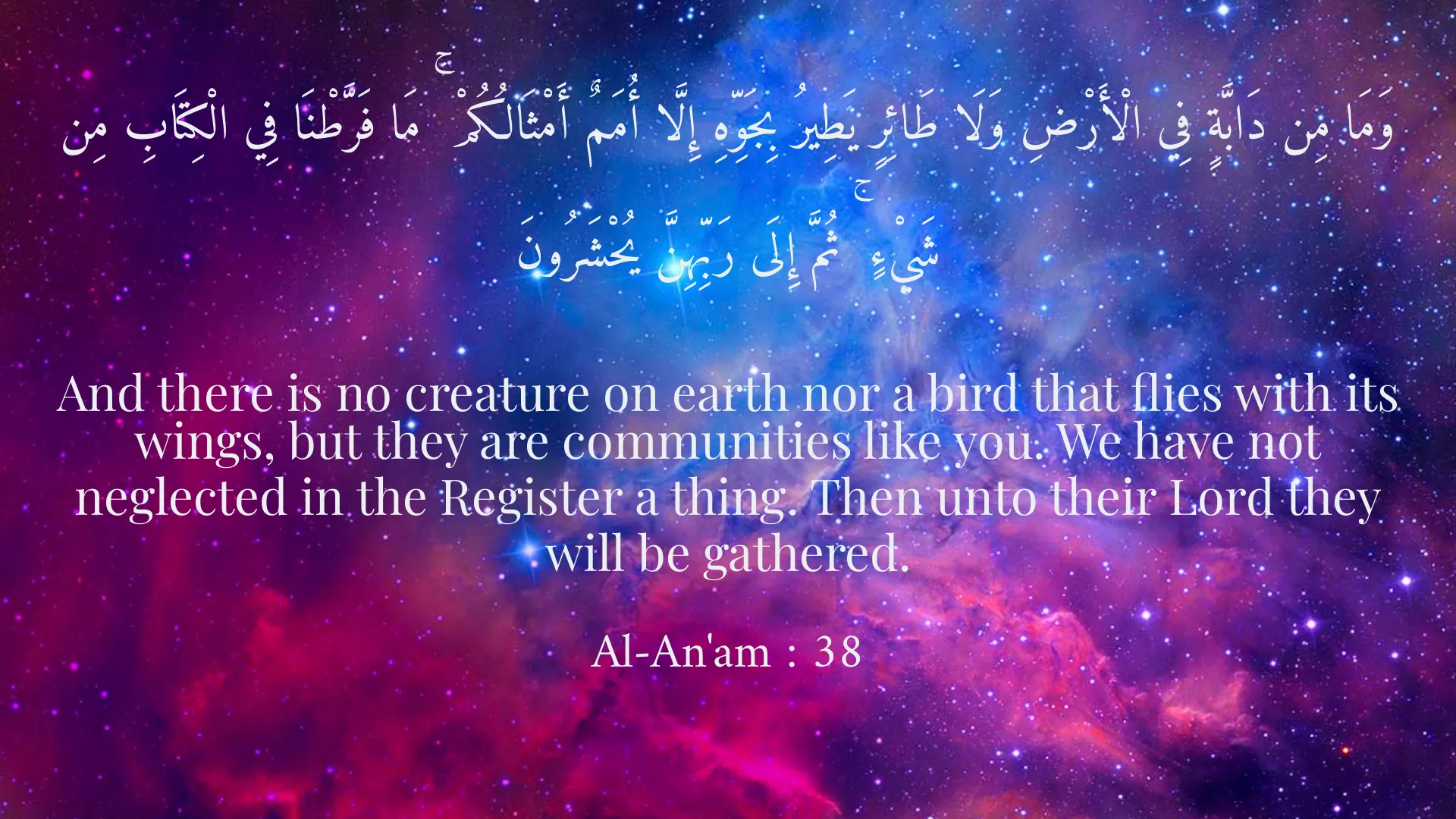
وَمَا مِن دَابَّةٍ فِي الْأَرْضِ وَلَا طَائِرٍ يَطِيرُ بِجَوِّهِ إِلَّا أُمَمٌ أَمْثَالُكُمْ ۚ مَا فَرَّطْنَا فِي الْكِتَابِ مِن شَيْءٍ ۚ ثُمَّ إِلَى رَبِّهِنَّ يُحْشَرُونَ
And there is no creature on earth nor a bird that flies with its wings, but they are communities like you. We have not neglected in the Register a thing. Then unto their Lord they will be gathered.
Al-An'am : 38
Short Story
One day, a kind man decided to help a stray dog that was wandering the streets. He went home and brought food for the dog. When the dog ate the food, it showed him love and loyalty. This small act changed the man's life as well, making him more attentive to those around him and prioritizing kindness in his life.