Quranic Answer
In the Holy Quran, laughter and joy are not merely incidental feelings but are depicted as profound signs of God's blessings. The significance of joy and laughter transcends the surface level of human experience, revealing deeper spiritual truths and perspectives that can guide a believer’s journey through life. These emotions are essential not only for individual well-being but also as communal bonds that elevate the spirit of Muslims everywhere. They remind us of the inherent goodness of God's creation, the mercy that pervades our existence, and the connections we share with each other as we navigate the vicissitudes of life. One of the most poignant references to joy and hope in the Quran is found in Surah Yusuf, where Prophet Jacob (peace be upon him) epitomizes parental love and resilience in the face of adversity. In verse 87, he counsels his sons to foster hope within themselves and to never despair of God’s mercy. This exhortation serves as a reminder that joy does not depend on external circumstances but rather springs from an unwavering belief in God’s compassion and kindness. The narrative of Surah Yusuf itself is a testament to how patience, trust, and eventual joy can emerge from the darkest of trials. Jacob's insistence on maintaining hope encourages believers to adopt a proactive attitude toward life's challenges, signifying that even in hardship, God provides avenues for joy and fulfillment. Furthermore, the lessons of joy extend into the realms of creation, as highlighted in Surah Ar-Rum, verse 37. This verse speaks not only to the magnificence of the heavens and the earth but emphasizes the signs of God within them — signs intended to instill joy and vitality within us. The beauty of nature, the intricate balance of ecosystems, and even the simple pleasure of a sunny day or a starlit night can evoke joy. They are reflections of God's creativity and reminders of His omnipresence. By engaging with these creations and recognizing them as manifestations of God's attributes, believers can cultivate a joyful heart that appreciates life in its totality. Moreover, it must be noted that both laughter and joy are divine gifts bestowed upon God's servants and should be acknowledged with gratitude. In Islamic teachings, the act of laughing is not frowned upon; instead, it is viewed as a natural human expression that brings people together. The Prophet Muhammad (peace be upon him) himself is known to have laughed and shared joyful moments with his companions, accentuating the importance of joy in social and communal settings. When individuals embrace laughter, they set off a ripple effect of joy within their communities. Happiness is inherently contagious; a smile can brighten a room, and shared laughter fosters connections that bind hearts together. Laughter softens rifts, heals wounds, and transforms conflicts into camaraderie. It dissolves barriers and helps in building trust among individuals, allowing spirituality to thrive as it encourages uplifting conversations and interactions rooted in empathy and understanding. From another perspective, the significance of joy and laughter in the life of a believer can be tied to the concept of gratitude. The Quran frequently calls upon believers to express gratitude for God’s blessings, which encompass both material and immaterial gifts. By genuinely appreciating the joyous moments in life, one can acknowledge the abundance of God’s favors. Joy, therefore, becomes a means of worship, tying the emotions directly to an individual’s spiritual practice. Every laugh shared in generosity and hospitality signifies a connection to God, reinforcing that joy is not only a personal experience but also a shared communal obligation. In times of hardship, seeking joy becomes even more pertinent. The world oftentimes presents challenges that test our faith, patience, and resilience. However, it is paramount for believers to remember that joy exists as a choice and a practice. Incorporating more laughter into our lives does not diminish our struggles; rather, it enhances our capacity to cope with them. Knowing that challenges are temporary can lead us to find joy amidst the suffering. Like the rays of light piercing through dark clouds, joy has the power to illuminate our circumstances, revealing paths of hope that we might not have otherwise seen. In conclusion, it is crucial to facilitate joy and laughter as integral parts of our faith and lives. Both serve as powerful reminders of God’s mercy and grace, providing upliftment in our spiritual walk. By consciously choosing to share joy with others, express gratitude, and integrate laughter into our lives, we not only enhance our own spiritual journey but also contribute positively to the lives of those around us. Thus, as believers, we are indeed urged to embrace these divine gifts and utilize them for pleasing God, enriching not just our lives, but also the lives of our families, communities, and the broader Ummah (Muslim community). In this light, joy and laughter become not just mere reactions to life's experiences, but rather, they transform into acts of worship, propagating a message of hope, resilience, and interconnectedness among all of humanity.
Related Verses
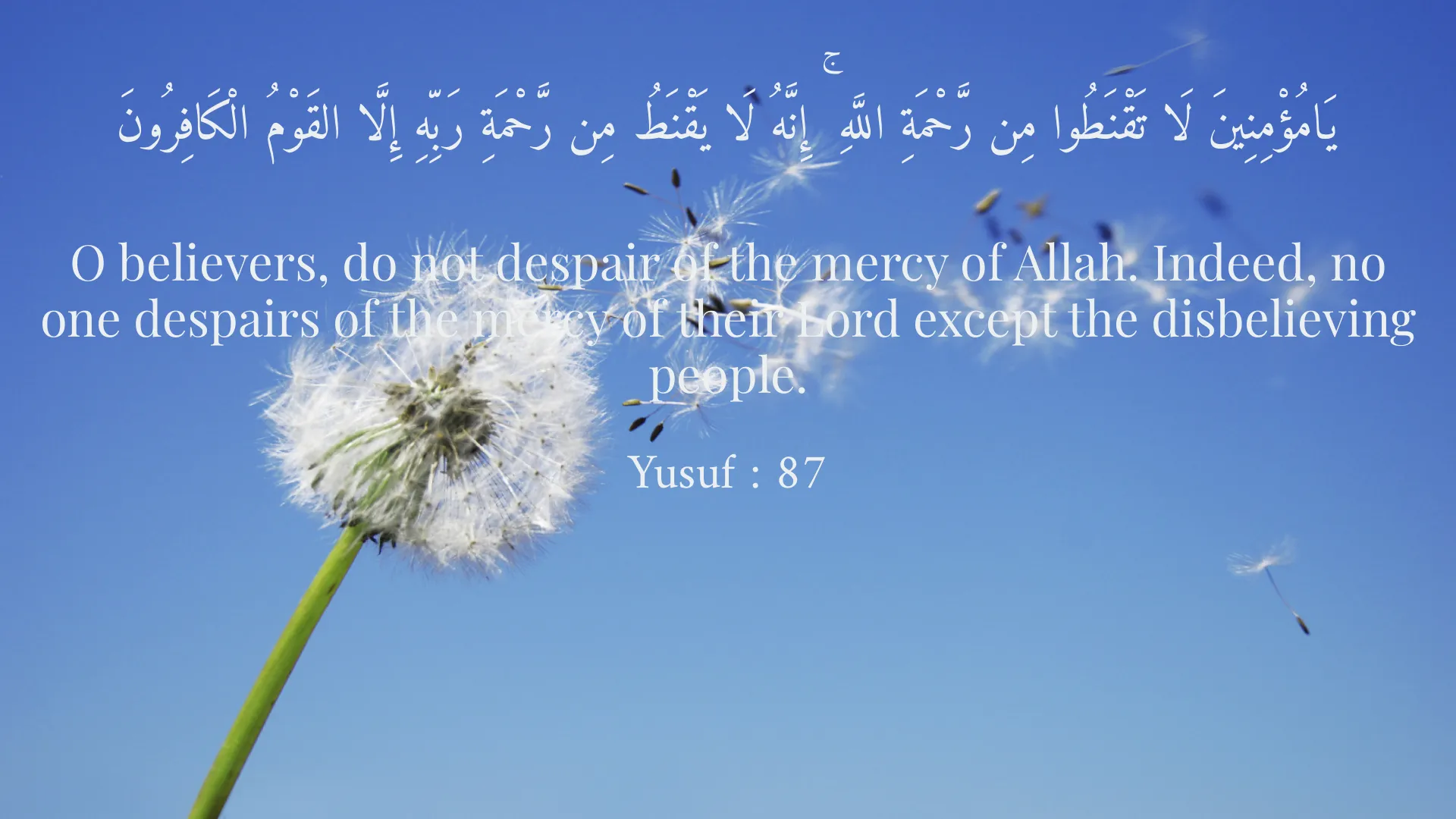
يَامُؤْمِنِينَ لَا تَقْنَطُوا مِن رَّحْمَةِ اللَّهِ ۚ إِنَّهُ لَا يَقْنَطُ مِن رَّحْمَةِ رَبِّهِ إِلَّا القَوْمُ الْكَافِرُونَ
O believers, do not despair of the mercy of Allah. Indeed, no one despairs of the mercy of their Lord except the disbelieving people.
Yusuf : 87
وَفِي الْأَرْضِ آيَاتٌ لِّلْمُوقِنِينَ
And in the earth are signs for the certain [in faith].
Ar-Rum : 37
Short Story
Once upon a time, a man named Amir was sitting in a narrow alley, worried about his future. He was talking to his neighbors about life's problems, and he saw no signs of hope. Suddenly, a small child approached him laughing and playing. The child said, "Why are you sad? Life is beautiful!" Amir looked at him with astonishment and felt a spark igniting in his heart. From that day on, Amir learned that even in the toughest times, joy and a smile could create a chain of happiness.